At a Glance
Friction is the force that opposes sliding or attempted sliding between surfaces, roughly f = μN for dry surfaces. Common examples are walking, writing with a pencil, car brakes, tires on a road, a match being struck, rubbing your hands together and air resistance on a skydiver.
- What counts
- Any contact that resists sliding, rolling or flowing past
- Direction
- Always against the motion or attempted motion
- Dry-surface rule
- f = μN (friction = coefficient × normal force)
- SI unit
- newton (N)
- Main types
- Static, kinetic (sliding), rolling, fluid
On this page
- What Makes Something an Example of Friction?
- What Types of Friction Show Up in These Examples?
- What Are Examples of Friction in Daily Life?
- What Are Examples of Frictional Force in Transport and Sports?
- What Are Examples of Friction in Air and Water?
- Which Examples of Friction Are Helpful and Which Are Harmful?
- Friction Examples for Kids
- Key Facts
- Quiz
- FAQ
What Makes Something an Example of Friction?
Something is an example of friction when a force appears at a contact and pushes back against sliding, rolling or flowing. The surfaces do not even need to be moving yet. A heavy bookcase that refuses to budge when you lean on it is held in place by friction too.
At the tiny scale, even polished surfaces are rough. Their high points press into each other and form weak bonds, and those bonds must be broken or dragged apart for one surface to slide. The harder the surfaces are pressed together, the more contact points form, which is why friction grows with the normal force.
For dry surfaces a simple rule works well: the friction force is about the coefficient of friction times the normal force. The coefficient depends on the pair of materials, such as rubber on asphalt or steel on ice.
| Example | What happens | Type of friction | Helpful or harmful |
|---|---|---|---|
| Walking | Shoe grips the ground as you push off | Static | Helpful |
| Pencil on paper | Graphite is scraped onto the page | Kinetic | Helpful |
| Striking a match | Rubbing heats the match head | Kinetic | Helpful |
| Rubbing hands | Motion turns into warmth | Kinetic | Helpful |
| Tied shoelaces | Strands hold each other in place | Static | Helpful |
| Nail in wood | Wood grips the nail | Static | Helpful |
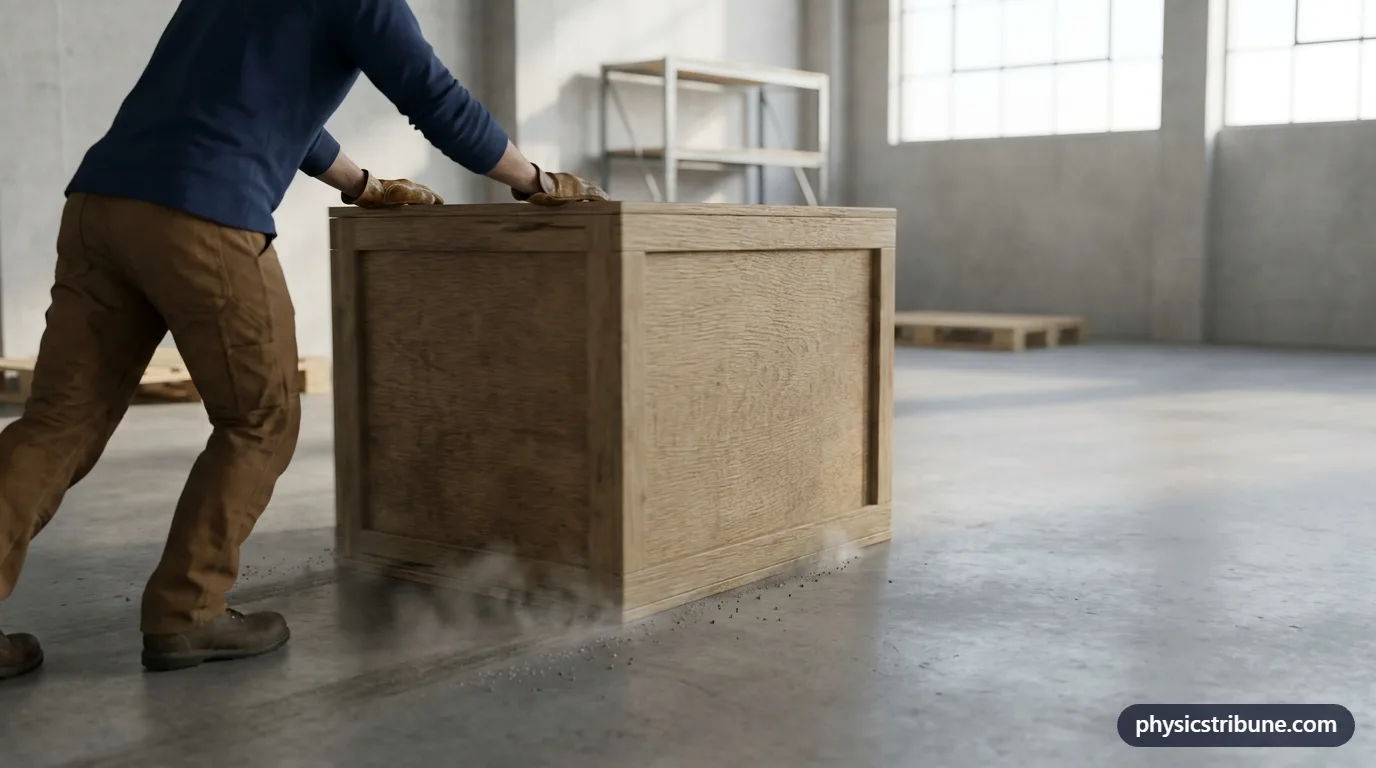
| Sliding a heavy box | Hard to start, easier to keep going | Static, then kinetic | Harmful (extra effort) |
| Opening a jar | Grip pad stops the hand slipping | Static | Helpful |
| Car brakes | Pads rub a spinning disc | Kinetic | Helpful, but wears pads |
| Tires on a road | Rubber grips asphalt to turn and stop | Static | Helpful |
| Bicycle coasting | Wheels slowly lose speed | Rolling | Harmful (slows the ride) |
| Climbing chalk | Dry hands grip the rock | Static | Helpful |
| Ice skating | Blade glides on a slippery surface | Kinetic (very low) | Low friction is the goal |
| Soccer cleats | Studs grip the turf | Static | Helpful |
| Sanding wood | Grains wear the surface smooth | Kinetic | Helpful |
| Parachute | Air slows the fall | Fluid | Helpful |
| Swimmer | Water resists the body | Fluid | Harmful (slows the swimmer) |
| Boat hull | Water drags on the hull | Fluid | Harmful (uses fuel) |
| Meteor | Air ahead is compressed and heated | Fluid | Protects the ground |
| Falling leaf | Air slows and sways the leaf | Fluid | Neutral |
| Source: Classification by our editors · Retrieved October 2026 | |||
What Types of Friction Show Up in These Examples?
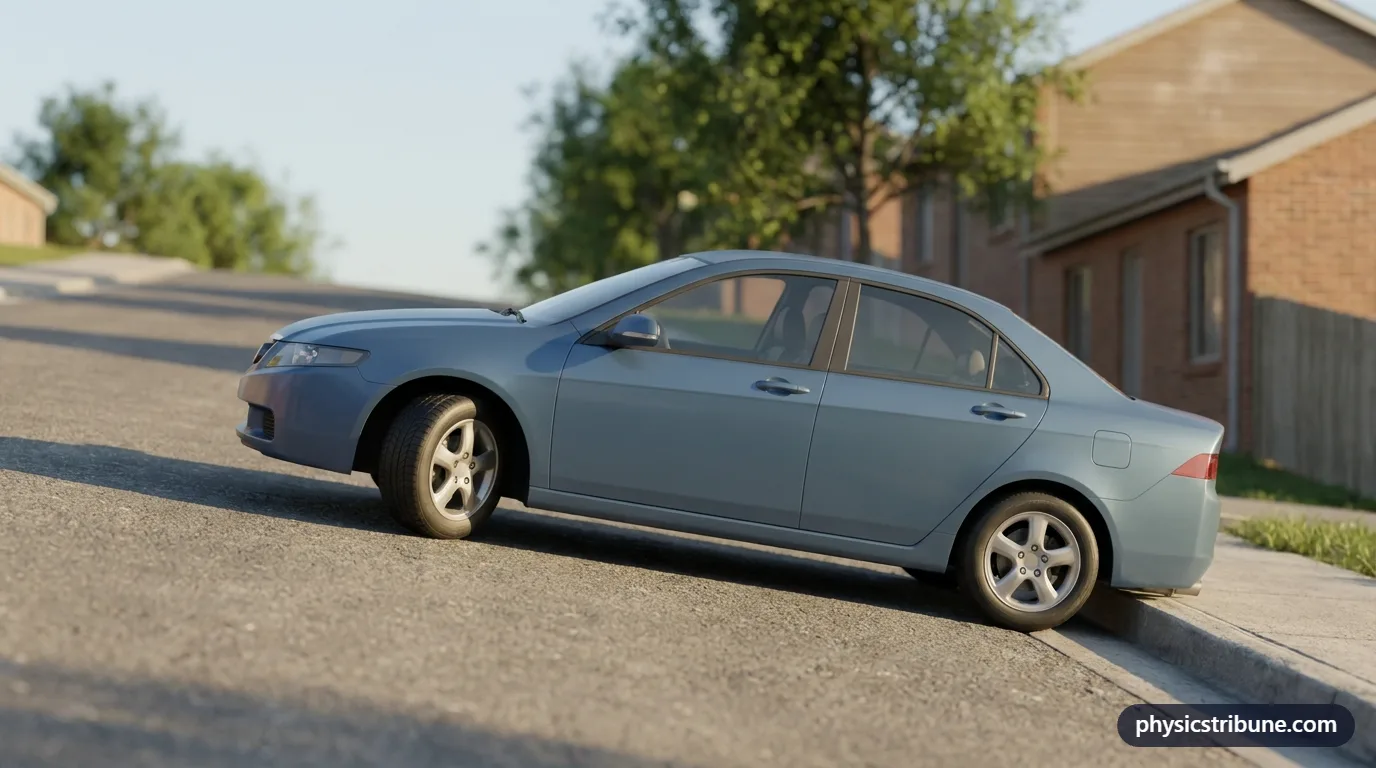
- Static friction stops surfaces from starting to slide. It holds a parked car on a hill and keeps your foot from slipping as you push off. See static friction.
- Kinetic (sliding) friction acts once surfaces are already sliding, like a box dragged across a floor. It is usually a bit weaker than static friction. See kinetic friction and the static vs kinetic friction comparison.
- Rolling friction resists a wheel or ball rolling on a surface. It is much smaller than sliding friction, which is why wheels were such a useful invention.
- Fluid friction resists motion through air or water. Air resistance and water drag both belong here; see air resistance.
What Are Examples of Friction in Daily Life?
- Walking. Each step pushes backward on the ground, and static friction pushes your foot forward. On ice there is too little friction, and your foot slides back instead.
- Writing with a pencil. Friction scrapes tiny flakes of graphite off the tip and leaves them on the paper.
- Striking a match. Rubbing the head across a rough strip heats it enough through friction to start a chemical reaction.
- Rubbing your hands together. Sliding friction turns the motion of your hands into warmth on a cold morning.
- Tying shoelaces. A knot holds because friction between the strands stops them from slipping apart.
- A nail in a board. The wood presses tightly on the nail, and static friction keeps it from pulling out.
- Sliding a heavy box. It takes a big shove to get it moving and a slightly smaller push to keep it going, because static friction is larger than kinetic friction.
- Opening a jar lid. A rubber grip pad raises the friction between your hand and the lid so it turns instead of slipping.


What Are Examples of Frictional Force in Transport and Sports?
- Car brakes. Pads squeeze a spinning disc, and sliding friction turns the car's kinetic energy into heat.
- Tires on a road. The rubber grips the asphalt through static friction, which is what lets a car speed up, turn and stop. Wet or icy roads lower this grip sharply, as the table below shows.
- A bicycle wheel rolling. Rolling friction is small, so a bike can coast a long way on flat ground.
- Climbers using chalk. The powder dries sweat from the hands and keeps friction on the rock high.
- Skiing and ice skating. A thin, slippery layer on the ice surface makes friction very low, so skaters glide easily.
- A soccer player's cleats. Studs dig into the turf to raise grip for sharp turns.
- Sanding wood. Hard grains on sandpaper use friction to wear away the surface and smooth it.
To work out the force in any of these cases, try our friction calculator.
| Road surface | Typical tire-road coefficient | Maximum friction force | Stopping distance from 25 m/s |
|---|---|---|---|
| Dry asphalt | about 0.7 | about 10,300 N | about 46 m |
| Wet asphalt | about 0.4 | about 5,900 N | about 80 m |
| Icy road | about 0.1 | about 1,500 N | about 320 m |
| Source: Computed with f = μmg (g = 9.80665 m/s²) and d = v²/(2μg); coefficients are typical values, and reaction time is not included · Retrieved October 2026 | |||
What Are Examples of Friction in Air and Water?
- A parachute. The wide canopy catches a lot of air, and the large drag force slows the fall to a safe speed.
- A swimmer. Water pushes back on the body, which is why racers wear smooth suits and stretch into a streamlined shape.
- A boat hull. Water drag along the hull means the engine must keep pushing just to hold a steady speed.
- A meteor. Rushing into the atmosphere at very high speed, it compresses and heats the air ahead of it until it glows.
- A falling leaf. Its large, light surface meets so much air resistance that it drifts down slowly and sways from side to side.
Fluid friction grows quickly with speed. A falling object speeds up until drag equals its weight, and then it stops speeding up, an effect called terminal velocity.
Which Examples of Friction Are Helpful and Which Are Harmful?
Friction is helpful whenever we need grip or controlled slowing. Walking, braking, holding a pencil, knots, nails and tire grip all depend on it. A world without friction would be one where you could not stand up, let alone drive.
Friction is harmful when it wastes energy or wears parts down. It heats engine parts, scuffs shoe soles, wears out brake pads and slows machines. Engineers fight this kind of friction with oil, grease, ball bearings and smooth, streamlined shapes.
Many examples are both at once. Brakes need friction to work, yet the same friction slowly grinds the pads away. The heat side of that story is explained in why friction causes heat.
Friction Examples for Kids
Friction is the "grippy" force. It happens when two things rub. It slows things down and helps things hold on.
Try this: slide a toy car across a rug, then across a smooth floor. On the rug it stops much sooner, because the rug has more friction. Rub your hands fast and feel them get warm. That warmth comes from friction too. More activities are on our friction for kids page, and teachers can find practice on the friction worksheets.
Key Facts
- Friction always acts against motion or the start of motion.
- For dry surfaces, friction is roughly the coefficient of friction times the normal force.
- Static friction is usually larger than kinetic friction, so starting a slide takes more force than keeping it going.
- Rolling friction is much smaller than sliding friction, which is why wheels save so much effort.
- Air and water resistance are fluid friction, and they grow quickly with speed.
- Friction turns kinetic energy into heat, which is why brakes and rubbed hands get warm.
- On ice a car needs several times the stopping distance it needs on dry pavement.
Quick Quiz: How Well Do You Know Examples of Friction?
6 questions. Tap an answer to check it.
Which example depends on static friction?
The car is not sliding, so static friction holds it in place.
Rubbing your hands to warm them shows which type of friction?
Your hands slide over each other, so kinetic friction turns motion into heat.
Air resistance on a parachute is an example of:
Air is a fluid, and it resists the parachute moving through it.
Which is an example of harmful friction?
Friction inside an engine wastes energy and wears metal away.
Why do wheels make moving loads easier?
A rolling wheel avoids most of the scraping that sliding causes.
A car brakes on ice instead of dry pavement. What happens to its stopping distance?
Ice has a much lower coefficient of friction, so the car slows far more gently.
Frequently Asked Questions
What are 10 examples of friction?
Ten common examples are walking on a sidewalk, writing with a pencil, striking a match, rubbing your hands to warm them, car brakes slowing a wheel, tires gripping a road, a nail held in wood, sanding a board, a parachute slowing a fall and a swimmer pushing through water. Each one involves a force that resists sliding or flowing.
What are examples of friction in daily life?
Everyday examples include walking without slipping, holding a cup, tying a knot that stays tied, opening a jar, erasing pencil marks, braking on a bike and the warmth you feel when you rub your hands. Even sitting in a chair without sliding off depends on friction between you and the seat.
What is a good example of friction for kids?
A great example is a slide at the playground. In regular clothes you slide down slowly, but sitting on a smooth plastic sheet makes you zoom faster, because the sheet lowers the friction. Kids can also push a toy car across carpet and then across tile to feel how surfaces change friction.
What are examples of helpful friction?
Helpful friction lets us walk, drive and hold things. Tire grip lets cars turn and stop, brake pads slow wheels, shoe soles keep us upright, knots and nails stay in place, and chalk helps climbers hold on. Without friction, almost any task that needs grip or controlled slowing would be impossible.
What are examples of harmful friction?
Harmful friction wastes energy and wears things out. Examples are moving engine parts heating up, shoe soles and tires wearing thin, a heavy box that is hard to push, water drag on a boat hull and air resistance on a car at highway speed. Oil, bearings and streamlined shapes are used to reduce it.
Is air resistance an example of friction?
Yes. Air resistance is a kind of fluid friction. As an object moves, it must push air out of the way and the air rubs along its surface, both of which create a force against the motion. It is small at walking speed but becomes large for fast cars, cyclists and skydivers.
Why do we put oil in machines if friction is useful?
Friction is useful where we want grip, but inside a machine it mainly wastes energy and wears parts down. Oil forms a thin layer between moving metal surfaces so they slide over the liquid instead of grinding on each other. That keeps the machine cooler, more efficient and longer lasting.