At a Glance
Newton's first law, the law of inertia, says an object keeps its state of motion unless a net external force acts on it. Common examples are a passenger sliding forward when a car stops suddenly, a tablecloth pulled out from under dishes that stay put, and a hockey puck that glides until friction slows it.
- Law
- Newton's first law (law of inertia)
- Statement
- No net force means no change in velocity
- Key idea
- Inertia: resistance to changes in motion
- Depends on
- Mass (more mass, more inertia)
- Published
- 1687, in Newton's Principia
- Examples on this page
- 18, from kitchens to deep space
On this page
- What Does Newton's First Law Say?
- What Are Examples of Newton's First Law in Everyday Life?
- How Does Newton's First Law Apply in a Car?
- What Are Examples of Newton's First Law in Sports?
- Are There Examples of Newton's First Law in Space?
- How Can You Tell if Something Is an Example of the First Law?
- How Can You Test Newton's First Law at Home?
- Key Facts
- Quiz
- FAQ
What Does Newton's First Law Say?
Newton's first law says that a resting object remains still and a moving object continues in a straight line at a steady speed, as long as no net external force acts on it. In short, velocity only changes when forces are unbalanced.
The property behind the law is inertia, an object's tendency to keep doing what it is already doing. Inertia depends on mass alone: a loaded shopping cart is harder to start and harder to stop than an empty one. That is why the law is often called the law of inertia.
Every example below has the same pattern. Something keeps its motion, or its stillness, while the surroundings change, or a force finally arrives and changes it. When you spot that pattern, you have spotted the first law.
What Are Examples of Newton's First Law in Everyday Life?
- The tablecloth trick. Yank a smooth cloth quickly from under plates and cups and they stay almost where they were. The pull is brief, so friction acts on the dishes for only a moment and their inertia keeps them at rest.
- Coin on a card. Balance a plain card on a glass with a coin on top, then flick the card sideways. The card shoots away, but the coin has no time to pick up sideways speed and drops into the glass.
- Shaking water off your hands. You swing your hands and stop them suddenly. The droplets keep moving and fly off.
- Beating a dusty rug. A stick hit makes the rug jump forward, while the dust tends to stay where it was and separates from the fibers.
- Tightening a hammer head. Tap the bottom of the handle on a hard floor. The handle stops, but the heavy head keeps moving down and slides tighter onto the handle.
- Ketchup from a bottle. Thrust the bottle downward and stop it sharply. The sauce keeps moving and comes out of the opening.
Notice that in each case nothing "pushes" the coin, the drops or the dust. They simply keep their motion while their container or support changes.
| Example | What happens | The physics |
|---|---|---|
| Tablecloth trick | Dishes stay on the table | Brief friction cannot overcome their inertia |
| Coin on a card | Coin falls into the glass | Coin stays at rest as the card leaves |
| Shaking wet hands | Water flies off | Drops keep moving when hands stop |
| Beating a rug | Dust falls out | Dust stays put while the rug moves |
| Tapping a hammer handle | Head tightens on handle | Moving head keeps going when handle stops |
| Ketchup bottle | Sauce comes out | Sauce keeps moving after the bottle stops |
| Car braking | Passengers lurch forward | Bodies keep moving until belts stop them |
| Car accelerating | Pressed into seat | Body resists the change in speed |
| Sharp turn | Pushed to the outside | Body tends to travel straight |
| Items on a dashboard | Slide forward | No force holds them as the car slows |
| Cruise at steady speed | Speed stays constant | Driving force balances drag, net force zero |
| Hockey puck | Glides far | Very low friction on ice |
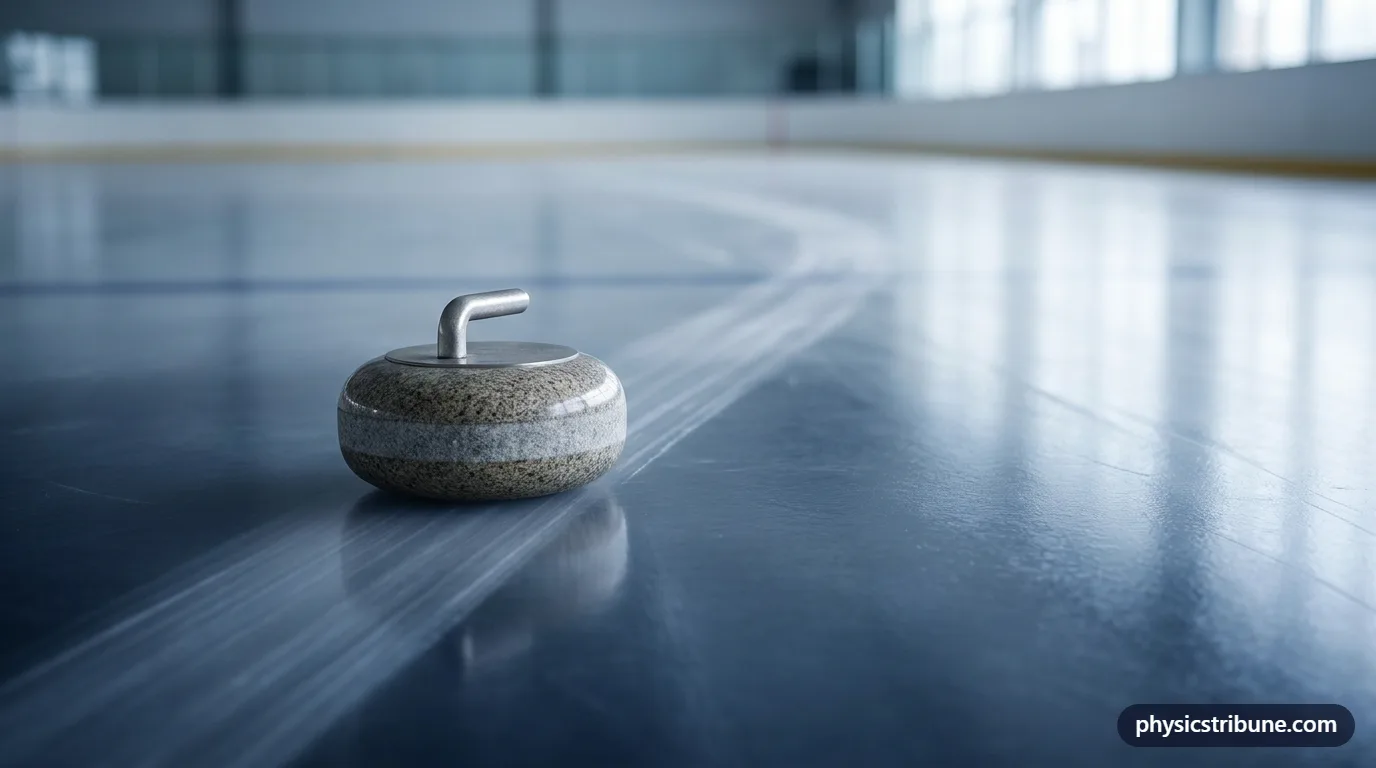
| Curling stone | Slides with no push | Motion continues; sweeping cuts friction |
| Sprinter at finish | Cannot stop instantly | Needs a braking force from the ground |
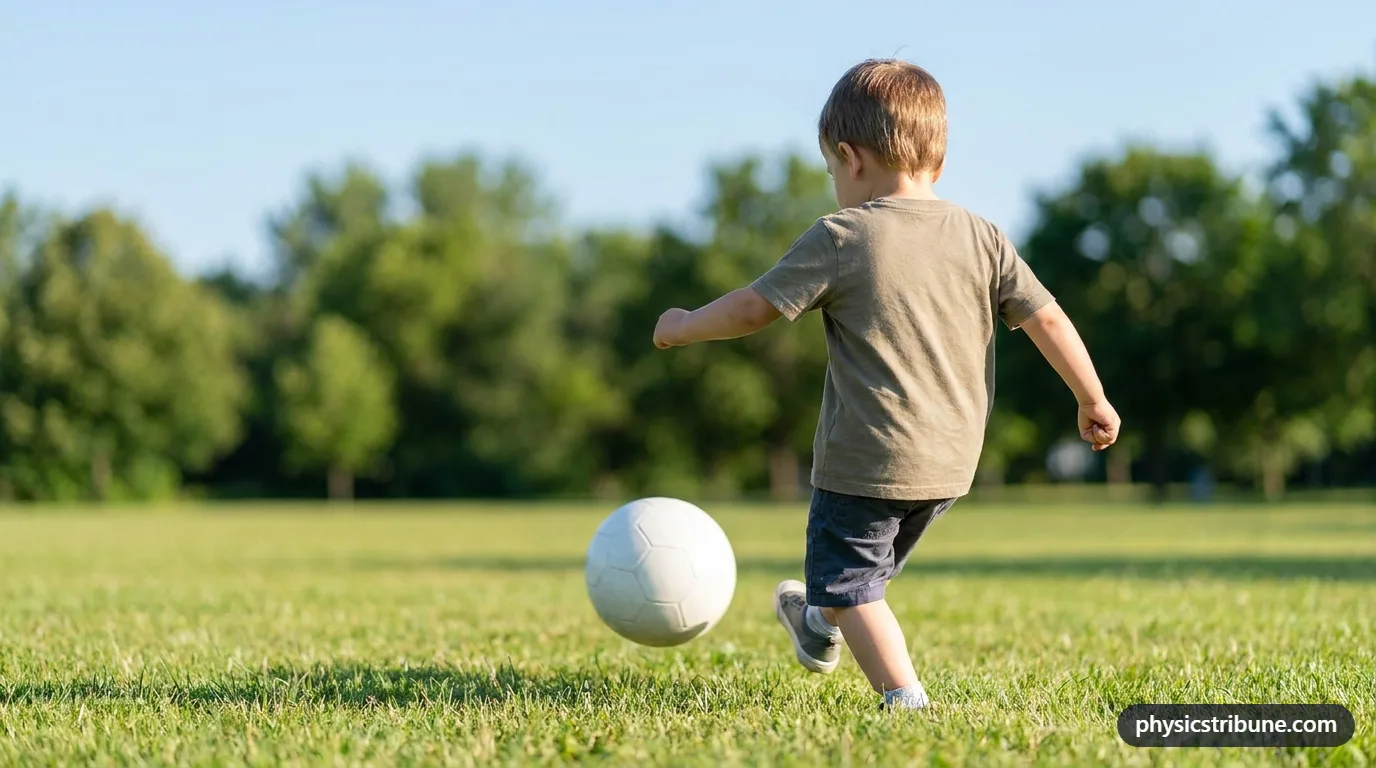
| Ball on the spot | Stays until kicked | No force, so no change from rest |
| Skateboard hits curb | Rider tips forward | Rider keeps moving when board stops |
| Space probe | Coasts for years | Almost no friction or drag in space |
| Dropped tool in orbit | Drifts away | Keeps the speed it had when released |
| Source: Examples written by our editors · physics per Newton's first law (Principia, 1687) · Retrieved October 2026 | ||

How Does Newton's First Law Apply in a Car?
- Lurching forward when braking. The brakes slow the car, but your body keeps moving forward until the seat belt applies a force to stop you.
- Pressed back when accelerating. As the car speeds up, your body tends to stay at its old speed, so the seat back has to push you forward. It feels like being pressed into the seat.
- Sliding sideways on a sharp turn. The car changes direction, but your body tends to continue in a straight line, so you drift toward the outside of the turn until the door or seat pushes you around.
- Loose items on the dashboard. A phone or a water bottle slides forward when the driver stops hard, because nothing holds it back strongly enough.
- Cruising at steady speed. On a level highway at constant speed, the driving force from the tires exactly balances air drag and rolling resistance. The net force is zero, so the speed stays the same. The free-body diagram below shows the balance.
Seat belts, airbags and headrests exist because of the first law. They supply the force that your inertia otherwise would not get in a crash. Our page on car safety features explains how they spread that force out.

What Are Examples of Newton's First Law in Sports?
- A hockey puck on ice. Ice has very little friction, so a struck puck glides a long way at almost constant speed.
- A curling stone. Once released, the stone slides on with no further push. Sweeping smooths the ice to reduce friction even more and keep it moving.
- A sprinter past the finish line. A runner cannot stop at the line. Their body keeps moving, and they need several strides of braking force from the ground to slow down.
- A soccer ball at rest. A ball on the penalty spot stays put until a kick provides a force. Out on the field, a rolling ball slows only because grass friction and air resistance act on it.
- A skateboarder hitting a curb. The board stops suddenly, but the rider's body keeps moving forward and tips over the front.
Are There Examples of Newton's First Law in Space?
- Space probes coasting. Probes sent to the outer solar system fire their engines only now and then. Between burns they coast for years, because in deep space there is almost no friction or air to slow them.
- An astronaut's dropped tool. A wrench let go of during a spacewalk keeps drifting at the speed it had. Nothing stops it, which is why tools are tethered.
Space shows the first law in its purest form. On Earth, friction and drag almost always act, which makes it look as if moving things "naturally" stop. Galileo argued against that idea with his ramp experiments, and Isaac Newton wrote it into his first law in 1687.
How Can You Tell if Something Is an Example of the First Law?
Ask one question: is the object keeping its motion, or is its motion being changed? If an object stays still, keeps a steady speed or keeps going straight because the forces on it are balanced or briefly absent, it is a first-law example. If you want to calculate how fast a force changes the motion, that is the territory of the second law,
A simple test is to look at the net force. Zero net force means constant velocity, which is the first law. A nonzero net force means acceleration, which links to our examples of Newton's second law. Forces that come in action and reaction pairs belong with the examples of Newton's third law. For the zero-force case in detail, see balanced and unbalanced forces.
How Can You Test Newton's First Law at Home?
The coin and card trick takes one minute. Put a plain index card over an empty glass, set a coin in the center, and flick the edge of the card hard and fast with your finger. The coin drops straight in. Now push the card slowly instead: friction has time to drag the coin along, and it falls off with the card.
The difference is time. A quick flick gives friction almost no time to act, so the coin's inertia wins. A slow push gives friction plenty of time. To practice explaining what you see, try our Newton's laws worksheets, and younger learners can start with Newton's laws for kids.
Key Facts
- Newton's first law says an object keeps its velocity, including zero velocity, unless a net external force acts on it.
- The first law is also called the law of inertia, and inertia depends only on mass.
- Passengers lurch forward in a braking car because their bodies keep moving until seat belts stop them.
- A car cruising at constant speed on a level road has zero net force, since the driving force balances drag.
- Objects on Earth seem to stop on their own only because friction and air resistance act on them.
- Space probes coast for years between engine burns, the clearest real example of the first law.
- Newton published the first law in 1687, building on Galileo's earlier work on motion.
Quick Quiz: How Well Do You Know Examples of Newton's First Law?
6 questions. Tap an answer to check it.
A coin on a card stays in place and drops into a glass when the card is flicked away. Which law does this show?
The coin keeps its state of rest because the flick acts too briefly to move it.
A truck cruises in a straight line at a steady 90 km/h. What is the net force on it?
Constant velocity means balanced forces, so the net force is zero.
Why does a rolling ball on grass eventually stop?
Without friction and drag the ball would keep rolling; these forces slow it.
Which object has the most inertia?
Inertia depends on mass, and the loaded truck has by far the most.
You feel pushed toward the door when a car turns sharply left. What is really happening?
Your body keeps its straight-line motion while the car turns beneath you.
Which is NOT a first law example?
Working out acceleration from force and mass uses the second law, F = ma.
Frequently Asked Questions
What is a simple example of Newton's first law?
A book lying on a desk is the simplest example. It stays at rest because the forces on it, its weight and the push of the desk, cancel out. It will not slide or lift off until you apply a force. A moving example is a puck sliding on ice, which keeps going at nearly the same speed because almost nothing pushes against it.
What are 3 examples of inertia in everyday life?
First, you lurch forward when a bus brakes suddenly, because your body keeps moving. Second, a coin on a card falls into a glass when the card is flicked away, because the coin stays at rest. Third, water flies off your hands when you shake them and stop, because the drops keep moving after your hands halt.
How is Newton's first law used in sports?
Athletes deal with it constantly. A soccer ball stays on the spot until it is kicked. A hockey puck glides far on low-friction ice. A sprinter cannot stop at the finish line and needs several strides to slow down. A curling team sweeps the ice to reduce friction so the stone keeps its motion for longer.
Why do passengers move forward when a car stops?
The brakes act on the car, not directly on the passengers. As the car slows, the passengers' bodies keep moving forward at the old speed because of inertia. Only when the seat belt, or the dashboard in an unbelted crash, applies a force do they slow down too. This is why seat belts are essential for safety.
Is a car moving at constant speed an example of Newton's first law?
Yes, if it moves in a straight line. At constant velocity the driving force from the tires exactly balances air resistance and rolling resistance, so the net force is zero. The car does not need an unbalanced force to keep moving. It only needs one to speed up, slow down or turn, which changes its velocity.
Why is Newton's first law called the law of inertia?
Because the law describes what inertia does. Inertia is the tendency of every object to resist changes to its motion. The first law says that, without a net force, an object's motion will not change at all. Objects with more mass have more inertia, so they need larger forces to start, stop or turn them.
What is the difference between Newton's first and second law examples?
First law examples focus on objects keeping their motion: staying still, coasting or continuing in a straight line when the net force is zero or very brief. Second law examples focus on how much an object accelerates when a net force acts, using F = ma. A car cruising steadily illustrates the first law; the same car speeding up illustrates the second.