
At a Glance
The most commonly confused physics pairs are speed vs velocity, distance vs displacement, mass vs weight, heat vs temperature, voltage vs current and AC vs DC. Most of these differ in one of three ways: one is a vector and the other a scalar, one is an amount while the other is a rate, or they describe different stages of the same process.
- What each guide gives
- Verdict, side-by-side table, both formulas, a diagram, quiz and FAQ
- Topics covered
- Motion, forces, energy, heat, waves, light, electricity, magnetism, nuclear and modern physics
- Most common mix-up
- Scalar vs vector quantities
- Level
- Middle school through AP and first-year college
On this page
- Why Do Physics Terms Get Mixed Up So Often?
- What Patterns Explain Most Physics Differences?
- How Can One Trip Show the Difference Between Two Quantities?
- What Does Each Comparison Guide Include?
- Which Comparisons Belong to Each Branch of Physics?
- In What Order Should You Read the Comparisons?
- All pages in this guide
- Key Facts
- FAQ
Why Do Physics Terms Get Mixed Up So Often?
Everyday English treats many physics words as synonyms. People say a car has a lot of speed or a lot of velocity without any difference in meaning, and a bathroom scale reports weight in kilograms even though kilograms measure mass. Physics gives each of these words one exact job, so a casual swap can turn a right answer into a wrong one.
A second source of confusion is that paired ideas often share units or appear in the same formula. Work and energy are both measured in joules, and current and voltage show up together in Ohm's law. When two quantities live side by side, it helps to see them in the same table, row by row, with the same example worked both ways.
That is the idea behind every guide in this section. We pick one pair, state the verdict in a sentence, and then show where the two agree and where they part ways.
What Patterns Explain Most Physics Differences?
After writing dozens of these guides, we find that most confusing pairs fall into a small number of patterns. Spotting the pattern first makes the rest of the comparison easy.
- Scalar versus vector. One quantity has only a size, the other has a size and a direction. Speed vs velocity and distance vs displacement are the classic cases, and our scalar vs vector guide explains the rule behind them.
- Amount versus rate. One quantity is a total, the other is how fast that total changes. Work vs power and energy vs power follow this pattern, as does the gap between charge and current.
- Property versus interaction. Mass belongs to the object, while weight depends on the gravity acting on it. Mass vs weight is the best example.
- Cause versus effect. Voltage pushes and current flows; heat moves energy and temperature records the result. See current vs voltage and heat vs temperature.
A few pairs, such as nuclear fission vs fusion or concave vs convex lenses, are simply two versions of the same process running in opposite directions.
How Can One Trip Show the Difference Between Two Quantities?
Picture a student who walks 10 meters down a school hallway at a steady pace, turns around and walks back to the starting door. The graph below plots her position against time for the whole 10-second trip.
She covered 20 meters of ground, so her distance is 20 m and her average speed is 2 m/s. Yet she ended exactly where she began, so her displacement is zero and her average velocity is zero too. One short walk produces two very different pairs of answers, and both are correct for the quantity being asked. That single picture settles the question for the two most searched pairs in this section.

What Does Each Comparison Guide Include?
Every comparison page follows the same plan, so once you have read one you know where to look in the next. The first sentence gives the verdict, the difference stated as plainly as we can manage. Then comes an At a Glance box and a side-by-side table of 10 to 15 rows covering definition, symbol, SI unit, formula, scalar or vector, and an everyday example.
Below the table you will find both formulas with their variables, a diagram drawn to scale where a picture helps, real examples of each idea, the most common mix-ups we see in student work, a short quiz and an FAQ. Numbers in the worked examples are recomputed when the page is built, and constants come from the NIST CODATA 2022 values.
Which Comparisons Belong to Each Branch of Physics?
The table lists our guides grouped by branch. A few highlights for each area:
- Motion and forces: velocity vs acceleration, static vs kinetic friction, centripetal vs centrifugal force and force vs pressure.
- Energy and momentum: kinetic vs potential energy, elastic vs inelastic collisions and impulse vs momentum.
- Heat: conduction vs convection vs radiation and evaporation vs boiling.
- Waves and light: frequency vs wavelength, transverse vs longitudinal waves and reflection vs refraction.
- Electricity: series vs parallel circuits, AC vs DC and volts vs amps vs watts.
| Pair | Key difference | Formulas (plain text) |
|---|---|---|
| Speed vs velocity | Velocity includes direction; speed does not | s = d / t; v̄ = Δx / Δt |
| Distance vs displacement | Displacement is the straight-line change in position with direction | d = total path; Δx = x_f − x_i |
| Mass vs weight | Mass is the amount of matter; weight is the pull of gravity on it | W = m g |
| Velocity vs acceleration | Acceleration is the rate of change of velocity | a = Δv / Δt |
| Work vs power | Power is how fast work is done | W = F d; P = W / t |
| Kinetic vs potential energy | Energy of motion vs energy of position | KE = ½ m v²; PE = m g h |
| Heat vs temperature | Heat is energy in transit; temperature measures average particle energy | Q = m c ΔT |
| Current vs voltage | Voltage is the push per charge; current is the flow of charge | V = I R; I = ΔQ / Δt |
| Series vs parallel circuits | One path for current vs several branches | R = R1 + R2; 1/R = 1/R1 + 1/R2 |
| Frequency vs wavelength | Cycles per second vs length of one cycle | v = f λ |
| Nuclear fission vs fusion | Splitting heavy nuclei vs joining light ones | E = m c² |
| Source: Formulas from our formula data set (data/formulas.json); summaries written by our editors · Retrieved October 2026 | ||
In What Order Should You Read the Comparisons?
The pairs build on each other, so this order works well for most students:
- Scalar vs vector, the rule that explains many of the others.
- Distance vs displacement, then speed vs velocity and velocity vs acceleration.
- Mass vs weight before any work on forces.
- Kinetic vs potential energy and work vs power.
- Heat vs temperature before any thermal physics.
- Current vs voltage, then series vs parallel circuits.
When a guide raises a question about one side of the pair, follow its link to the full concept page, or try the matching physics calculator to check your own numbers.
All Physics Comparisons (47)
 compareAc vs Dc
 compareAccuracy vs Precision
 compareAlpha vs Beta vs Gamma Radiation
 compareCelsius vs Fahrenheit vs Kelvin
 compareCentripetal vs Centrifugal
 compareClassical vs Quantum Physics
 compareConcave vs Convex Lens
 compareConcave vs Convex Mirror
 compareConvection vs Conduction
 compareVoltage vs Current
 compareDifference Between Density and Specific Gravity
 compareDiffraction vs Interference
 compareDiffraction vs Refraction
 compareDistance vs Displacement
 compareElastic vs Inelastic Collision
 compareElectric Field vs Magnetic Field
 compareDifference Between Electromagnet and Permanent Magnet
 compareEnergy vs Power
 compareEvaporation vs Boiling
 compareForce vs Energy
 compareDifference Between Force and Pressure
 compareDifference Between Frequency and Wavelength
 compareGenerator vs Motor
 compareHeat vs Temperature
 compareMomentum vs Impulse
 compareIsothermal vs Adiabatic Processes
 compareKinetic vs Potential Energy
 compareMass vs Volume
 compareMass vs Weight
 compareMomentum vs Inertia
 compareMomentum vs Kinetic Energy
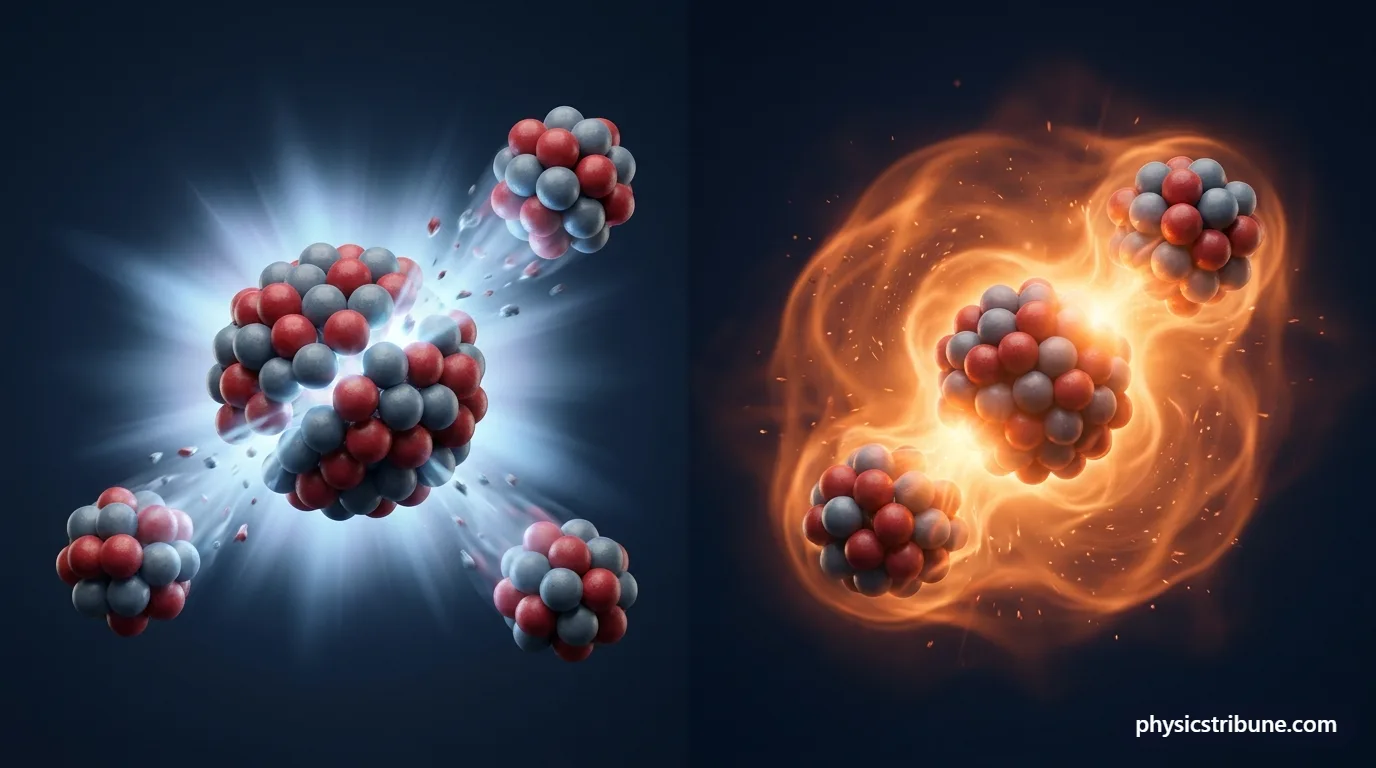 compareFission vs Fusion
 compareReal vs Virtual Image
 compareReflection vs Refraction
 compareDifference Between Renewable and Nonrenewable Energy
 compareScalar vs Vector
 compareSeries vs Parallel
 compareDifference Between Sound and Light Waves
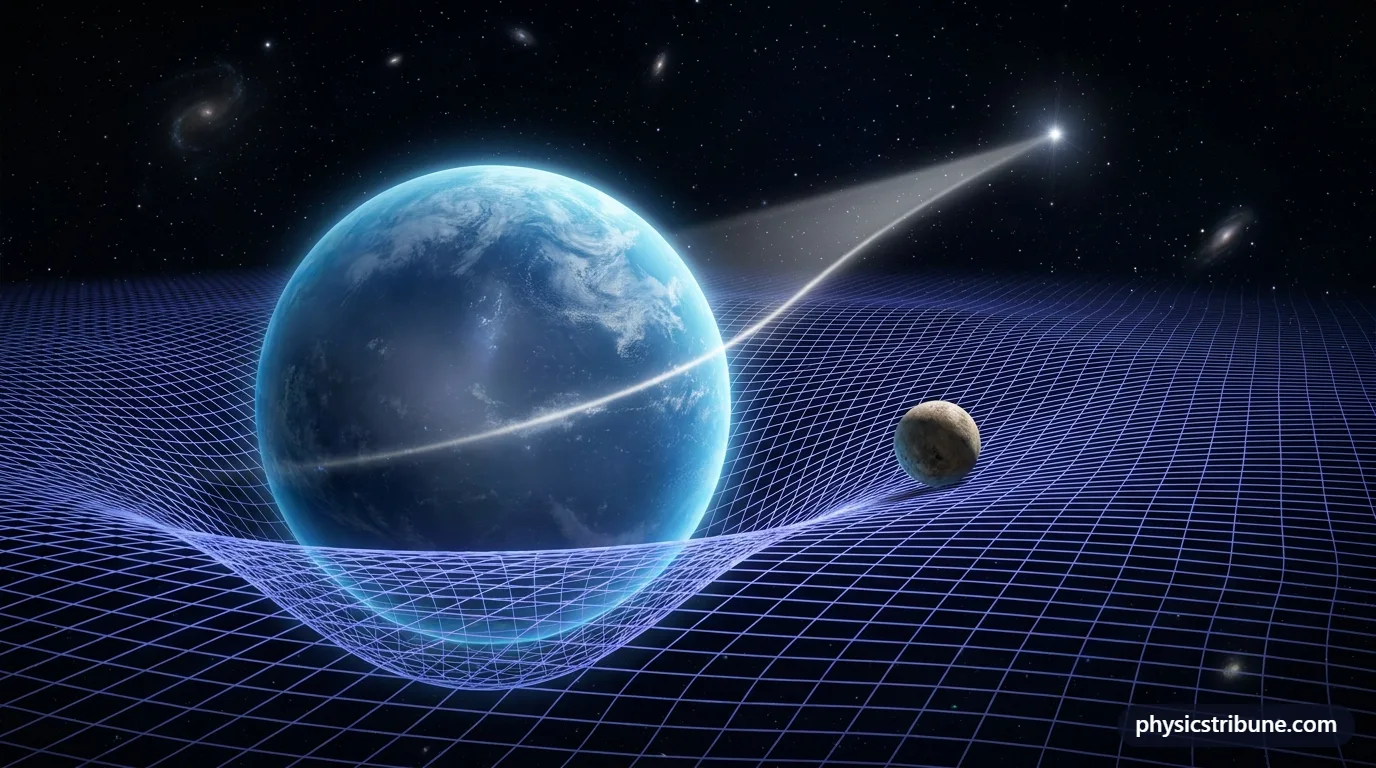 compareSpecial vs General Relativity
 compareSpeed vs Velocity
 compareStatic vs Kinetic Friction
 compareStep-Up vs Step-Down Transformers
 compareTemperature vs Thermal Energy
 compareTransverse vs Longitudinal Waves
 compareVelocity vs Acceleration
 compareVoltage vs Amps
 compareWork vs Power
Key Facts
- Most confusing physics pairs differ because one is a scalar and the other is a vector, or one is an amount and the other a rate.
- Distance and speed ignore direction, while displacement and velocity include it.
- Mass stays the same everywhere, but weight changes with the strength of gravity.
- Power is the rate of doing work, so the same job done faster needs more power, not more energy.
- Every comparison guide opens with a one-sentence verdict followed by a 10 to 15 row table.
- Two quantities can share a unit and still mean different things, as work and torque both use newton-meters.
Frequently Asked Questions
What is the difference between a scalar and a vector?
A scalar has only a size, such as 20 meters, 5 kilograms or 30 degrees Celsius. A vector has a size and a direction, such as 20 meters east or 9.8 meters per second squared downward. Speed, distance, mass, energy and temperature are scalars, while velocity, displacement, force, acceleration and momentum are vectors. Adding vectors requires paying attention to direction, not just the numbers.
Can speed and velocity ever be the same?
Their sizes match whenever an object moves in a straight line without turning back. A train rolling along a straight track at a steady 30 m/s has a speed of 30 m/s and a velocity of 30 m/s in its direction of travel. As soon as the path curves or reverses, average speed and the size of average velocity start to differ, and on a closed loop the average velocity becomes zero.
Why do scales show weight in kilograms?
A bathroom scale actually measures the force you press down with, which is your weight in newtons. It then divides by the standard value of gravity and shows the result as mass in kilograms, because that number is easier to understand. The trick works on Earth, but the same scale on the Moon would show a much smaller reading even though your mass would not change at all.
What is the easiest way to remember volts, amps and watts?
Think of water in a hose. Volts are like the water pressure that pushes, amps are like the flow rate through the hose, and watts are the rate at which energy is delivered, found by multiplying the two, P = I × V. A device rated at 1,200 watts on a 120-volt outlet therefore draws 10 amps. Our volts vs amps vs watts guide works through more examples.
How are the comparison guides checked for accuracy?
Every formula comes from our formula data set, which lists each variable and its SI unit, and physical constants use the NIST CODATA 2022 values. Numbers in worked examples are recomputed by code each time a page is built instead of being typed by hand. Tables of typical values say so in their source line, and each guide is reviewed against the concept pages it links to.
Are there comparisons for kids?
The comparison guides are written for middle school, high school and AP students, but each one opens with a plain-language verdict that younger readers can follow. For students in grades 3 to 5, our kids section covers the same ideas, such as forces, energy, light and circuits, with shorter sentences, quick facts, simple activities and a five-question quiz on every page.


