At a Glance
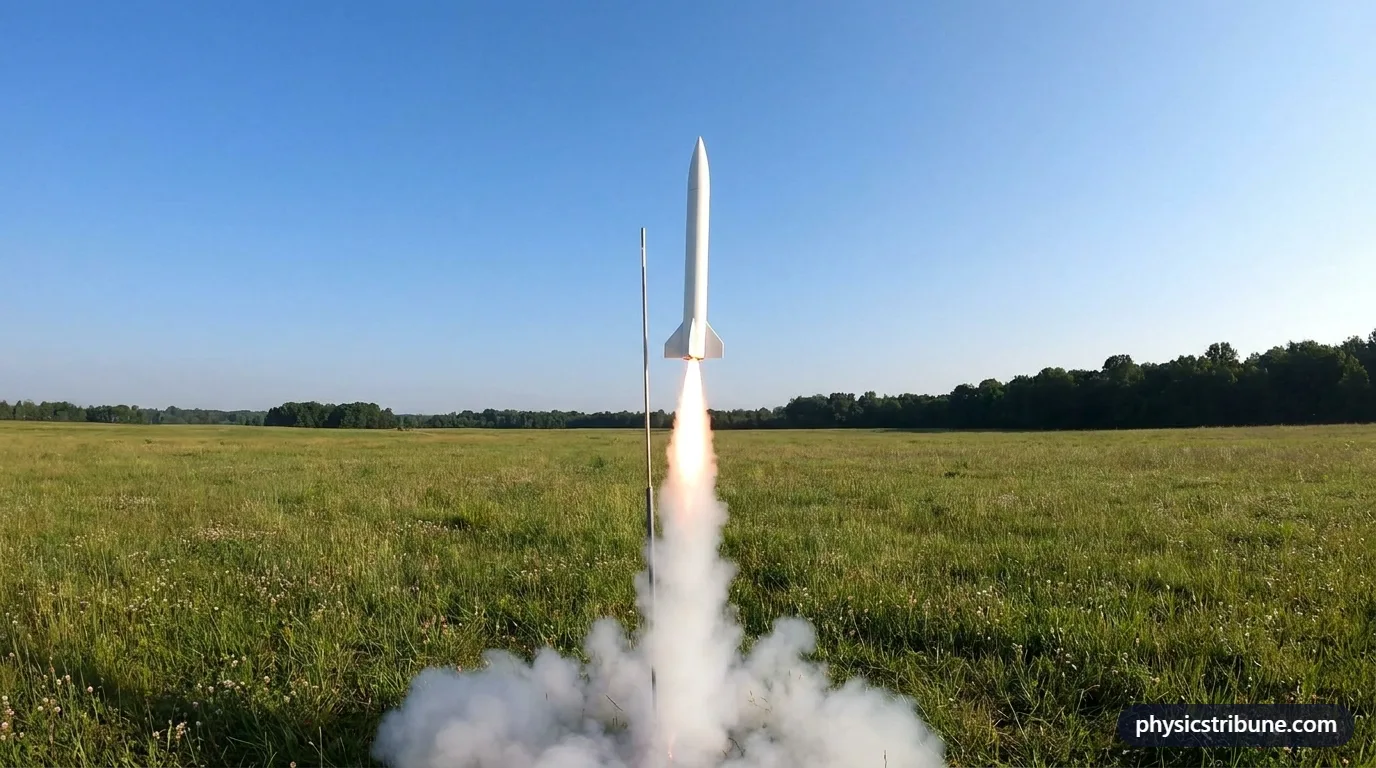
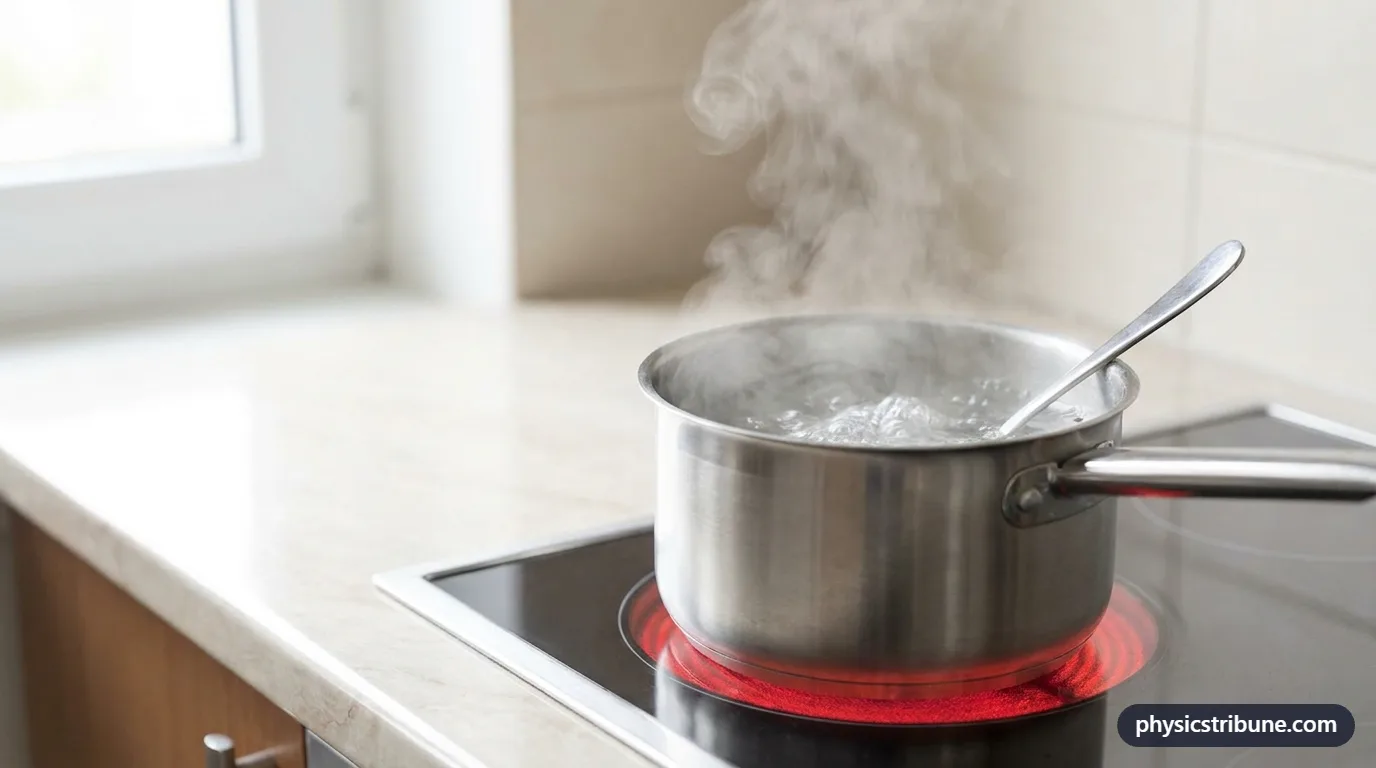
Everyday physics examples include a seatbelt holding you in place during sudden braking (Newton's first law), a basketball following a curved path (projectile motion), a spoon warming in hot soup (conduction), a playground seesaw (levers) and a ship floating on water (buoyancy). Our example lists cover each topic with 10 to 20 real situations and the physics that explains them.
- Lists available
- Example pages for forces, energy, heat, electricity, waves, light, fluids and machines
- Each list gives
- 10 to 20 examples, a table of what happens and why, a classify-it quiz and FAQ
- Best for
- Homework, revision, lesson starters and science-fair ideas
- Level
- Middle school to high school, with links to deeper concept pages
On this page
- Why Do Real-Life Examples Help You Learn Physics?
- What Are Everyday Examples of Forces and Motion?
- What Are Everyday Examples of Energy?
- What Are Examples of Machines, Electricity and Waves?
- How Can You Spot Physics in Your Own Day?
- Which Example Lists Should You Read First?
- All pages in this guide
- Key Facts
- FAQ
Why Do Real-Life Examples Help You Learn Physics?
A law written as an equation can feel remote until you connect it to something you have felt. Most students already know that a heavy shopping cart is harder to stop than an empty one; once they hear that this is inertia, the idea sticks. Examples turn a definition into a memory.
Examples also expose misunderstandings. If you can explain why a passenger lurches forward when a bus brakes, you understand the first law. If you think a force pushed the passenger forward, the example has shown you exactly what to fix. That is why every example on our lists comes with a short explanation of the physics, not just a name.
What Are Everyday Examples of Forces and Motion?
Forces are at work in nearly everything you do. Our Newton's first law examples show inertia in seatbelts, tablecloth tricks and coins on a card. Newton's second law examples compare pushing an empty and a loaded cart, and Newton's third law examples explain why a rowboat moves forward when the oars push water back.
Other lists cover friction, gravity, balanced and unbalanced forces, centripetal force and projectile motion. The diagram below shows a basketball shot, one of the clearest projectile examples you can find: once it leaves the hand, only gravity acts on it, if we ignore air resistance.
| Everyday example | Principle | Formula (plain text) |
|---|---|---|
| Pushing a loaded cart | Newton's second law | F_net = m a |
| Sliding a box across the floor | Kinetic friction | f_k = μk N |
| Your weight on a scale | Weight | W = m g |
| A rolling bowling ball | Kinetic energy | KE = ½ m v² |
| A book on a high shelf | Gravitational potential energy | PE = m g h |
| A catcher stopping a fastball | Momentum | p = m v |
| A phone charger | Ohm's law | V = I R |
| A guitar string | Wave speed | v = f λ |
| A boat floating | Buoyant force | F_b = ρ g V |
| Source: Formulas from our formula data set (data/formulas.json) · Retrieved October 2026 | ||

What Are Everyday Examples of Energy?
Energy changes form all day long. A child at the top of a slide has gravitational potential energy that becomes kinetic energy on the way down, and a phone battery turns chemical energy into electrical energy and then into light and sound. Our lists of kinetic energy examples, potential energy examples and energy transformation examples trace these chains step by step.
For a wider view, forms of energy examples sorts familiar objects into the main energy types. Heat transfer examples separates conduction, convection and radiation in the kitchen, at the beach and in a house in winter. Momentum examples covers collisions on the road and in sport.
What Are Examples of Machines, Electricity and Waves?
Machines. Scissors, wheelbarrows and bottle openers are all levers, and our simple machines examples, lever examples, pulley examples and inclined plane examples show how each one trades force for distance. Torque examples explains why door handles sit far from the hinges.
Electricity and magnetism. A balloon clinging to a wall, a string of holiday lights and a scrapyard crane lifting cars cover static electricity, series and parallel circuits and electromagnets. Conductors and insulators examples explains why cables have copper cores and plastic coats.
Waves, light and fluids. A straw that looks bent in a glass of water is a refraction example, a stretched spring and a ripple show transverse and longitudinal waves, and a ship of steel floats thanks to buoyancy.
How Can You Spot Physics in Your Own Day?
Try a simple habit: whenever something speeds up, slows down, heats up, cools off, lights up or makes a sound, ask which force or energy change is responsible. Morning toast is electrical energy turned into heat. The bus ride is a lesson in inertia. The puddle that vanishes by afternoon is evaporation powered by sunlight.
Writing down three of these each day is a quick way to revise, and it builds the habit that exam questions reward: linking a situation to the right principle. Our overview of physics in everyday life walks through a full day this way, and the scalar and vector quantities examples page helps you sort what you measure along the way.
Which Example Lists Should You Read First?
If you are working through a physics course, this order follows most syllabi:
- Physics in everyday life for the big picture.
- First law, second law and third law examples.
- Friction and gravity examples.
- Kinetic and potential energy, then energy transformations.
- Heat transfer, then circuits.
After each list, check your understanding on the matching concept page, such as Newton's laws of motion or forms of energy, and see our physics comparisons for pairs that are easy to confuse.
All Physics Examples in Everyday Life (28)
 examplesExamples of Balanced Forces
 examplesExamples of Buoyancy
 examplesExamples of Centripetal Force
 examplesExamples of Conductors
 examplesExamples of Electromagnets
 examplesExamples of Energy Transformation
 examplesExamples of Thermal Energy
 examplesExamples of Friction
 examplesExamples of Gravity
 examplesExamples of Conduction
 examplesExamples of Inclined Plane
 examplesExamples of Kinetic Energy
 examplesExamples of Levers
 examplesExamples of Momentum in Real Life
 examplesExamples of Newton's First Law
 examplesExamples of Newton's Second Law
 examplesExamples of Newton's Third Law
 examplesPhysics Examples in Everyday Life
 examplesExamples of Potential Energy
 examplesExamples of Projectile Motion
 examplesExamples of Pulleys
 examplesExamples of Refraction
 examplesExamples of Scalar Quantities
 examplesExamples of Series Circuits
 examplesExamples of Simple Machines
 examplesExamples of Static Electricity
 examplesExamples of Torque
 examplesExamples of Transverse Waves
Key Facts
- Everyday physics examples link a familiar event to the law or concept that explains it.
- A passenger lurching forward when a bus brakes is inertia, not a forward force.
- A basketball in flight follows a curved path because gravity is the only significant force acting on it.
- Most household events involve energy changing form, such as electrical energy becoming heat in a toaster.
- Each example list on our site has 10 to 20 examples, a table, a classify-it quiz and FAQ.
- Explaining an example in your own words is one of the fastest ways to find gaps in your understanding.
Frequently Asked Questions
What are some examples of physics in everyday life?
Walking uses friction between shoes and the ground, a seatbelt works because of inertia, a refrigerator moves heat from inside to outside, and a rainbow forms when sunlight refracts and reflects in raindrops. Cooking, driving, playing sports and charging a phone all depend on physics. Our example lists group hundreds of such cases by topic, each with the principle behind it.
What is a good example of Newton's first law?
A passenger in a car that stops suddenly keeps moving forward until the seatbelt holds them back. Nothing pushed the passenger forward; their body simply kept the motion it already had. The same law explains why a coin on a card drops into a glass when the card is flicked away quickly. Our Newton's first law examples list covers many more.
What are examples of energy transformation at home?
A toaster turns electrical energy into thermal energy, a lamp turns electrical energy into light and heat, a gas stove turns chemical energy into heat, and a speaker turns electrical energy into sound. A battery-powered fan turns chemical energy into electrical and then kinetic energy. In each case the total energy stays the same, but some always ends up as waste heat.
How can I use these examples for homework?
Pick an example, name the principle, and then explain it in two or three sentences of your own, including a formula if one applies. Each list has a table showing what happens and why, plus a classify-it quiz to test yourself. For written answers, always say which force or energy change is involved and in which direction it acts.
What is an everyday example of buoyancy?
A swimmer floating on their back, a beach ball pushed under water that springs back up, and a heavy steel cargo ship riding on the sea are all buoyancy examples. Water pushes up on any object with a force equal to the weight of the water it moves aside. The ship floats because its hollow hull displaces a huge volume of water.
Are these examples suitable for kids?
The example lists are written for middle and high school students, but many situations, such as slides, seesaws and balloons, are familiar to younger children too. For grades 3 to 5, our kids section explains forces, energy, light, sound and circuits in short sentences, with simple activities to try at home and a five-question quiz on every page.