At a Glance
Newton's three laws of motion say: an object keeps still or keeps moving unless a force changes it; a bigger force makes a bigger change, and heavier things need more force; and every action has an equal and opposite reaction.
- Who wrote them
- Isaac Newton
- Year published
- 1687
- First law
- Things keep doing what they are doing (inertia)
- Second law
- More force means more change; more mass needs more force
- Third law
- Every push gets an equal push back
- Grade level
- Grades 3 to 5
On this page
What Are Newton's Laws of Motion?
Newton's laws are three rules about motion. They tell us how pushes and pulls change the way things move. Scientists call a push or a pull a force.
A scientist named Isaac Newton wrote the laws down in 1687. He lived in England more than 300 years ago. His rules still help engineers build cars, roller coasters and rockets today.
You use Newton's laws every day without knowing it. Kicking a ball, riding a bike and jumping all follow these rules.
What Is Newton's First Law?
The first law says objects keep doing what they are already doing. A still object stays still. A moving object keeps moving in a straight line. Only a force can change that.
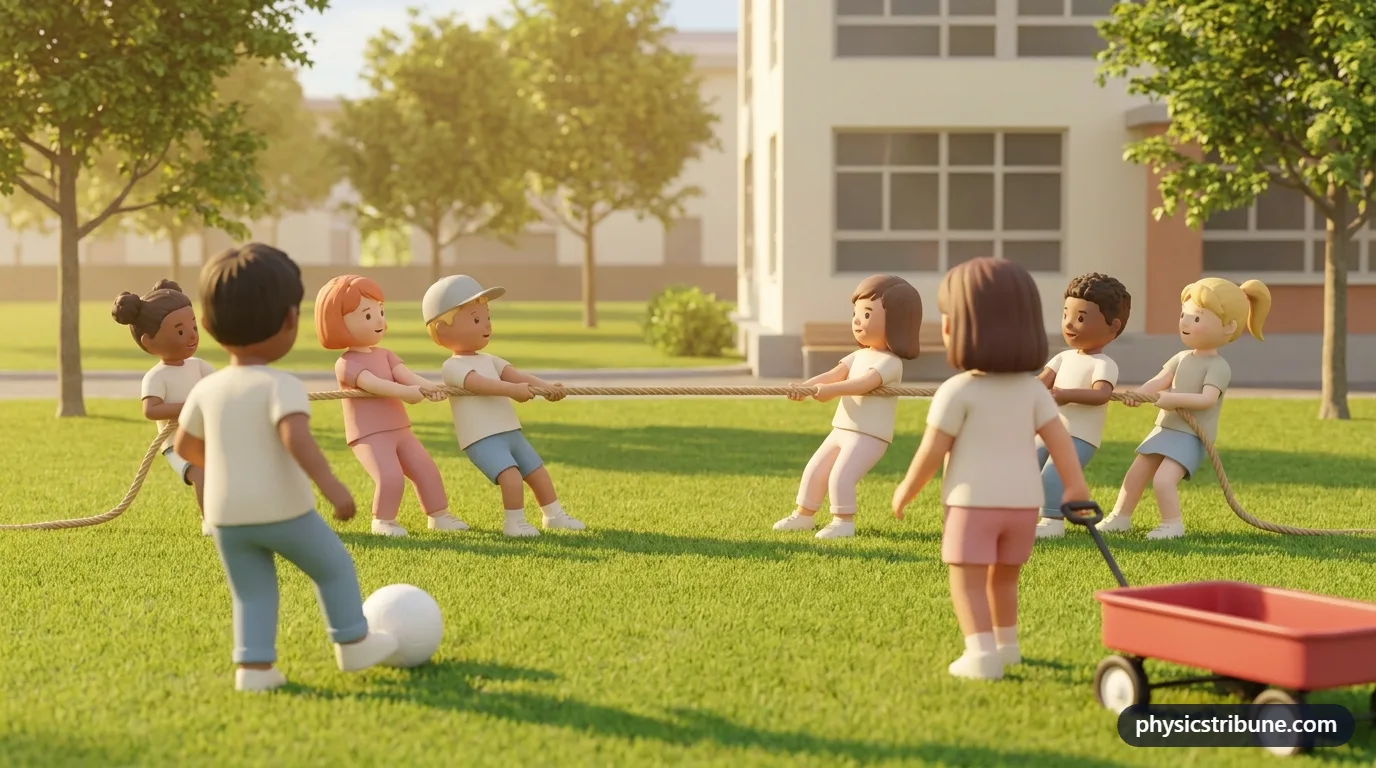
This idea is called inertia. Think about a soccer ball on the grass. It will not start rolling by itself. Someone has to kick it.
Here is another example. You are riding in a car, and the car stops fast. Your body keeps moving forward! That is why we wear seat belts.
So why does a rolling ball stop? The grass rubs against it. That rubbing force is called friction. Grown-ups can read more about Newton's first law.
What Is Newton's Second Law?
The second law is about how much things speed up. It has two simple parts.
- A bigger force makes a bigger change. Tap a ball gently, and it rolls slowly. Kick it hard, and it zooms away.
- Heavier things need more force. An empty shopping cart is easy to push. A full cart needs a much bigger push to get going.
Scientists say force equals mass times acceleration. Mass is how much stuff is in an object. Acceleration means speeding up, slowing down or turning. Older students can explore Newton's second law with real numbers.
What Is Newton's Third Law?
The third law says every action has an equal and opposite reaction. When you push on something, it pushes back on you just as hard.
Here are some examples:
- Swimming: You push water backward with your arms. The water pushes you forward.
- Jumping: Your legs push down on the ground. The ground pushes you up into the air.
- Balloon rocket: A balloon pushes air out the back. The air pushes the balloon forward.
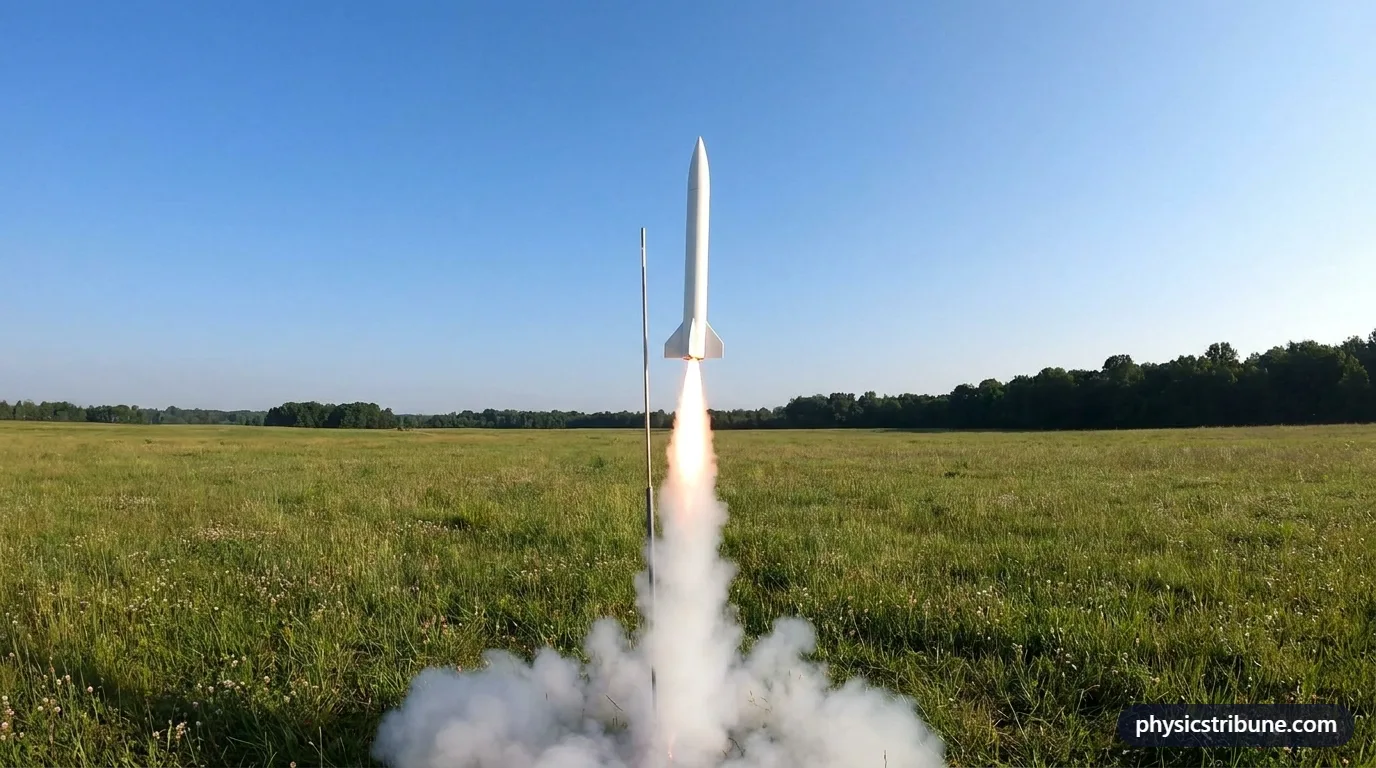
- Real rockets: Hot gas blasts down. The gas pushes the rocket up into space.
The two forces always act on different objects. That is why they do not cancel out. See more in Newton's third law.
| What happens | Which law | Why |
|---|---|---|
| A coin drops into the cup when you flick the card away | First law | The still coin stays still |
| Your seat belt holds you when the car stops fast | First law | Your moving body keeps moving forward |
| A hard kick sends a ball faster than a soft tap | Second law | A bigger force makes a bigger change |
| A full cart needs a bigger push than an empty one | Second law | More mass needs more force |
| A swimmer pushes water back and moves forward | Third law | The water pushes back on the swimmer |
| A balloon rocket zooms along its string | Third law | Air pushed out the back pushes the balloon forward |
| Source: Typical everyday examples · Retrieved October 2026 | ||
How Can You Test Newton's Laws at Home?
Try these with a grown-up nearby. Use plastic cups, not glass.
Coin and card trick (first law):
- Put a playing card on top of a plastic cup.
- Set a coin in the middle of the card.
- Flick the card sideways, fast and hard.
- Watch the coin drop straight into the cup!
The coin was still, so it wanted to stay still. The card zipped away, but the coin stayed behind.
Balloon rocket (third law):
- Thread a long string through a drinking straw.
- Tie the string tight between two chairs.
- Blow up a balloon and hold the end shut.
- Tape the balloon to the straw, then let go.
Air rushes out one way, and the balloon zooms the other way. For more practice, try our Newton's laws worksheets.

What Are Some Fun Facts About Newton's Laws?
- In space there is almost no friction. A tossed ball would keep drifting for a very long time.
- Astronauts use the third law to move. They push off a wall to float the other way.
- A squid swims by squirting water out backward, like a jet.
- The unit of force is named after Newton. It is called the newton.
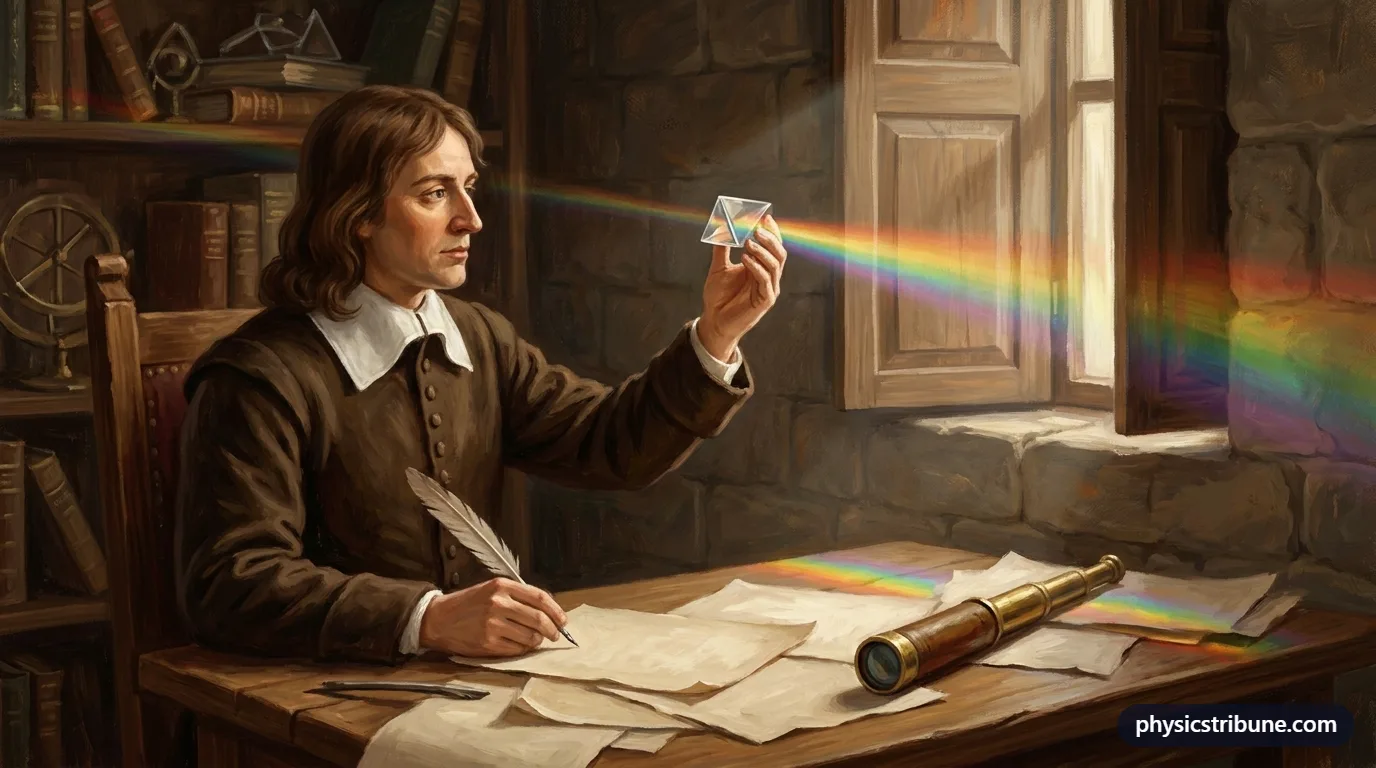
- Newton also studied gravity, light and colors.
Want to learn more about pushes and pulls? Visit forces and motion for kids.
Common Misconceptions
Myth: A moving object stops because it runs out of force.
Physics: Moving objects slow down because forces like friction and air push against them. Without those forces, they would keep going.
Myth: Action and reaction forces cancel each other out.
Physics: The two forces act on different objects, so they do not cancel. That is why a swimmer can still move forward.
Key Facts
- Isaac Newton published his three laws of motion in 1687.
- First law: objects keep still or keep moving unless a force acts on them.
- Second law: a bigger force causes a bigger change, and heavier objects need more force.
- Third law: every action has an equal and opposite reaction.
- Friction is the force that makes rolling and sliding things slow down.
Quick Quiz: How Well Do You Know Newton's Laws of Motion for Kids?
5 questions. Tap an answer to check it.
Which law is also called the law of inertia?
The first law says objects keep doing what they are doing, which is inertia.
Which cart needs a bigger push to speed up?
A full cart has more mass, so it needs more force.
When you jump, what pushes you up?
You push down on the ground, and the ground pushes you up.
Why does a rolling ball on grass slowly stop?
Friction from the grass acts against the ball's motion.
In what year did Newton publish his laws of motion?
Newton published the laws of motion in 1687.
Frequently Asked Questions
What are Newton's 3 laws of motion for kids?
Newton's first law says things keep still or keep moving unless a force changes them. The second law says a bigger force makes a bigger change, and heavier things need more force. The third law says every push gets an equal push back. Together they explain how everything around us moves.
What is an example of Newton's first law?
A ball resting on the floor stays still until someone kicks it. Another example is riding in a car that stops suddenly. Your body keeps moving forward, which is why seat belts are important. Both show inertia, which means objects keep doing what they are already doing.
What is an example of Newton's second law?
Pushing a shopping cart is a great example. An empty cart speeds up easily with a small push. A cart full of groceries needs a much bigger push to speed up the same amount. More mass needs more force, and a stronger push makes a bigger change in motion.
What is an example of Newton's third law?
When you jump, your legs push down on the ground. The ground pushes back up on you, and you rise into the air. Swimming works the same way. You push water backward, and the water pushes you forward. Rockets also fly this way by pushing hot gas down.
Who was Isaac Newton?
Isaac Newton was a scientist and mathematician from England. He was born in 1643. He wrote down the three laws of motion and explained how gravity works. He also studied light and showed that white light contains many colors. Many people think he was one of the greatest scientists ever.
What is inertia in simple words?
Inertia means objects do not like to change what they are doing. A still object wants to stay still. A moving object wants to keep moving in the same direction. Heavier objects have more inertia, so they are harder to start or stop. Inertia is the main idea of Newton's first law.