
At a Glance
Physics is the study of matter, energy, forces and motion. For kids, it means asking how everyday things work, like why balls bounce, why lights turn on and why ice melts. Kids learn physics best by watching, testing small ideas at home and talking about what they saw.
- Who it is for
- Kids in grades 3 to 5, plus parents and teachers
- Big topics
- Forces, energy, electricity, magnets, light, sound, matter
- On every page
- 5 quick facts, simple explanation, try-it-at-home idea, quiz
- Reading level
- Short sentences, everyday words
- Safety
- Every experiment uses safe household items with an adult nearby
On this page
What Is Physics for Kids?
Physics is the science that asks how the world works. It looks at things you can push, things that move and things that give off light or heat. A physicist is a person who asks questions and then tests them.
You already do physics every day. When you kick a ball, you use a force. When you switch on a lamp, you use electricity. When you hear a dog bark, sound travels to your ears.
Physics is about noticing. Why does a sled go faster on a steep hill? Why does a spoon in hot soup get warm? Every page in this section starts with a question like that.
What Are the Big Topics in Kids Physics?
We split kids physics into a few big groups. Each group has its own guide with smaller pages inside it.
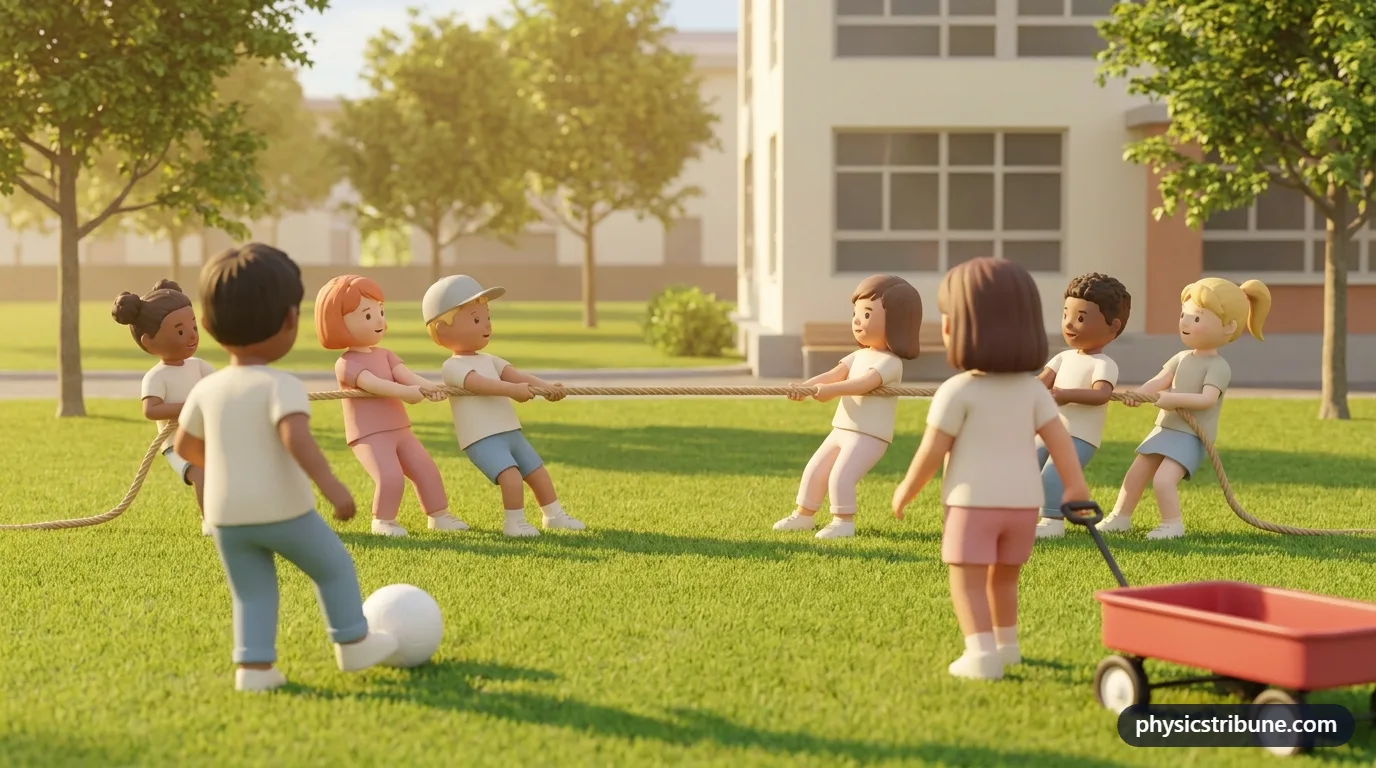
- Forces and motion: pushes, pulls, gravity, friction and speed.
- Energy: what makes things move, glow and warm up.
- Electricity and magnetism: circuits, batteries, static and magnets.
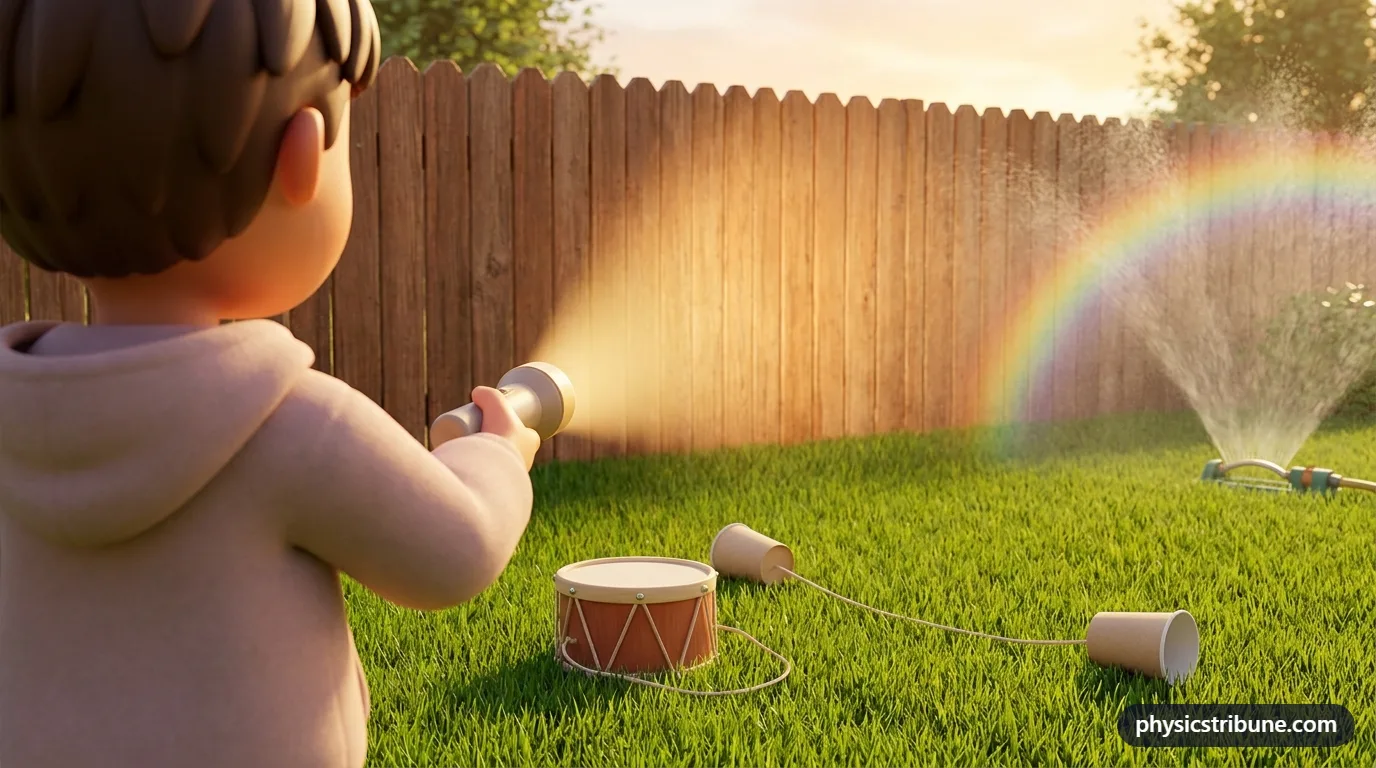
- Light and sound: shadows, mirrors, rainbows and echoes.
- Matter: solids, liquids, gases, atoms and materials.
- Simple machines: levers, pulleys, ramps and wheels.
- Famous physicists: the curious people who found these ideas.
| Big idea | What it means | You can see it when... |
|---|---|---|
| Force | A push or a pull | You open a door or pull a wagon |
| Gravity | The pull that makes things fall | An apple drops from a tree |
| Friction | A force that slows sliding things | Your bike brakes stop the wheels |
| Energy | What makes things move, glow or warm up | A wind-up toy zips across the floor |
| Electricity | Moving charges that power devices | A flashlight turns on |
| Magnetism | A pull or push from magnets | A note sticks to the fridge |
| Light | Energy that lets us see | Sunlight makes your shadow |
| Sound | Vibrations that travel to your ears | A drum booms when you hit it |
| Matter | Anything that takes up space | Ice melts into water |
| Source: Written by our editors for grades 3 to 5 · Retrieved October 2026 | ||
What Will You Find on Each Kids Page?
Every kids page follows the same easy plan, so you always know where to look. It opens with five quick facts. Then it explains the idea like you are nine years old.
Next comes a Try it at home activity. It uses things like cups, balloons, coins and string. After that you get fun facts, a printable activity sheet and a short quiz to check what you learned.
The quiz has five questions. If you miss one, read that part again and try once more. Getting it wrong is how scientists learn too.
Where Should Kids Start Learning Physics?
Start with things you can feel with your own hands. Then move to things you can see but not touch. Here is a path that works well:
- Pushes and pulls, then gravity and friction.
- Speed and motion, then Newton's laws.
- Kinetic and potential energy, then heat.
- States of matter and density.
- Electricity, circuits and magnets.
- Light and sound.
There is no rush. One page a week is plenty for most kids.
What Is an Easy Physics Experiment for Kids?
Here is one you can do right now. Hold a sheet of paper and a book at the same height. Drop them together. The book lands first.
Now lay the paper flat on top of the book and drop them again. This time they fall together. The book pushes the air out of the way, so the paper is not slowed down by it. That shows air pushes back on falling things.
Want more? Older kids can try the static electricity balloon, the paper helicopter or the lemon battery. Our list of easy experiments at home has many more.
How Can Parents and Teachers Use These Pages?
Read a page together and stop at each quick fact. Ask your child to guess before you read the answer. Guessing first makes the real answer stick.
The pages line up with common elementary science topics, such as forces, energy, magnets, light and matter. Each one links to the grown-up version of the same idea, like our forces guide or energy guide, so you can check a detail. When kids grow older, they can move on to our physics worksheets and full lessons.
All Physics for Kids (7)




Key Facts
- Physics is the science of matter, energy, forces and motion.
- A force is a push or a pull.
- Energy is never used up; it just changes into another kind.
- Sound is made by things that shake back and forth.
- Light travels faster than anything else.
- Everything around you is made of tiny atoms.
Frequently Asked Questions
What is physics in simple words for kids?
Physics is the science of how things move and change. It studies pushes and pulls, energy, light, sound, electricity and the stuff everything is made of. A simple way to say it is that physics asks how the world works and then tests the answer with experiments. You already use physics when you ride a bike or throw a ball.
What are the main topics of physics for kids?
Most elementary science lessons cover forces and motion, energy, electricity and magnetism, light and sound, and matter. Simple machines like levers and ramps are another favorite. Our kids pages are grouped the same way, so you can pick one topic and work through its smaller pages one at a time.
At what age can kids start learning physics?
Kids start learning physics as soon as they drop a spoon from a high chair and watch it fall. Simple ideas like pushes, pulls and floating fit preschool. Our pages are written for grades 3 to 5, roughly ages 8 to 11, with short sentences and safe home activities that a parent can help with.
How can I make physics fun for my child?
Turn every lesson into a small test. Ask your child to guess what will happen, try it, and talk about why. Balloons, toy cars, cups of water and flashlights make great tools. Keep it short and let your child lead the questions, then look up the answer together on the matching kids page.
What is a famous physicist kids should know?
Isaac Newton is a great place to start, because he explained gravity and how forces make things move. Other favorites are Galileo, who studied falling objects, Marie Curie, who studied radioactivity, and Albert Einstein, who changed how we think about light and time. Our famous physicists for kids guide tells their stories.
Are the experiments on these pages safe?
Yes. Every try-it-at-home activity uses common household things like paper, cups, balloons, coins and string. None use wall power, flames or sharp tools. We still ask that an adult stays nearby, especially when water, small parts or batteries are involved, and that kids wash their hands afterward.
