At a Glance
Gravity is a pulling force between all things that have mass. Bigger and closer objects pull harder, so huge Earth pulls everything toward its center. Near the ground, falling things speed up by about 9.8 meters per second every second.
- What it is
- A pull between all things that have mass
- Which way on Earth
- Down, toward Earth's center
- Gets stronger with
- More mass and less distance
- Falling speed-up near Earth
- About 9.8 m/s every second
- Famous scientists
- Galileo and Isaac Newton
On this page
What Is Gravity?
Toss a ball up in the air. It always comes back down. Something invisible is pulling it toward the ground. That pull is called gravity.
Every object pulls on every other object, even you and your pencil. Most of these pulls are far too weak to notice. Earth is so huge that its pull is easy to feel.
Gravity is a type of pull that works without touching. It reaches across empty space. That is how the Sun can hold Earth in place from very far away.
What Makes Gravity Stronger or Weaker?
Two things change how strong gravity is. The first is mass, which means how much stuff an object has. More mass gives a stronger pull.
The second is distance. Objects that are closer pull on each other harder. Move them farther apart, and the pull fades quickly.
The Sun has far more mass than Earth, so its pull is enormous. But you are much closer to Earth. That is why Earth's pull is the one keeping your feet on the ground.
Is Weight the Same as Gravity?
Your weight is how hard gravity pulls on you. Your mass is how much stuff you are made of. These two ideas are close, but they are not the same.
Your mass stays the same everywhere. Your weight changes when gravity changes. The Moon's gravity is only about one-sixth as strong as Earth's. So on the Moon you would weigh about one-sixth as much, and you could jump much higher.
On giant Jupiter, gravity is stronger than on Earth. There you would feel heavier and find it harder to stand up.
| World | Gravity compared with Earth | Weight of a 60-pound kid |
|---|---|---|
| The Moon | About 1/6 | About 10 pounds |
| Mercury | About 3/8 | About 23 pounds |
| Mars | About 3/8 | About 23 pounds |
| Venus | A little less (about 9/10) | About 54 pounds |
| Earth | The same | 60 pounds |
| Jupiter | About 2 and 1/2 times | About 150 pounds |
| Source: Computed from typical surface gravity values: Earth 9.8, Moon 1.6, Mercury 3.7, Mars 3.7, Venus 8.9 and Jupiter 24.8 meters per second every second · Retrieved October 2026 | ||
Do Heavy Things Fall Faster Than Light Things?
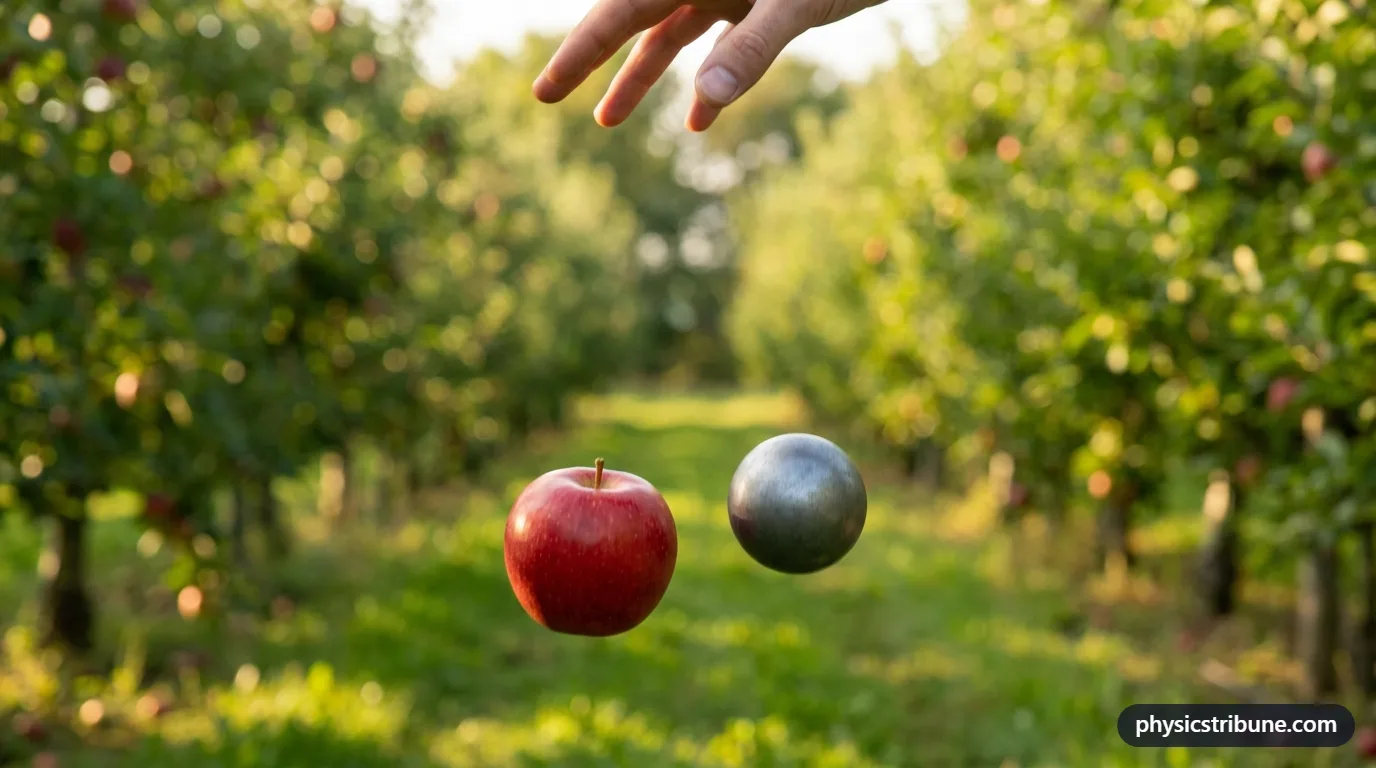
Many people guess that a heavy rock falls faster than a pebble. Long ago, the scientist Galileo tested this idea. He found that without air in the way, they fall at the same speed.
So why does a feather float down slowly? Air pushes up on it as it falls. A feather is light and wide, so the air slows it a lot.
Astronauts tried this on the Moon, where there is no air. A hammer and a feather landed at the same moment. Our page on why objects fall at the same rate tells the full story.
How Does Gravity Work in Space?
Gravity holds the whole solar system together. The Sun's pull keeps Earth and the other planets moving in big loops called orbits. Earth's pull keeps the Moon in its orbit too.
The Moon pulls back on Earth as well. Its pull lifts the oceans a little, which causes the tides at the beach.
Astronauts on a space station float, but gravity has not vanished. They and their station are falling around Earth together. Because everything falls at once, they feel weightless.
Try It at Home: Can Paper Fall as Fast as a Book?
You need a hardcover book and a sheet of paper smaller than the book.
- Hold the book in one hand and the flat paper in the other.
- Drop them at the same time from the same height.
- Watch the paper drift down slowly.
- Now lay the paper flat on top of the book.
- Drop the book again and watch the paper.
On top of the book, the paper falls just as fast. The book blocks the air from pushing on it. This shows that air, not weight, slowed the paper down.

What Are Some Fun Facts About Gravity?
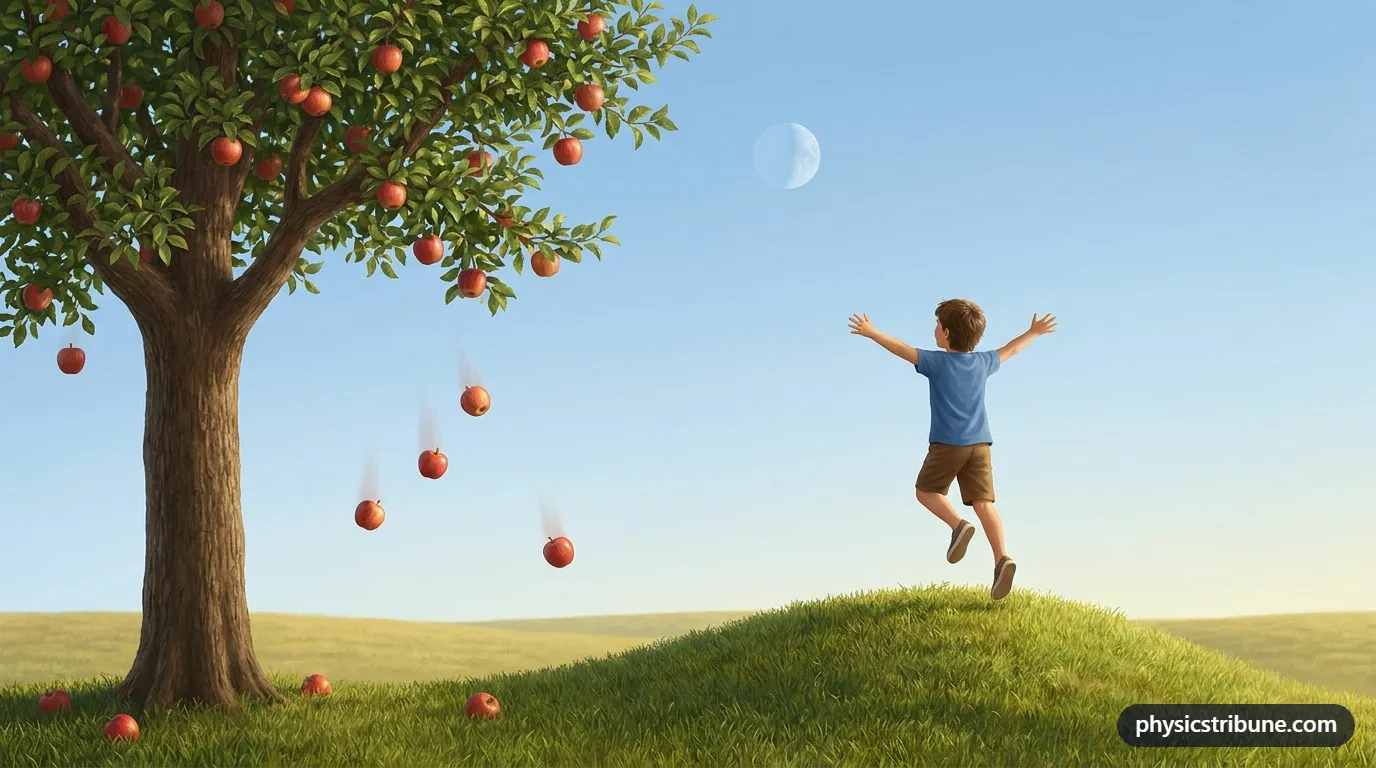
- A famous story says a falling apple got Isaac Newton thinking about gravity.
- Astronauts can grow a little taller in space, because their spines stretch out.
- Gravity from the Sun reaches far beyond the farthest planet.
- Black holes have gravity so strong that not even light escapes.
- You pull on Earth a tiny bit too, just as it pulls on you.
Common Misconceptions
Myth: There is no gravity in space.
Physics: Gravity reaches far into space. Astronauts float because they are falling around Earth, not because gravity is gone.
Myth: Heavy things always fall faster.
Physics: Without air in the way, heavy and light things fall at the same speed. Air slows down light, wide things like feathers.
Key Facts
- Gravity is a pull between all things that have mass.
- Bigger objects and closer objects pull harder.
- Earth's gravity pulls everything toward its center, which we call down.
- Without air, heavy and light objects fall at the same speed.
- Gravity keeps the Moon around Earth and the planets around the Sun.
Quick Quiz: How Well Do You Know Gravity for Kids?
5 questions. Tap an answer to check it.
Which way does Earth's gravity pull you?
Earth pulls everything toward its center, which we call down.
What makes gravity stronger?
More mass and less distance both make the pull stronger.
On the Moon, you would weigh...
The Moon's gravity is only about one-sixth as strong as Earth's.
Without air, a hammer and a feather fall...
Gravity speeds up all objects the same when there is no air.
What keeps the Moon going around Earth?
Earth's gravity pulls on the Moon and keeps it in orbit.
Frequently Asked Questions
What is gravity in simple words?
Gravity is an invisible pull between things that have mass. Earth is very big, so it pulls everything toward its center. That is why a dropped toy falls to the floor. Gravity also keeps the Moon going around Earth and keeps Earth going around the Sun.
Why don't we fall off the Earth?
Earth's gravity pulls everything toward its center. So no matter where you stand, down always points into the ground. People in Australia and people in Canada both feel pulled toward Earth's middle. Nobody is upside down, and nobody falls off into space.
Is there gravity on the Moon?
Yes. The Moon has gravity, but it is only about one-sixth as strong as Earth's. That is because the Moon has much less mass. Astronauts on the Moon could bounce and hop high while wearing heavy suits. A dropped tool still fell down, just more slowly.
Who discovered gravity?
People always knew that things fall. Galileo tested how things fall and found they speed up at the same rate. Later, Isaac Newton explained that the same pull makes apples fall and keeps the Moon in orbit. Albert Einstein later gave an even deeper picture of gravity.
Why do astronauts float in space?
Astronauts on a space station are moving around Earth very fast while falling toward it. Their station falls at the same rate, so nothing pushes against their feet. That makes them feel weightless and float. Gravity is still pulling on them the whole time.
What would happen without gravity?
Without gravity, nothing would stay on the ground. Air and oceans would drift off into space. The Moon would stop circling Earth, and Earth would leave the Sun. Stars and planets could never have formed in the first place, so gravity is very important.