
At a Glance
Each calculator solves one physics formula for any of its variables, such as KE = ½mv² or V = IR, converts units for you and shows the substitution step by step. Pick the tool that matches your formula, enter the known values, and read the answer with its SI unit.
- What it covers
- Motion, forces, energy, electricity, waves, optics, heat, gravity, modern physics
- Number of tools
- 50+ calculators and converters
- Solve for
- Any variable in the formula, not only the usual one
- Units
- SI by default, with dropdowns for common non-SI units
- Constants
- NIST CODATA 2022 values
- Cost
- Free, no sign-up
On this page
- What Can Our Physics Calculators Do?
- Which Physics Calculator Should I Use?
- What Calculators Are There for Each Branch of Physics?
- How Accurate Are the Results?
- How Do the Calculators Handle Units?
- In What Order Should Students Use the Calculators?
- How Do You Get the Most Out of a Physics Calculator?
- All pages in this guide
- Key Facts
- FAQ
What Can Our Physics Calculators Do?
Every tool on this page is built around a single formula or a small family of closely related ones. You type the values you know, choose the unit each one is in, and the calculator works out the missing quantity. The answer appears as a sentence you can read aloud, not just a bare number.
Most tools can solve in any direction. The kinetic energy calculator, for example, finds energy from mass and speed, but it can also find the speed a 2 kg ball needs to carry 100 J. That flexibility matters because textbook problems rarely ask for the variable on the left-hand side.
Below each result you will see the formula, the values substituted with their units and the arithmetic. If your own working gives a different number, comparing the two lines usually shows exactly where the mistake crept in.
Which Physics Calculator Should I Use?
Start from the quantity you want and the quantities you already have. If you know a distance and a time, you need the speed, distance and time calculator. If you know a force and a mass and want the acceleration, use the force calculator, which applies Newton's second law.
When a problem involves several steps, such as a ball thrown off a cliff, a single-formula tool is not enough. The kinematics equation solver and the projectile motion calculator handle the whole chain for constant acceleration. For circuits, the Ohm's law calculator covers one resistor, while the series and parallel resistor calculator combines many.
The table of key formulas further down maps each common equation to the tool that solves it. If you are unsure which equation applies, the physics formula sheets group every equation by topic with its variables and units.
| Quantity | Formula | SI unit of result | Calculator |
|---|---|---|---|
| Average speed | s = d / t | m/s | Speed, distance and time |
| Acceleration | a = Δv / Δt | m/s² | Acceleration |
| Net force | F = m a | N | Force (F = ma) |
| Kinetic friction | f = μ N | N | Friction |
| Kinetic energy | KE = ½ m v² | J | Kinetic energy |
| Gravitational potential energy | PE = m g h | J | Potential energy |
| Work | W = F d cos θ | J | Work |
| Power | P = W / t | W | Power |
| Momentum | p = m v | kg·m/s | Momentum |
| Wave speed | v = f λ | m/s | Wave speed |
| Ohm's law | V = I R | V | Ohm's law |
| Electric power | P = I V | W | Electrical power |
| Heat for a temperature change | Q = m c ΔT | J | Specific heat |
| Centripetal force | F = m v² / r | N | Centripetal force |
| Mass-energy | E = m c² | J | E = mc² |
| Source: Formulas from our formula data set (data/formulas.json); SI units from the BIPM SI Brochure · Retrieved October 2026 | |||
What Calculators Are There for Each Branch of Physics?
The tools follow the same branches as the rest of the site, so each one sits next to the lessons it supports.
- Motion: acceleration, free fall, vector addition and the kinematics solver.
- Forces and momentum: friction, momentum, collisions, Hooke's law and inclined planes.
- Energy: potential energy, work, power and mechanical advantage.
- Electricity and magnetism: electrical power, resistor color codes, Coulomb's law, capacitors and magnetic fields.
- Waves, sound and light: wave speed, frequency and wavelength, Doppler effect, Snell's law and the thin lens equation.
- Heat and gases: specific heat, latent heat, thermal expansion and the gas law calculator.
- Gravity, rotation and modern physics: gravitational force, centripetal force, torque, half-life, photon energy and E = mc².
How Accurate Are the Results?
The arithmetic runs in double precision in your browser, so rounding inside the tool is far smaller than the uncertainty in any real measurement. Results are displayed to four significant figures by default, which is more than most school problems need.
Physical constants such as the speed of light, the gravitational constant and the elementary charge come from the NIST CODATA 2022 set, and unit definitions follow the SI as published by the BIPM. Where a tool uses a typical value instead, such as 9.81 m/s² for gravity at Earth's surface, it says so and lets you change it.
The bigger risk is the model, not the math. A friction calculator assumes a constant coefficient, and a projectile tool usually ignores air resistance. Each calculator page lists its assumptions so you know when the answer is a good estimate and when reality will differ.
How Do the Calculators Handle Units?
Every input box has a unit menu. You can enter a speed in km/h or mph and a mass in grams or pounds, and the tool converts everything to SI before it calculates. Mixing units by hand is one of the most common sources of wrong answers, so letting the tool do it saves real marks.
For conversions on their own, the physics unit converter handles SI prefixes and derived units, and the temperature converter moves between Celsius, Fahrenheit and kelvin. Remember that any formula involving gas pressure or radiated heat needs temperature in kelvin.
In What Order Should Students Use the Calculators?
The tools are most useful when you solve the problem on paper first and then check. A sensible order for a first physics course is:
- Speed, distance and time, then acceleration.
- Force with F = ma and friction.
- Kinetic energy, potential energy and work.
- Momentum and collisions.
- Wave speed and frequency and wavelength.
- Ohm's law and electrical power.
- Specific heat and the gas laws.
For extra practice with answer keys, pair each step with the matching set in our printable physics worksheets.
How Do You Get the Most Out of a Physics Calculator?
Write down what you know and what you want before you open a tool, including units. Then estimate the answer roughly in your head: a car's kinetic energy should be in the hundreds of thousands of joules, not a few dozen. If the calculator disagrees with your estimate by a factor of a thousand, check for a missed kilo prefix.
Finally, read the steps rather than copying the final number. Teachers grade the method, and the step-by-step display is there so you can learn the method, not skip it.
All Physics Calculators (53)
 calculatorsAcceleration Calculator
 calculatorsBuoyant Force Calculator
 calculatorsCapacitors in Series & Parallel Calculator
 calculatorsCentripetal Force & Acceleration Calculator
 calculatorsCircuit Builder (series/parallel simulator)
 calculatorsElastic & Inelastic Collision Calculator
 calculatorsCoulomb's Law Calculator
 calculatorsDecibel & Sound Intensity Calculator
 calculatorsDensity Calculator
 calculatorsDoppler Effect Calculator
 calculatorsE = mc² Calculator (mass-energy)
 calculatorsElectrical Power Calculator (watts, volts, amps)
 calculatorsEscape & Orbital Velocity Calculator
 calculatorsForce Calculator (F = ma)
 calculatorsFree Fall Calculator
 calculatorsFrequency ↔ Wavelength Converter
 calculatorsFriction & Coefficient of Friction Calculator
 calculatorsGravitational Force Calculator
 calculatorsHalf-Life & Radioactive Decay Calculator
 calculatorsHooke's Law & Spring Constant Calculator
 calculatorsGas Law Calculator (ideal, Boyle, Charles, combined)
 calculatorsInclined Plane Calculator
 calculatorsKinematics (SUVAT) Equation Solver
 calculatorsKinetic Energy Calculator
 calculatorsLatent Heat Calculator (Q = mL)
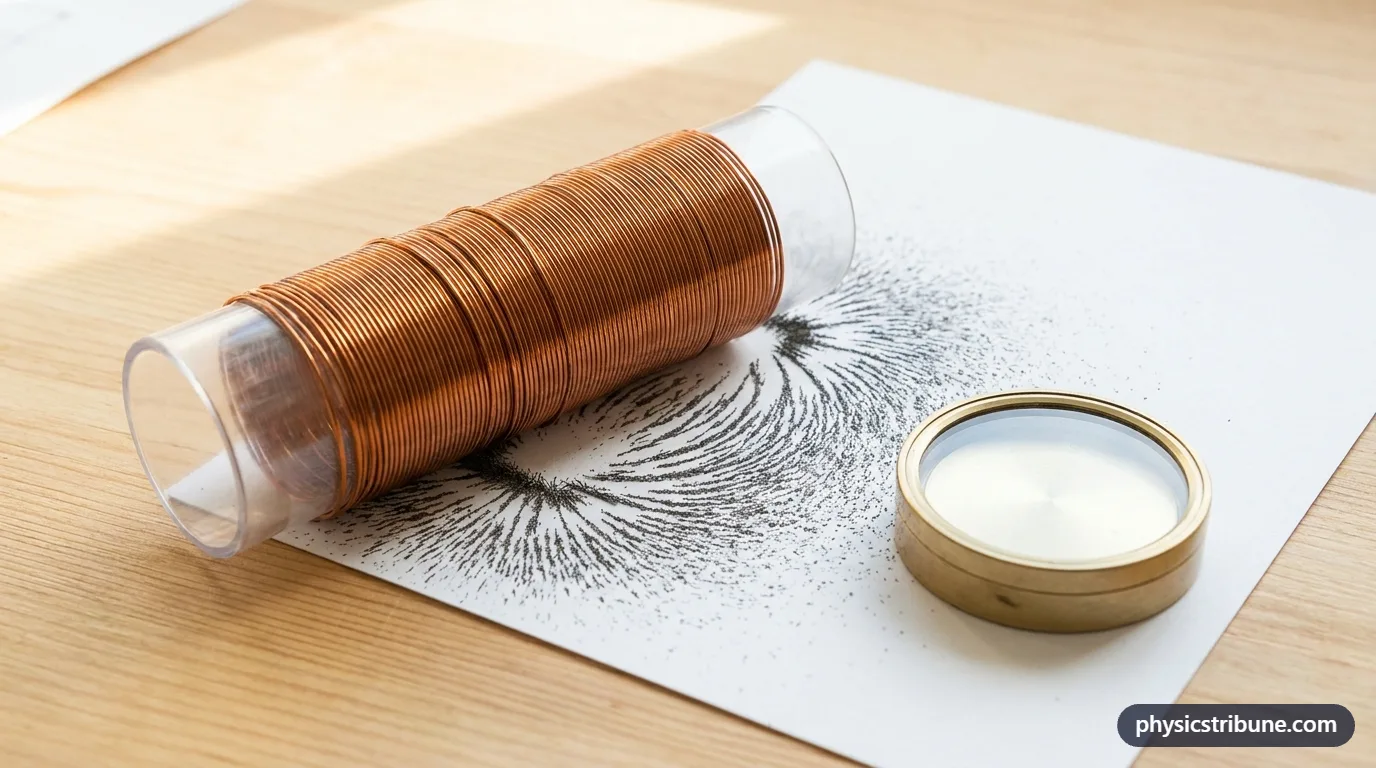 calculatorsMagnetic Field Calculator (wire, solenoid)
 calculatorsMechanical Advantage Calculator (levers, pulleys, ramps)
 calculatorsMirror Equation Calculator (concave & convex)
 calculatorsMomentum Calculator
 calculatorsOhm's Law Calculator
 calculatorsPendulum Period Calculator & Simulator
 calculatorsPhoton Energy Calculator
 calculatorsPhysics Unit Converter (SI, prefixes, derived units)
 calculatorsPotential Energy Calculator
 calculatorsPower Calculator (Physics)
 calculatorsPressure Calculator (P = F/A)
 calculatorsProjectile Motion Calculator & Simulator
 calculatorsResistor Color Code Calculator (4, 5, 6 band)
 calculatorsSeries & Parallel Resistor Calculator
 calculatorsAngular Velocity, Moment of Inertia & Rotational KE
 calculatorsSnell's Law & Critical Angle Calculator
 calculatorsSpecific Heat Calculator (Q = mcΔT)
 calculatorsSpeed, Distance & Time Calculator
 calculatorsSpeed of Sound Calculator
 calculatorsTemperature Converter (°C, °F, K)
 calculatorsThermal Expansion Calculator
 calculatorsThin Lens Equation Calculator (with ray diagram)
 calculatorsTime Dilation & Lorentz Factor Calculator
 calculatorsTorque Calculator (Physics)
 calculatorsVector Addition Calculator (Physics)
 calculatorsVoltage Divider Calculator
 calculatorsWave Speed Calculator
 calculatorsWork Calculator (Physics)
Key Facts
- Each physics calculator solves one formula for any of its variables, not just the usual unknown.
- Inputs can be entered in common non-SI units and are converted to SI before the calculation.
- Physical constants come from the NIST CODATA 2022 set.
- Every result shows the formula, the substituted values with units and the arithmetic.
- Each tool lists its assumptions, such as ignoring air resistance or using g = 9.81 m/s².
- All calculators are free and work in the browser without an account.
Frequently Asked Questions
Are these physics calculators free?
Yes. Every calculator on this page is free to use, with no sign-up and no limit on how many problems you solve. The tools run in your browser, so they keep working on a phone or a school laptop, and each one shows the full working so you can learn the method as well as check the answer.
Can a physics calculator solve for any variable?
Most of ours can. Each tool is built on a formula and its rearranged forms, so you choose which quantity is unknown and fill in the rest. A kinetic energy tool can return energy, mass or speed, and an Ohm's law tool can return voltage, current or resistance. The steps update to show the rearranged equation you would write on paper.
What units do the calculators use?
They calculate in SI units: meters, kilograms, seconds, newtons, joules, watts, volts and kelvin. You can still type values in units such as km/h, grams, miles or degrees Fahrenheit, because each input has a unit menu and the tool converts before calculating. The answer is shown in SI and, where helpful, in a familiar everyday unit too.
Is it cheating to use a physics calculator for homework?
Using a calculator to check work you have already done is good practice, not cheating. The danger is copying a number without understanding it, because tests rarely allow online tools. Solve the problem on paper first, then compare your steps with the calculator's steps. Where they differ, you have found the exact line to fix.
Which constants do the calculators use?
Fundamental constants such as the speed of light, Planck's constant and the gravitational constant come from the NIST CODATA 2022 recommended values. Standard gravity at Earth's surface is taken as 9.81 m/s² in school-level tools, and you can change it to work on the Moon or another planet. Each calculator page states the constants it relies on.
What if my problem needs more than one formula?
Break it into steps and use one tool per step, carrying the result forward. For common multi-step problems we offer combined tools, such as the kinematics equation solver for constant acceleration and the projectile motion calculator for launched objects. The formula sheets help you spot which equations link the quantities you have to the one you need.
Keep Exploring
calculatorsKinetic Energy CalculatorcalculatorsForce Calculator (F = ma)calculatorsOhm's Law CalculatorcalculatorsSpeed, Distance & Time CalculatorcalculatorsProjectile Motion Calculator & SimulatorcalculatorsPhysics Unit Converter (SI, prefixes, derived units) formulasPhysics Formulas
 worksheetsPhysics Worksheets