At a Glance
Sound is energy made by vibrations that travel as waves through air, water or solids. In air it moves at about 343 meters per second. Sound needs something to travel through, so there is no sound in empty space.
- What it is
- Energy made by vibrations
- Travels through
- Air, water and solids
- Speed in air
- About 343 meters per second
- In empty space
- Cannot travel at all
- We hear it with
- Our ears and brain
- Grade level
- Grades 3 to 5
On this page
What Is Sound?
Sound is a kind of energy. It starts when something vibrates. To vibrate means to shake back and forth very quickly.
Put your fingers on your throat and hum. Do you feel a buzz? Those are your vocal cords vibrating. That buzz is making the sound of your voice.
A plucked guitar string vibrates. So does a drum skin when you hit it. Every sound you hear begins with a vibration like these.
Grown-ups can read more in our guide to sound waves.
How Does Sound Travel?
A vibrating object bumps the tiny bits of air next to it. Those bits bump their neighbors, and so on. The bumping spreads out like ripples in a pond. This moving pattern is a sound wave.
Sound needs something to travel through. It can move through air, water and solids like wood or metal. In air, sound travels about 343 meters every second.
Sound actually moves faster in water and solids. Put your ear on a table and tap the far end. The tap sounds loud and clear! Find out why in why sound travels faster in solids.
Space is almost empty, with nothing to bump. So sound cannot travel in space. Astronauts use radios to talk.
What Are Pitch and Loudness?
Sounds can be high or low. This is called pitch. Fast vibrations make high sounds, like a bird chirping. Slow vibrations make low sounds, like a big drum.
Sounds can also be loud or soft. Big, strong vibrations make loud sounds. Small, gentle ones make soft sounds. We measure loudness in units called decibels.
Very loud sounds can hurt your ears. Cover your ears near fireworks or loud machines.
| Sound | About how loud | Safe for your ears? |
|---|---|---|
| A whisper | 30 decibels | Yes |
| Friends talking | 60 decibels | Yes |
| A vacuum cleaner | 75 decibels | Yes |
| A lawn mower | 90 decibels | Only for a short time |
| A loud rock concert | 110 decibels | No, wear ear plugs |
| Fireworks up close | 140 decibels | No, it can hurt your ears right away |
| Source: Typical everyday values · Retrieved October 2026 | ||
How Do Our Ears Hear Sound?
Your outer ear is shaped like a cup. It catches sound waves and sends them inside.
- Sound waves travel down a tube to your eardrum.
- The eardrum is a thin skin. It vibrates when sound hits it.
- Three tiny bones pass the vibrations along.
- A snail-shaped part filled with liquid turns them into signals.
- Nerves carry the signals to your brain. Your brain says, "That's music!"
It all happens in a split second. Learn more about how we hear.
What Is an Echo?
Sound can bounce off hard surfaces, like light bounces off a mirror. A sound that bounces back to you is called an echo.
Shout in an empty gym or a big canyon. You might hear your voice again a moment later. Soft things like pillows and curtains soak up sound, so they stop echoes.
Bats and dolphins use echoes to find food. They make clicks and listen for the echoes. The echoes tell them where things are.
Can You Try Sound Experiments at Home?
Yes! Ask a grown-up to help you with these.
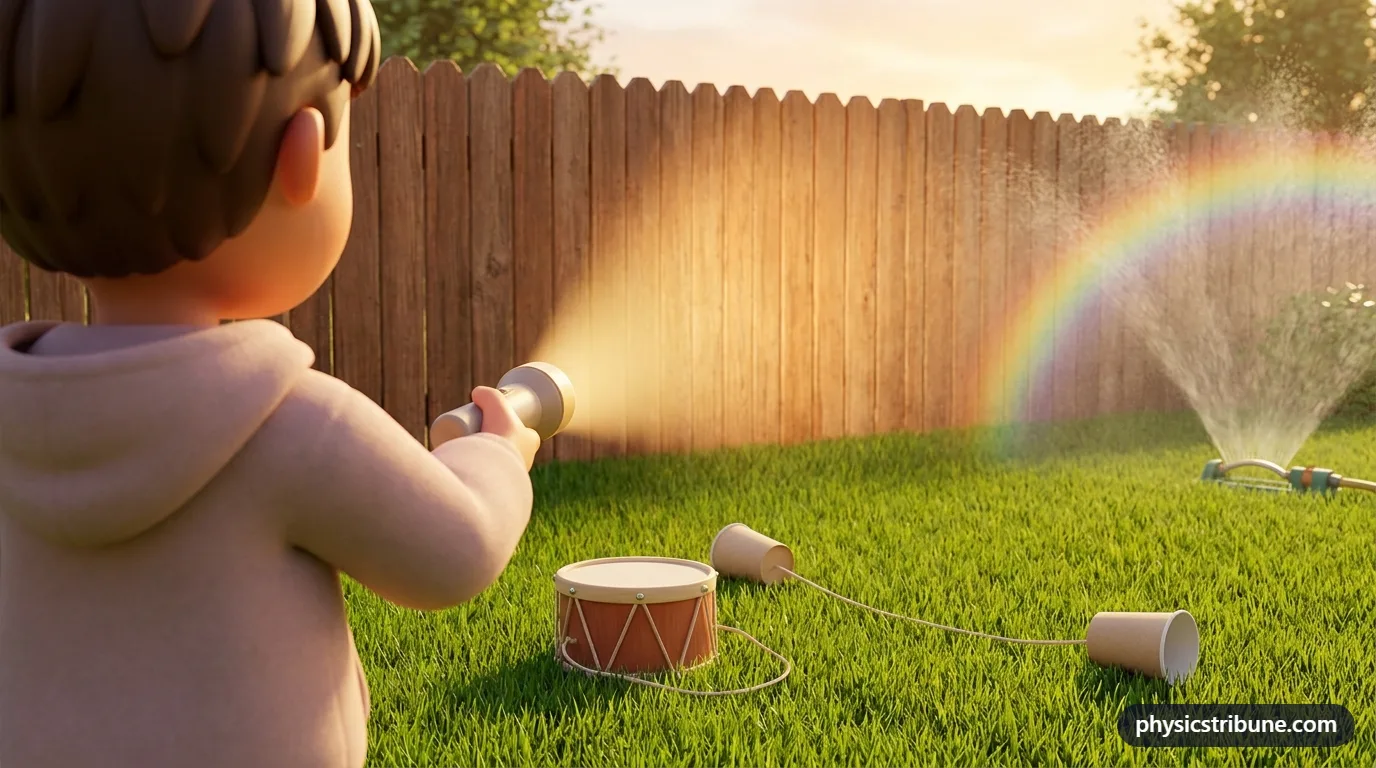
Make a cup phone:
- Poke a small hole in the bottom of two paper cups.
- Thread a long string through both holes and tie knots inside.
- Walk apart until the string is tight.
- Talk into one cup while a friend listens in the other.
Your voice vibrates the cup. The tight string carries the vibrations to your friend.
Rubber band guitar: Stretch rubber bands of different thickness around an open box. Pluck each one. Thin, tight bands sound high. Thick, loose bands sound low.
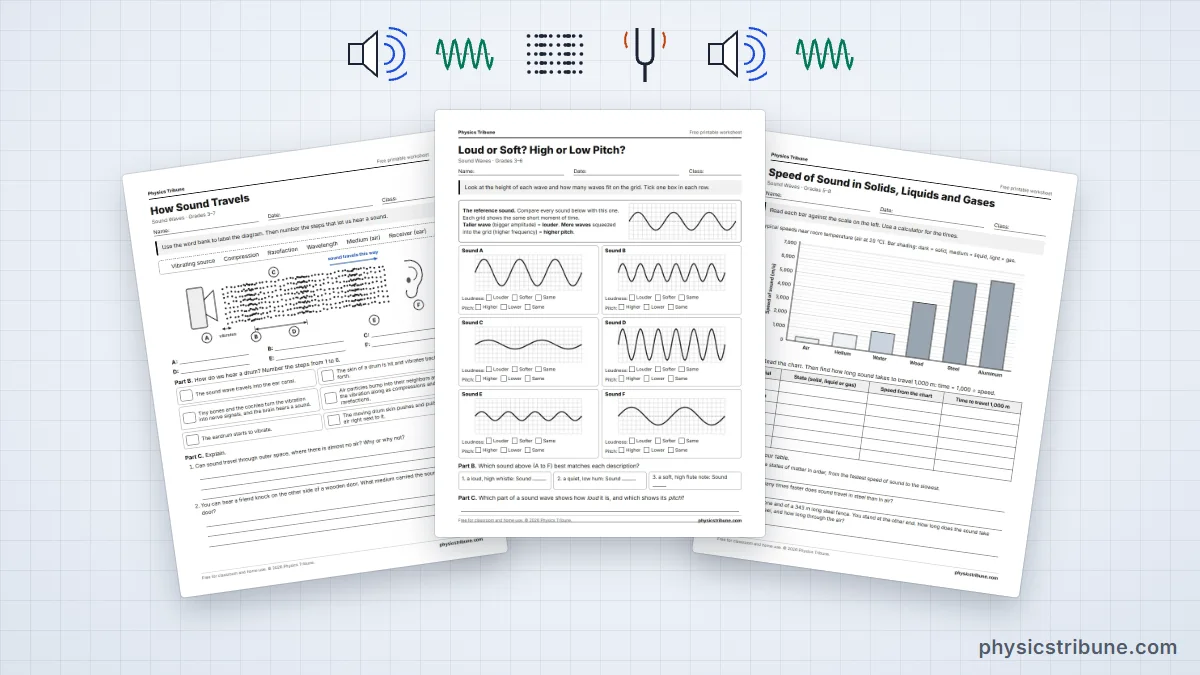
Next, explore light, sound's partner, in light for kids. Older students can try our sound waves worksheets.

Common Misconceptions
Myth: Sound can travel through space.
Physics: Sound needs air, water or a solid to travel through. Space is nearly empty, so it is silent there.
Myth: Loud sounds are always high and soft sounds are always low.
Physics: Loudness and pitch are different. A sound can be loud and low, like a big drum, or soft and high, like a quiet whistle.
Key Facts
- Sound is energy made by vibrations.
- Sound travels as waves through air, water and solids.
- In air, sound moves at about 343 meters per second.
- Sound cannot travel through empty space.
- Fast vibrations make high pitches, and slow vibrations make low pitches.
Quick Quiz: How Well Do You Know Sound for Kids?
5 questions. Tap an answer to check it.
What starts every sound?
All sounds begin when something vibrates back and forth.
Where can sound NOT travel?
Space is nearly empty, so there is nothing to carry sound.
What kind of vibrations make a high pitch?
Faster vibrations make higher sounds.
What is a sound that bounces back to you called?
A bounced-back sound is an echo.
Which part of your ear vibrates first when sound arrives?
Sound waves hit the eardrum first and make it vibrate.
Frequently Asked Questions
What is sound for kids?
Sound is a kind of energy made when something vibrates, or shakes back and forth very fast. The vibrations push on the air around them and travel as sound waves. When the waves reach your ears, your eardrums vibrate too. Your brain then turns those vibrations into the sounds you hear.
How fast does sound travel?
In air at room temperature, sound travels about 343 meters every second. That is fast, but light is much faster. Sound moves even faster through water and solids like wood or steel. The tiny bits in water and solids are held together much more tightly, so each one passes the push to its neighbor more quickly.
Why can't sound travel in space?
Sound needs something to travel through, like air or water. It moves by tiny bits bumping into each other. Space is almost completely empty, so there is nothing to carry the vibrations. That means space is silent. Astronauts use radios, which send signals that can cross empty space.
What makes a sound high or low?
The speed of the vibrations decides if a sound is high or low. Fast vibrations make a high pitch, like a whistle or a bird. Slow vibrations make a low pitch, like a tuba or a bass drum. Small and tight objects usually vibrate faster than big and loose ones.
What is an echo for kids?
An echo is a sound that bounces off a hard surface and comes back to you. You can hear echoes in big empty rooms, tunnels and canyons. Hard walls bounce sound well. Soft things like pillows, rugs and curtains soak up sound, so rooms with them have fewer echoes.
How do we hear sound?
Your outer ear catches sound waves and sends them to your eardrum. The eardrum vibrates, and three tiny bones pass the vibrations deeper inside. A liquid-filled part of the inner ear turns them into signals. Nerves carry those signals to your brain, which tells you what you heard.