At a Glance
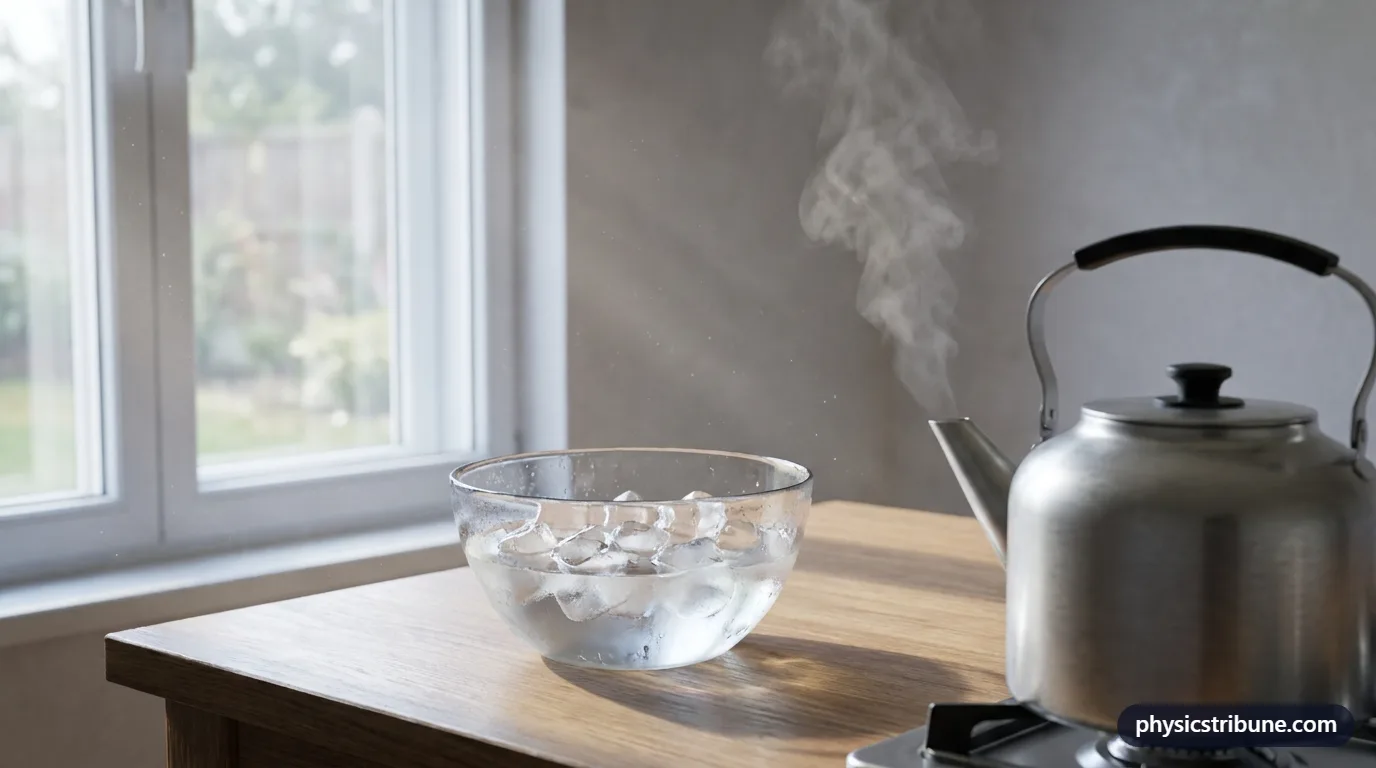
Matter comes in three main states: solid, liquid and gas. Solids keep their shape, liquids flow and take the shape of their container, and gases spread out to fill any space. Plasma is a fourth state made of super hot, glowing gas.
- Main states
- Solid, liquid, gas (plus plasma)
- Solid example
- Ice cube, rock, pencil
- Liquid example
- Water, juice, honey
- Gas example
- Air, steam, the gas in a balloon
- What changes the state
- Adding or taking away heat
- Grade level
- Grades 3 to 5
On this page
What Is Matter?
Matter is anything that takes up space and has mass. Your desk is matter. Your milk is matter. Even the air you breathe is matter.
All matter is made of tiny pieces called particles. They are much too small to see. You can learn more about them on our atoms for kids page.
The way these particles are packed and how fast they move decides the state. That is the big secret of this whole page.
What Are the 3 States of Matter?
Picture a school playground with lots of kids on it. The kids are like particles. How they stand and move shows each state.
- Solid: The kids stand in neat rows and hold hands. They wiggle in place but do not walk away. That is why a solid keeps its own shape.
- Liquid: The kids let go and slide past each other. They stay close, but they can move around. That is why a liquid flows and fills the bottom of a cup.
- Gas: The kids run all over the playground. They are far apart and zoom fast. That is why a gas spreads out to fill a whole room.
A solid has a fixed shape and a fixed size. A liquid has a fixed size but no fixed shape. A gas has no fixed shape and no fixed size at all.
What Is the Fourth State of Matter?
The fourth state is called plasma. Plasma is gas that got so hot it started to glow. Its particles break into even smaller charged bits.
You have seen plasma before. A bolt of lightning is plasma. The Sun and the stars are giant balls of plasma. Some bright signs also glow because of plasma inside the glass tube.
Older kids can read more on our plasma page. There are even stranger states that scientists make in labs, but they need super cold freezers.
How Does Matter Change From One State to Another?
Heat is the key. When you add heat, particles move faster. When you take heat away, particles slow down.
- Melting: A solid turns into a liquid. A popsicle melts on a hot day.
- Freezing: A liquid turns into a solid. Water in a tray becomes ice cubes.
- Evaporation: A liquid turns into a gas. A puddle slowly dries up in the sun.
- Condensation: A gas turns into a liquid. Drops form on a cold glass of lemonade.
Water melts and freezes at 0 °C, which is 32 °F. At sea level it boils at 100 °C, which is 212 °F. Our melting and freezing for kids page goes deeper.
| Solid | Turns liquid at about | Where you might see it melt |
|---|---|---|
| Ice | 0 °C (32 °F) | A drink on a warm day |
| Butter | 30 to 35 °C | A warm frying pan |
| Candle wax | 60 °C | Next to a candle flame |
| Table salt | 800 °C | A very hot lab oven |
| Gold | 1,064 °C | A jeweler's furnace |
| Iron | 1,538 °C | A giant steel mill furnace |
| Source: Typical everyday values (melting points at normal air pressure; butter and wax melt over a range of temperatures) · Retrieved October 2026 | ||
How Can You See the States of Matter at Home?
Try this easy ice test with a grown-up nearby. You need two ice cubes, two small plates and a sunny window.
- Put one ice cube on each plate.
- Set one plate in the sun and one in a shady spot.
- Check both plates every five minutes.
- Write down which cube melts first.
The cube in the sun gets more heat, so it melts faster. Leave the water on the plate for a day. It will slowly disappear because it evaporates into the air as a gas. You just watched a solid, a liquid and a gas all from one ice cube!

What Are Some Fun Facts About States of Matter?
- Water is special because you can find it as a solid, a liquid and a gas on the same day.
- Ice floats because water spreads out a little when it freezes.
- Glass looks solid and it really is a solid, even though it has no neat rows inside.
- Dry ice skips the liquid step. It goes right from solid to gas, which makes spooky fog.
- Most of the matter in space is plasma, because stars are made of it.
Want more practice? Grab our states of matter worksheets. You can also explore other properties of materials.
Key Facts
- Matter is anything that has mass and takes up space.
- The three main states of matter are solid, liquid and gas.
- Solids keep their shape, liquids flow and gases spread out.
- Adding heat can melt a solid or boil a liquid.
- Plasma is a fourth state found in lightning and the Sun.
Quick Quiz: How Well Do You Know States of Matter for Kids?
5 questions. Tap an answer to check it.
Which state of matter keeps its own shape?
A solid keeps its shape because its particles are packed tightly in place.
What happens when a liquid turns into a gas?
Evaporation is when a liquid, like a puddle, turns into a gas.
Which one is a gas?
The air inside a balloon is a gas that spreads out to fill the balloon.
What is lightning made of?
Lightning is plasma, a super hot gas that glows.
What do you add to ice to make it melt?
Heat makes the particles move faster until the ice turns into water.
Frequently Asked Questions
What are the 3 states of matter for kids?
The three states of matter are solid, liquid and gas. A solid like a rock keeps its own shape. A liquid like milk flows and takes the shape of its cup. A gas like air spreads out to fill any space. All three are made of tiny particles that move in different ways.
What is the 4th state of matter?
The fourth state of matter is plasma. It forms when a gas gets so hot that it glows. Lightning, the Sun and the stars are all made of plasma. It is rare on Earth, but it is the most common state of matter in space.
Is water a solid, liquid or gas?
Water can be all three! When it is very cold, it is solid ice. At room temperature, it is a liquid you can drink. When it gets very hot, it becomes a gas called water vapor. That makes water a great way to learn about states of matter.
Why does ice melt?
Ice melts because it takes in heat from the air or your hand. The heat makes its tiny particles wiggle faster and faster. Soon they break out of their neat rows and slide past each other. When that happens, the solid ice has turned into liquid water.
Is air matter?
Yes, air is matter. It is a gas, so you cannot see it, but it still has mass and takes up space. Blow up a balloon and watch it grow. The air you pushed inside is filling the space. You can also feel air as wind on your face.
What state of matter is a gel or toothpaste?
Toothpaste and gels are tricky. They hold their shape like a solid when you leave them alone. But when you squeeze them, they flow like a liquid. Scientists say they are a bit of both. Many foods, like ketchup and pudding, act this way too.