
At a Glance
Conductors are materials that let electric current or heat pass easily, such as copper, aluminum, silver, iron and salt water. Insulators resist that flow, such as rubber, glass, plastic, dry wood and air. Metals are usually good conductors of both electricity and heat.
- Conductor
- Lets charge or heat flow easily
- Insulator
- Strongly resists that flow
- Best electrical conductor
- Silver, closely followed by copper
- Key property
- Resistivity (Ω·m); thermal conductivity (W/(m·K))
- In between
- Semiconductors such as silicon
On this page
- What Makes a Material a Conductor or an Insulator?
- What Are Examples of Conductors of Electricity?
- What Are Examples of Insulators of Electricity?
- What Are Examples of Conductors and Insulators of Heat?
- Why Are Conductors and Insulators Used Together?
- How Can You Test Whether Something Is a Conductor?
- How Do You Sort Materials Into Conductors and Insulators?
- Common Misconceptions
- Key Facts
- Quiz
- FAQ
What Makes a Material a Conductor or an Insulator?
A conductor has charges that are free to move. In a metal, some electrons are not tied to any single atom and drift through the whole solid, so a small push from a battery sets a current flowing. Salt water conducts in a different way: dissolved ions carry the charge instead of free electrons.
An insulator holds its electrons tightly to their atoms. A battery's push moves almost nothing, so the current is tiny. The same idea explains heat: free electrons in metals carry thermal energy quickly, while insulators pass it slowly from one vibrating atom to the next.
Scientists measure the difference with resistivity. Copper and rubber differ by more than twenty powers of ten, one of the widest ranges of any property in nature. The full explanation is on our conductors and insulators concept page.
| Material or object | Electricity | Heat | Everyday use |
|---|---|---|---|
| Copper | Conductor | Conductor | House wiring, pan bottoms |
| Silver | Conductor (best) | Conductor | Switch contacts |
| Gold | Conductor | Conductor | Connector plating |
| Aluminum | Conductor | Conductor | Power lines, baking trays |
| Iron and steel | Conductor | Conductor | Spoons, fences, tools |
| Graphite | Conductor | Conductor | Pencil lead, electrodes |
| Salt water | Conductor | Fair | Seawater, sweat |
| Human body | Conductor | Fair | Why shocks are dangerous |
| Rubber | Insulator | Insulator | Gloves, boot soles |
| Plastic | Insulator | Insulator | Wire coating, pot handles |
| Glass | Insulator | Poor conductor | Windows, old line insulators |
| Porcelain | Insulator | Insulator | Pole insulators, spark plugs |
| Dry wood | Insulator | Insulator | Spoon handles |
| Dry air | Insulator | Insulator | Gaps between power lines |
| Pure water | Poor conductor | Fair | Lab-grade water |
| Foam | Insulator | Insulator (very good) | Cups, coolers |
| Wool and fabric | Insulator | Insulator | Oven mitts, sweaters |
| Vacuum | Insulator | Blocks conduction | Thermos flask |
| Snow | Insulator | Insulator | Igloo walls |
| Diamond | Insulator | Conductor (excellent) | Heat spreaders in electronics |
| Source: Classification by our editors; behavior at room temperature and low voltage · Retrieved October 2026 | |||
What Are Examples of Conductors of Electricity?
- Copper. The standard metal for household wiring and electric motors, because it conducts very well and is affordable.
- Silver. The best electrical conductor of all, used in some switch contacts and high-end electronics, but too costly for most wiring.
- Gold. A little less conductive than copper, but it never tarnishes, so it coats connector pins and circuit contacts.
- Aluminum. Lighter than copper, which makes it the usual choice for overhead power lines.
- Iron and steel. Weaker conductors than copper, yet still conductors, which is why a metal fence near a fallen wire is dangerous.
- Graphite. A form of carbon that conducts, found in pencil lead and battery electrodes.
- Salt water. Dissolved ions carry the current, which is why seawater conducts far better than pure water.
- The human body. Our tissues are full of salty fluid, so electricity can pass through us, the reason electrical safety rules exist.
For the deeper reason metals behave this way, read why metals conduct electricity.
What Are Examples of Insulators of Electricity?
- Rubber. Used for electricians' gloves and the boots worn near high voltage.
- Plastic (PVC and similar). The colored coating around household wires.
- Glass. Many power lines hang from strings of toughened glass insulators; others use porcelain or polymer instead.
- Porcelain and ceramics. The white discs and spark plug bodies that hold high voltages apart.
- Dry wood. A fair insulator when dry, but damp wood conducts enough to be unsafe.
- Dry air. Fills the gaps between power lines, until a voltage is high enough to make a spark or lightning jump across.
- Pure water. Surprisingly, water with nothing dissolved in it is a poor conductor. Ordinary tap water conducts because of its dissolved minerals.
No insulator is perfect. A high enough voltage tears electrons loose and the material breaks down, which is exactly what happens to air in a lightning strike.
What Are Examples of Conductors and Insulators of Heat?
Heat moves through solids by conduction, and the same divide appears.
- Good heat conductors: copper pan bottoms, aluminum baking trays, a steel spoon left in hot soup, the metal fins of a computer heat sink and the stone of a granite countertop, which feels cold because it pulls heat from your hand quickly.
- Good heat insulators: the wooden or plastic handle on a pot, a foam cooler, a wool sweater, the trapped air in a double-pane window, fiberglass in attic walls and the feathers of a down jacket.
- Foam cup: keeps a drink hot because it is mostly trapped gas.
- Oven mitt: thick fabric with air pockets slows heat on its way to your hand.
- Thermos flask: a vacuum between two walls almost stops conduction completely.
- Snow: fresh snow is full of air, which is why an igloo stays warmer inside than the wind outside.
- Diamond: an unusual case that conducts heat extremely well yet is an electrical insulator.
For numbers on how fast heat flows, see thermal conductivity, and for building and clothing uses, see thermal insulation.
| Material | Resistivity (Ω·m) | Thermal conductivity (W/(m·K)) |
|---|---|---|
| Silver | about 1.6 × 10⁻⁸ | about 430 |
| Copper | about 1.7 × 10⁻⁸ | about 400 |
| Aluminum | about 2.8 × 10⁻⁸ | about 240 |
| Iron | about 1 × 10⁻⁷ | about 80 |
| Seawater | about 0.2 | about 0.6 |
| Pure water | about 2 × 10⁵ | about 0.6 |
| Glass | roughly 10¹⁰ to 10¹⁴ | about 1 |
| Rubber | roughly 10¹³ | about 0.15 |
| Air (still) | very high | about 0.026 |
| Source: Typical rounded values; exact figures vary with purity, temperature and composition · Retrieved October 2026 | ||

Why Are Conductors and Insulators Used Together?
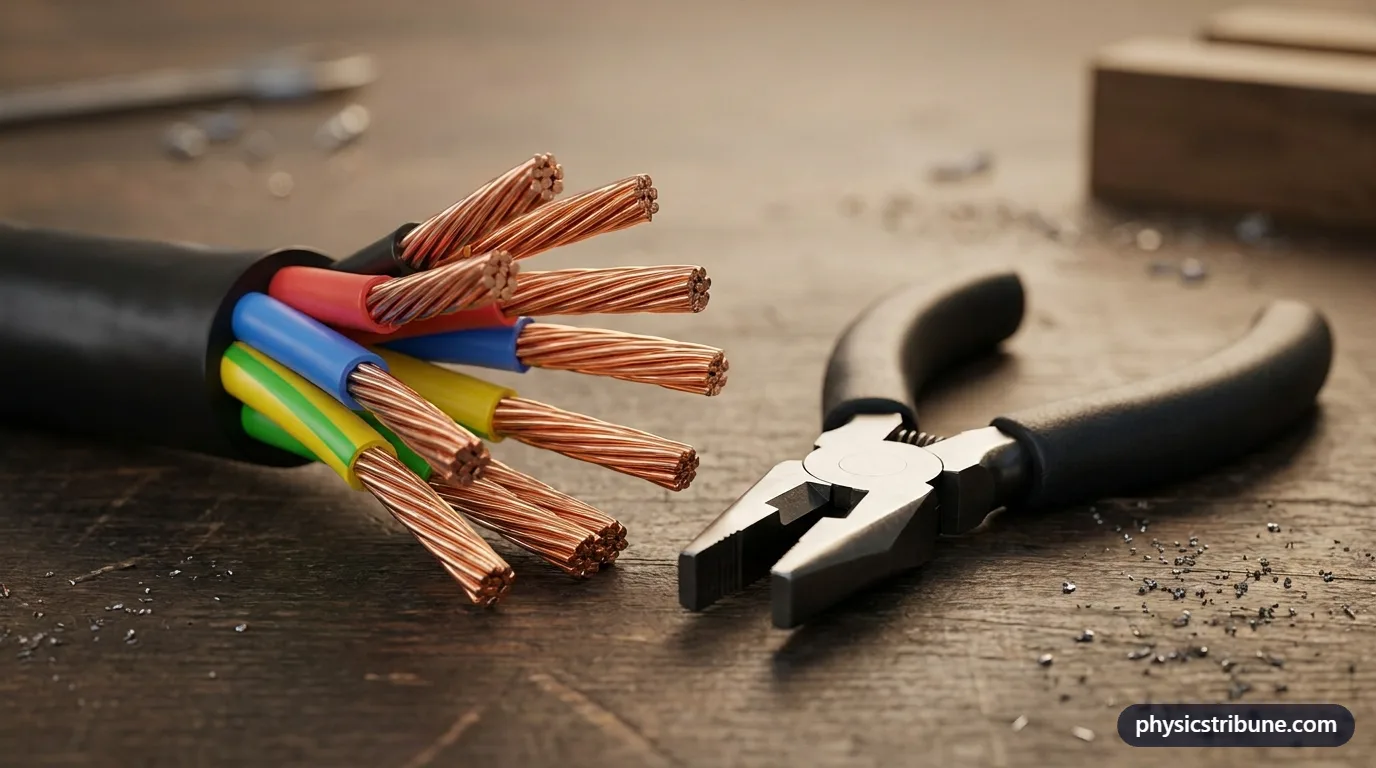
Almost every useful object combines both. A power cord has a copper core to carry current and a plastic jacket to keep it away from your fingers. A frying pan has a metal base to spread heat into the food and a handle that stays cool enough to hold.
Circuit boards follow the same plan: thin copper tracks carry signals across a fiberglass board that keeps each track separate. Between the two extremes sit semiconductors like silicon, whose conductivity engineers can tune, and at the far end sit superconductors, which lose all resistance when cooled enough.
How Can You Test Whether Something Is a Conductor?
A simple conductivity tester needs a small battery, a flashlight bulb or LED and three short wires. Connect them in a loop with a gap, then touch the two loose ends to the object you want to test. If the bulb lights, the object conducts; if it stays dark, it is an insulator, at least at that low voltage.
Try a coin, a paper clip, a pencil lead, an eraser, a plastic spoon and a strip of aluminum foil. Only use a small battery, never a wall outlet. A guided version with a heat twist is our insulation and conduction race, and younger students can start with conductors and insulators for kids.

How Do You Sort Materials Into Conductors and Insulators?
A quick rule of thumb works for most classroom questions:
- Shiny metal? Almost certainly a conductor of both electricity and heat.
- Plastic, rubber, glass, ceramic or fabric? Almost certainly an insulator of both.
- Full of trapped air? A heat insulator, such as foam, wool or snow.
- A liquid? Check whether it holds dissolved salts. Salty or mineral-rich water conducts; pure water and oils barely do.
The exceptions, like graphite and diamond, are what make the topic interesting, and they are good test questions.
Common Misconceptions
Myth: Water is a good conductor of electricity.
Physics: Pure water conducts very poorly. Tap water, pool water and seawater conduct because of the salts and minerals dissolved in them.
Myth: Insulators never let any current through.
Physics: They allow a very tiny current, and at a high enough voltage any insulator breaks down and conducts, as air does in lightning.
Myth: A good heat conductor must also be a good electrical conductor.
Physics: Usually true for metals, but diamond conducts heat superbly while blocking electric current.
Key Facts
- Conductors let electric charge or heat flow easily; insulators strongly resist it.
- Silver is the best electrical conductor, and copper is a close, cheaper second.
- Metals conduct because some of their electrons move freely through the solid.
- Salt water conducts because dissolved ions carry the charge, while pure water barely conducts.
- Materials full of trapped air, like foam and wool, are excellent heat insulators.
- Most useful objects combine both, such as copper wire inside a plastic jacket.
Quick Quiz: How Well Do You Know Examples of Conductors?
6 questions. Tap an answer to check it.
Which material is the best electrical conductor?
Silver has the lowest resistivity of any common material.
Why is the outside of a power cord made of plastic?
The plastic jacket insulates the copper conductor inside.
Which of these is an insulator of heat?
Foam is mostly trapped gas, which slows heat flow.
Salt water conducts electricity because:
Moving ions carry the charge through the liquid.
Classify graphite in a pencil:
Graphite is a form of carbon that conducts electricity.
A metal spoon in hot soup warms up faster than a wooden one because:
Free electrons in metal carry heat quickly up the handle.
Frequently Asked Questions
What are 10 examples of conductors?
Ten common conductors are copper, silver, gold, aluminum, iron, steel, brass, graphite, salt water and the human body. Metals top the list because their free electrons carry current easily. Graphite is the main nonmetal conductor, and salty liquids conduct because their dissolved ions move.
What are 10 examples of insulators?
Ten common insulators are rubber, plastic, glass, porcelain, dry wood, paper, cloth, dry air, foam and pure water. They all hold their electrons tightly, so very little current can pass. Many of them, especially foam, wool and fabric, are also good insulators of heat.
What are examples of conductors and insulators of electricity?
Copper wiring, aluminum power lines, gold contacts and steel tools are electrical conductors. The plastic coating on cords, rubber gloves, glass or porcelain pole insulators and dry wooden ladders are electrical insulators. A power cord uses both: copper inside to carry current and plastic outside to keep you safe.
What are examples of insulators of heat?
Good heat insulators include foam cups and coolers, wool and fleece clothing, fiberglass attic insulation, oven mitts, the wooden or plastic handles on pans, double-pane windows with trapped gas, down feathers, cork and fresh snow. Most of them work by trapping still air, which conducts heat very poorly.
Is the human body a conductor or an insulator?
The human body is a conductor. Our tissues contain salty fluids full of ions, so current can pass through us, especially through wet skin. Dry skin adds some resistance, but not enough to make household voltages safe, which is why electrical safety rules matter.
Is water a conductor or insulator?
Pure water is a poor conductor and behaves almost like an insulator. Everyday water from taps, rivers, pools and the sea contains dissolved salts and minerals that form ions, and those ions make it a conductor. Never use electrical devices near water for this reason.
Is wood a conductor or an insulator?
Dry wood is an insulator of both electricity and heat, which is why cooking spoons and tool handles are often wooden. Wet or green wood holds water with dissolved minerals, so it can conduct enough current to be dangerous near power lines.
Keep Exploring
 electricityElectrical Conductors and Insulators
 electricityResistivity and Conductivity
 electricitySemiconductors and Doping
 thermodynamicsThermal Conductivity
 thermodynamicsThermal Insulation
 questionsWhy do metals conduct electricity?
 kidsConductors and Insulators for Kids
 experimentsInsulation and conduction race
 examplesPhysics Examples in Everyday Life