At a Glance
Nikola Tesla (born July 10, 1856, died January 7, 1943) was a Serbian-American engineer best known for the AC induction motor and the polyphase alternating current system, patented in 1888. AC won out because transformers can step its voltage up and down, following V_s / V_p = N_s / N_p, which makes long-distance power lines practical.
- Born
- July 10, 1856, Smiljan, Austrian Empire (now Croatia)
- Died
- January 7, 1943, New York City, United States, age 86
- Nationality
- Austrian Empire; United States (citizen from 1891)
- Known for
- AC induction motor, polyphase power system, Tesla coil
- Key work
- A New System of Alternate Current Motors and Transformers (lecture, 1888)
- Key equation
- V_s / V_p = N_s / N_p (transformer equation)
On this page
Who Was Nikola Tesla?
Nikola Tesla was the inventor whose ideas made alternating current practical. In the 1880s most electricity came from small direct current stations that could only serve customers within about a mile. Tesla designed motors, generators and transformers that worked with AC, and together they let a single power plant feed an entire city from many miles away.
He held around three hundred patents worldwide, covering induction motors, high-frequency coils, radio parts, turbines and remote control. He worked mostly alone, sketching machines in his head in great detail before building them. He was brilliant, showy and often ahead of what could be built or paid for.
Tesla was an engineer and inventor more than a theoretical physicist, but his work rests squarely on the physics of electromagnetic induction discovered by Michael Faraday. His name now lives on in the SI unit of magnetic field strength.
Where Did Tesla Grow Up and Study?
Tesla was born in 1856 in the village of Smiljan, in the Military Frontier region of the Austrian Empire, now part of Croatia. His parents were ethnic Serbs; his father was an Orthodox priest and his mother invented small household tools. Young Nikola showed a remarkable memory and a talent for picturing machines in his mind.
In 1875 he enrolled at the polytechnic school in Graz, Austria, to study engineering. There a professor demonstrated a direct current machine whose brushes threw sparks, and Tesla argued that a motor could work without them. He left Graz without a degree and later spent a term at the university in Prague.
In 1881 he took a job at a new telephone exchange in Budapest. While walking in a park there in 1882, he later said, he suddenly saw how a rotating magnetic field could drive a motor, and he sketched the idea in the sand.
| Year | Event |
|---|---|
| 1856 | Born on July 10 in Smiljan, Austrian Empire |
| 1875 | Begins engineering studies at the polytechnic in Graz |
| 1882 | Conceives the rotating magnetic field in Budapest; moves to Paris to work on electric lighting |
| 1884 | Arrives in New York and works briefly for Edison's company |
| 1888 | Lectures on AC motors and transformers; Westinghouse licenses his patents |
| 1891 | Builds the Tesla coil; becomes a US citizen |
| 1893 | AC power lights the World's Columbian Exposition in Chicago |
| 1895 | Polyphase AC generation begins at Niagara Falls |
| 1898 | Demonstrates a radio-controlled boat in New York |
| 1899 | Runs high-voltage experiments in Colorado Springs |
| 1901 | Starts building the Wardenclyffe tower on Long Island |
| 1917 | Receives the Edison Medal; Wardenclyffe tower is demolished |
| 1943 | Dies in New York City on January 7, aged 86 |
| Source: Birth and death dates from our physicists data file (Wikidata, CC0); other years are standard biographical dates · Retrieved October 2026 | |
How Does Tesla's Induction Motor Work?
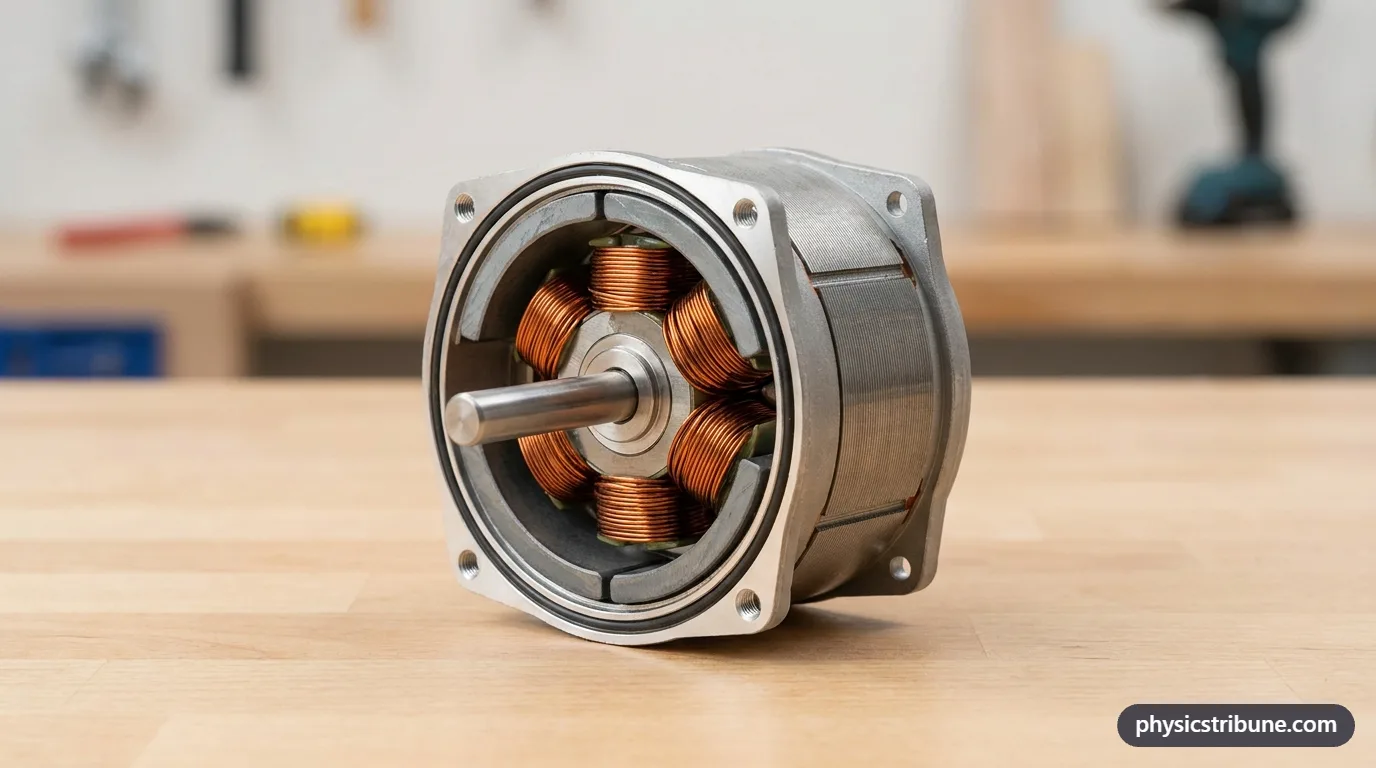
Tesla's key insight was the rotating magnetic field. Feed two or three alternating currents, slightly out of step with each other, into coils arranged around a ring. Each coil's field rises and falls in turn, and the combined field sweeps around the ring like the beam of a lighthouse, with no moving parts.
Place a metal rotor inside, and the sweeping field induces currents in it. Those currents feel a magnetic force that drags the rotor around after the field. There are no brushes and no sliding contacts to spark and wear out, so the motor is simple, rugged and cheap. Compare this with the brushed designs on our electric motor page.
Versions of the induction motor now turn fans, pumps, compressors, factory machines and many electric vehicles. A large share of all the electricity used in industry passes through motors that follow his basic plan.
What Was the War of the Currents?
Tesla arrived in New York in 1884 and briefly worked for Thomas Edison's company, improving DC generators. The two men disagreed about AC, and Tesla left within months. In 1888 he lectured on his AC motors and transformers to the American Institute of Electrical Engineers, and the industrialist George Westinghouse bought licenses to his patents.
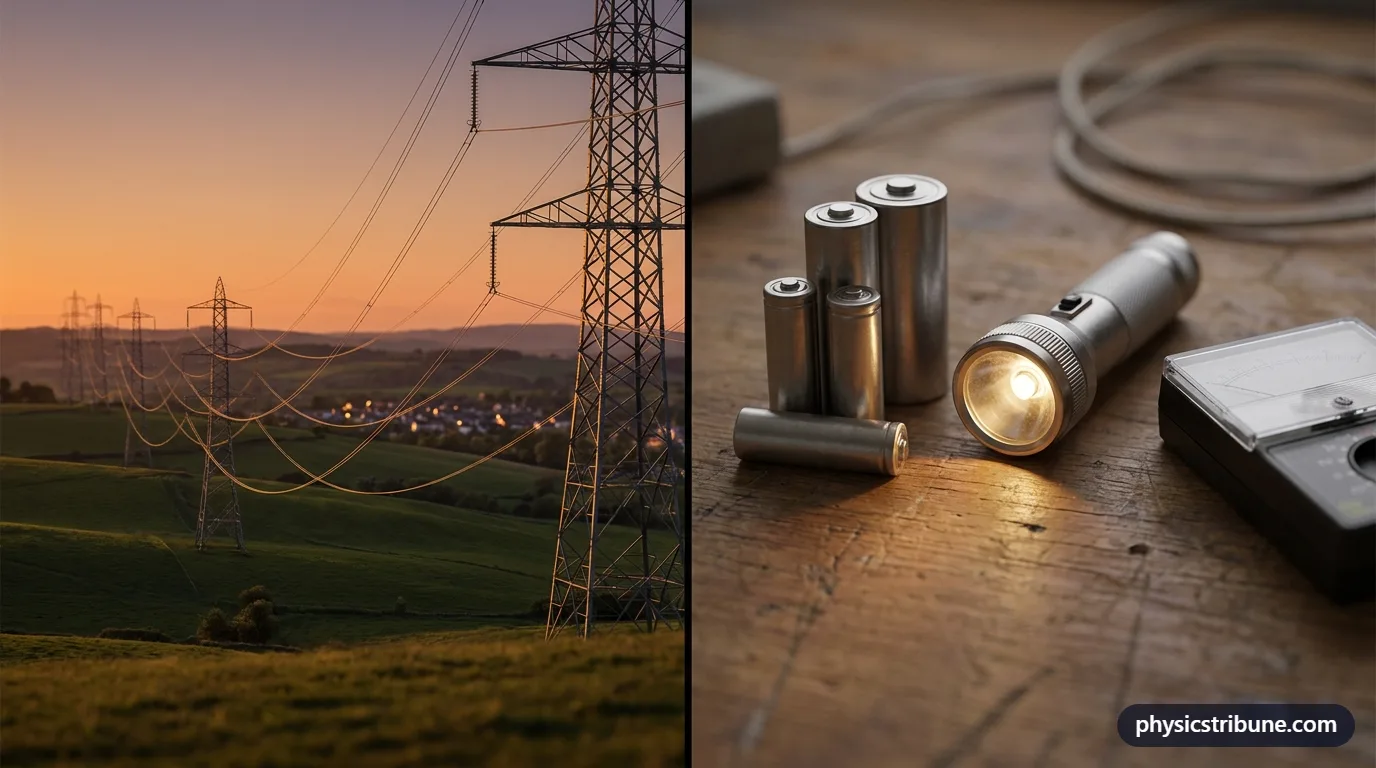
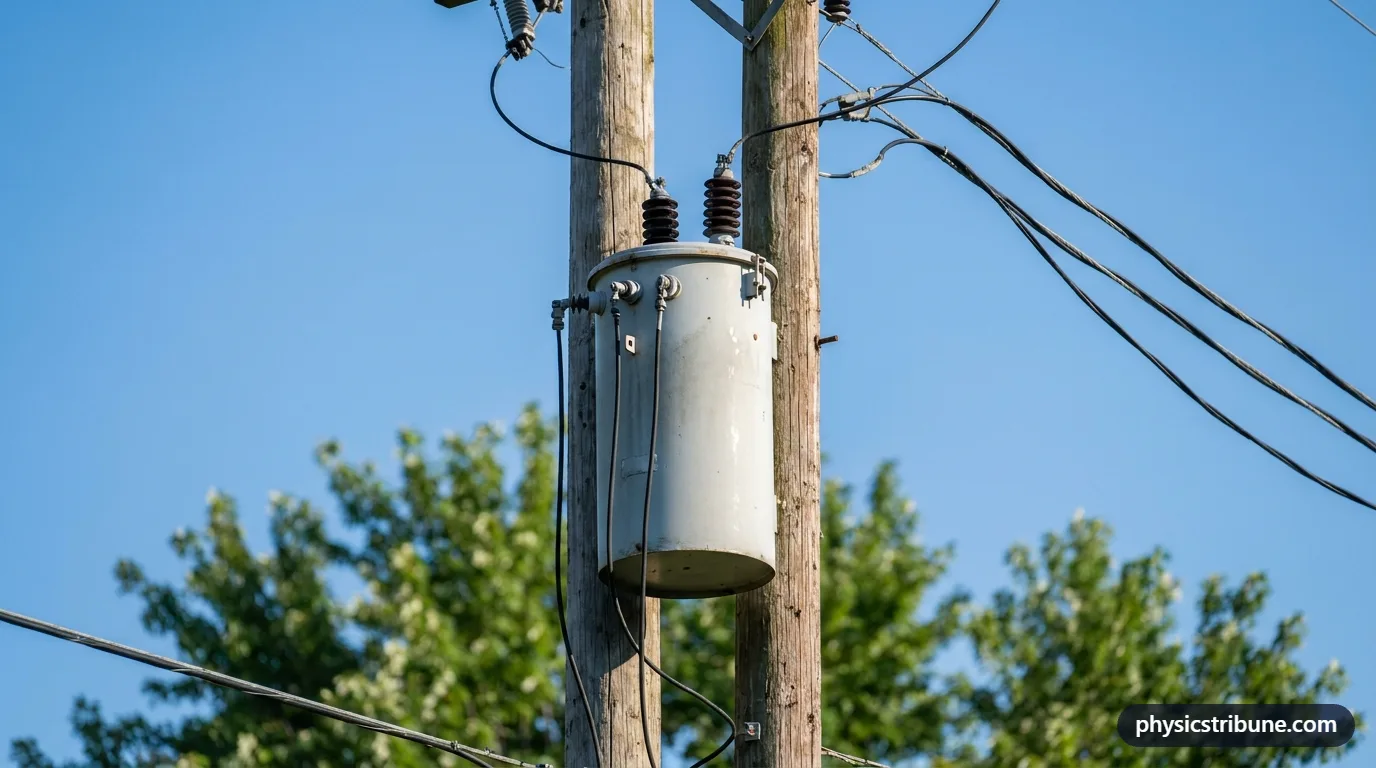
What followed was a bitter fight between Edison's DC system and the Westinghouse AC system. The deciding advantage was the transformer: it can raise AC voltage for efficient long-distance transmission and then lower it to safe levels for homes. DC could not be transformed easily with the technology of the day. Our AC vs DC comparison sets out the differences side by side.
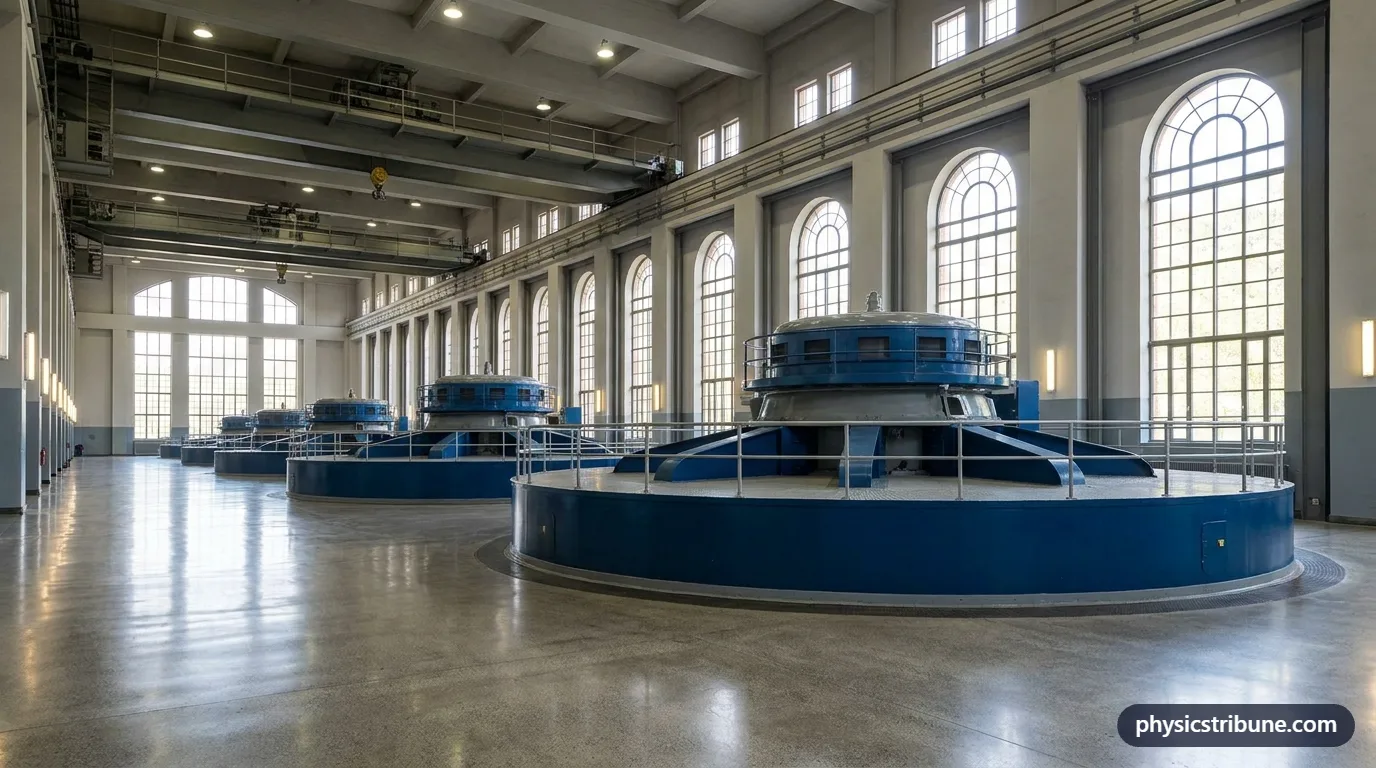
AC won two showcase contracts. In 1893 Westinghouse lit the World's Columbian Exposition in Chicago with it, and in 1895 a hydroelectric plant at Niagara Falls began generating polyphase AC, and from 1896 sending power more than 20 miles to Buffalo. The modern national grid grew from that model.
What Is a Tesla Coil?
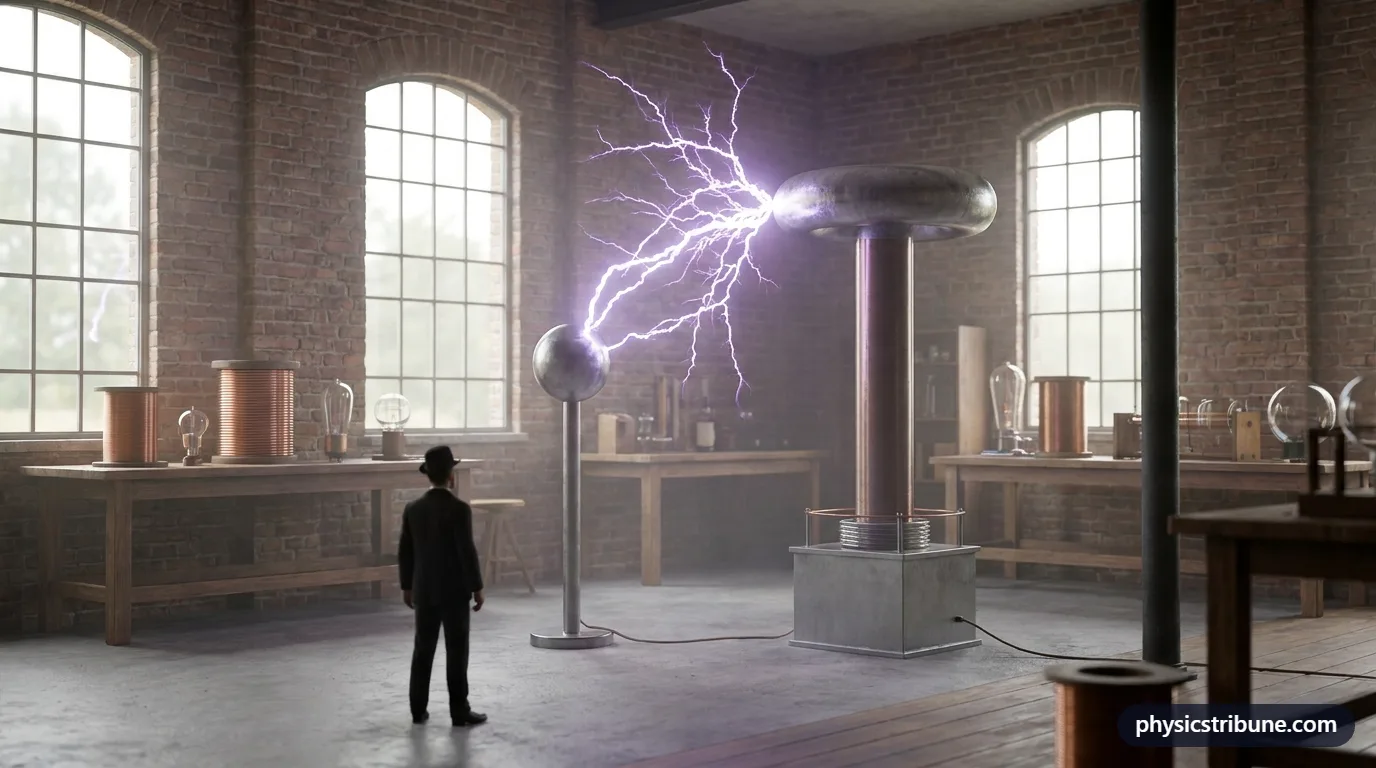
Around 1891 Tesla built a resonant transformer that produces extremely high voltages at high frequency. A capacitor and a small primary coil are charged and discharged through a spark gap, making a burst of oscillating current. A tall secondary coil with many turns, tuned to the same frequency, builds up voltages large enough to throw long purple sparks into the air.
The device depends on resonance, the same effect described on our LC circuits page: energy sloshes back and forth between a capacitor and a coil at a natural frequency. Tesla used his coils to light lamps without wires and to study high-frequency currents. Tesla coils are now mostly used for science demonstrations, but the tuned circuits in every radio share the same idea.
Did Tesla Invent Radio and Wireless Power?
Tesla worked on wireless transmission in the 1890s and filed radio patents in 1897. In 1898 he showed a small boat steered by radio waves in a pool at an electrical exhibition in New York, one of the first demonstrations of remote control. Guglielmo Marconi is usually credited with practical long-distance radio, and the question of priority was argued in court for decades. In 1943 the US Supreme Court struck down key parts of Marconi's patent, partly because of earlier work by Tesla and others.
His larger dream was a global system for sending power and messages without wires. He built a laboratory in Colorado Springs in 1899 and then a tall tower at Wardenclyffe on Long Island from 1901. Funding ran out, the project stalled, and the tower was torn down in 1917. Wireless charging pads use induction over a few millimeters, a modest cousin of what he imagined.
Tesla's Key Equation
Tesla's system works because a transformer changes AC voltage in proportion to its turns. A coil with more turns on the output side steps the voltage up, and fewer turns steps it down, as the equation below shows. Power lines run at very high voltage so the current, and the heat lost in the wires, stays small.
The second idea every AC engineer needs is the rms value: because AC voltage swings up and down, its useful heating effect matches a steady voltage equal to the peak divided by the square root of two. Our rms voltage article explains why.
The transformer equation is the reason alternating current conquered the power grid. Here it is with each symbol and its rearrangements.
| Symbol | Quantity | SI unit |
|---|---|---|
| secondary voltage | volt (V) | |
| primary voltage | volt (V) | |
| number of secondary turns | dimensionless (1) | |
| number of primary turns | dimensionless (1) |
Rearranged to find another variable:
Valid for: ideal transformer (no losses), AC only; currents satisfy I_s / I_p = N_p / N_s.
Example 1 Stepping up voltage at a power station
A generator delivers 2,400 V to the primary coil of a step-up transformer with 100 turns. The secondary coil has 5,000 turns. What voltage leaves the secondary for the transmission line?
- Given:
- primary voltage:
- number of secondary turns:
- number of primary turns:
- primary voltage:
- Formula:
- Substitute:
- Answer:
Raising the voltage fifty times cuts the current by about the same factor, so far less energy is lost as heat in the long wires.
Example 2 The effective voltage of a wall outlet
The alternating voltage of a North American outlet swings between plus and minus 170 V at 60 Hz. What steady (rms) voltage would deliver the same heating power?
- Given:
- peak voltage:
- peak voltage:
- Formula:
- Substitute:
- Answer:
This is the familiar 120 V printed on appliance labels: it is the rms value, not the peak of the wave.

How Did Tesla Spend His Final Years?
Tesla was a celebrity in the 1890s, but he spent money as quickly as he earned it and had little business sense. After Wardenclyffe failed he lived in a series of New York hotels, announcing ideas for death rays and new engines that were never built. He grew eccentric, feeding pigeons in the park and caring for them in his rooms.
He did receive honors. The American Institute of Electrical Engineers gave him its Edison Medal in 1917, an irony he appreciated. He died alone in his room at the Hotel New Yorker on January 7, 1943, aged 86.
Why Is Tesla Important Today?
Every power grid on Earth delivers alternating current, generated by rotating machines and distributed through transformers, much as Tesla and Westinghouse proposed. Induction motors remain workhorses of industry. In 1960 the international General Conference on Weights and Measures named the SI unit of magnetic flux density the tesla in his honor.
His story also became a legend, sometimes inflated beyond the evidence. The real record is impressive enough: a handful of clear, practical ideas that changed how the whole world uses energy. Younger readers can start with our Nikola Tesla for kids page.
Key Facts
- Nikola Tesla was born on July 10, 1856, and died on January 7, 1943.
- He was an ethnic Serb born in the Austrian Empire and became a US citizen in 1891.
- He invented the AC induction motor, which uses a rotating magnetic field instead of brushes.
- His polyphase AC patents, licensed by Westinghouse, became the basis of modern power grids.
- He built the Tesla coil, a resonant transformer that makes very high voltages.
- He demonstrated a radio-controlled boat in 1898.
- The SI unit of magnetic flux density, the tesla, was named after him in 1960.
Quick Quiz: How Well Do You Know Nikola Tesla?
6 questions. Tap an answer to check it.
What makes Tesla's induction motor turn?
Out-of-step alternating currents create a field that sweeps around and drags the rotor with it.
Which businessman licensed Tesla's AC patents?
Westinghouse bought the licenses in 1888 and built AC systems on them.
Why is AC better than DC for long-distance power lines?
Transformers raise the voltage so the current and heat losses in the line stay small.
A transformer has 10 times more turns on its secondary than its primary. What happens to the voltage?
V_s / V_p = N_s / N_p, so ten times the turns gives ten times the voltage.
What does the SI unit named after Tesla measure?
The tesla is the unit of magnetic field strength, equal to one weber per square meter.
Where did polyphase AC first supply power on a large scale in 1895?
The Niagara Falls hydroelectric plant began generating polyphase AC in 1895.
Frequently Asked Questions
What is Nikola Tesla best known for?
Tesla is best known for the AC induction motor and the polyphase alternating current system that power grids still use. He is also famous for the Tesla coil, early work on radio and remote control, and his ambitious plans for wireless power. The SI unit of magnetic flux density is named after him.
What did Nikola Tesla invent?
His most important inventions were the induction motor based on a rotating magnetic field, polyphase AC generators and distribution systems, and the Tesla coil. He also patented radio components, a bladeless turbine, improved arc lamps and a radio-controlled boat. In total he held around three hundred patents in many countries.
Did Tesla invent alternating current?
No. Alternating current was known and used before Tesla, and several engineers built AC generators and transformers in the 1880s. Tesla's contribution was a practical AC motor and a complete polyphase system of generators, transmission and motors. That made AC useful for factories and homes, not just for lighting.
Why did AC win over DC?
AC won mainly because transformers can raise its voltage for transmission and lower it again for use. High voltage means low current, and low current means little energy wasted as heat in long wires. With the technology of the 1890s, DC could not be stepped up and down this way, so it was limited to short distances.
What was the relationship between Tesla and Edison?
Tesla worked for Edison's company in New York for about six months, starting in mid-1884, improving DC equipment. They clashed over pay and over AC, and Tesla left to start his own firm. Later, when Westinghouse used Tesla's patents, Edison's DC companies became the main rivals in the so-called war of the currents.
What is the tesla unit?
The tesla, symbol T, is the SI unit of magnetic flux density, the strength of a magnetic field. One tesla equals one weber per square meter. A fridge magnet is roughly a hundredth of a tesla, while hospital MRI scanners typically use fields of about 1.5 to 3 tesla.
Was Tesla rich when he died?
No. Despite his valuable patents, Tesla died with very little money. He had given up royalty payments to help Westinghouse through a financial crisis, spent heavily on experiments, and lost backing for his Wardenclyffe project. In his last decades he lived in New York hotels, partly supported by a small monthly payment from Westinghouse's company.
Did Tesla invent the radio?
Tesla built many parts of early radio, including tuned circuits, and filed radio patents in 1897. Marconi is usually credited with the first practical long-distance radio system. In 1943 the US Supreme Court invalidated key parts of Marconi's patent, citing earlier work by Tesla and others, so the credit is shared among several inventors.