At a Glance
An inclined plane is a simple machine made of a sloped surface that reduces the force needed to raise an object. Gravity's pull along the slope is F_parallel = m g sin θ, so a gentler angle means a smaller push, and the ideal mechanical advantage equals the slope length divided by the height.
- Type
- One of the six classic simple machines
- What it does
- Trades a longer distance for a smaller force
- Force along the slope
- F∥ = mg sin θ
- Force into the slope
- N = mg cos θ
- Ideal mechanical advantage
- Length ÷ height = 1 ÷ sin θ
- Moving parts
- None; the surface stays still
On this page
- What Is an Inclined Plane?
- How Does an Inclined Plane Work, Step by Step?
- What Is the Formula for an Inclined Plane?
- What Is the Mechanical Advantage of an Inclined Plane?
- How Does Friction Change an Inclined Plane?
- What Are the Types of Inclined Planes?
- Where Are Inclined Planes Used?
- What Is the History of the Inclined Plane?
- How Can You Practice Inclined Plane Problems?
- Common Misconceptions
- Key Facts
- Quiz
- FAQ
What Is an Inclined Plane?
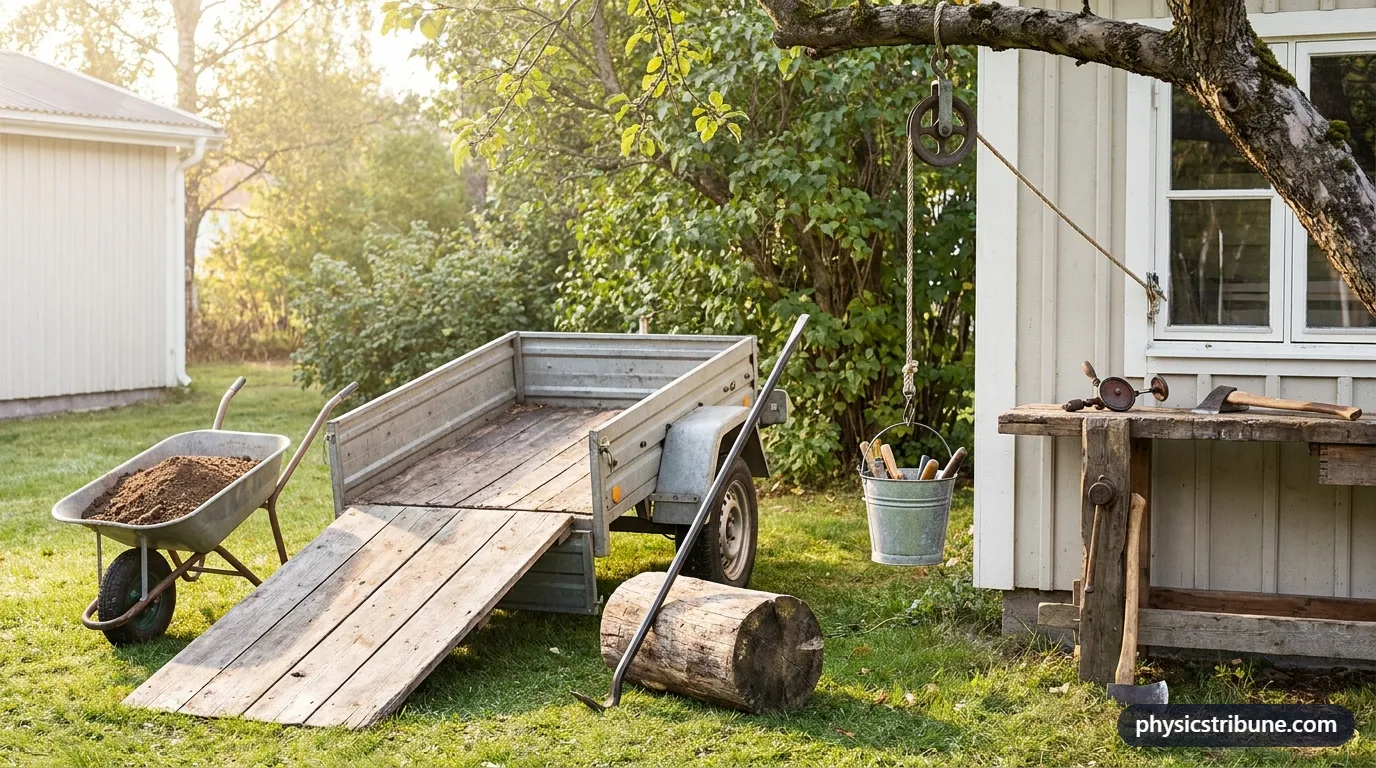
An inclined plane is about the simplest machine there is: a tilted surface that connects a low point to a high one. Instead of lifting a heavy object straight up, you slide, roll or carry it along the slope. Because the climb is spread over a longer path, each step needs less force.
It is one of the six classic simple machines, alongside the lever, pulley, wheel and axle, wedge and screw. Unlike most of the others, it has no moving parts. The object moves; the plane stays where it is.
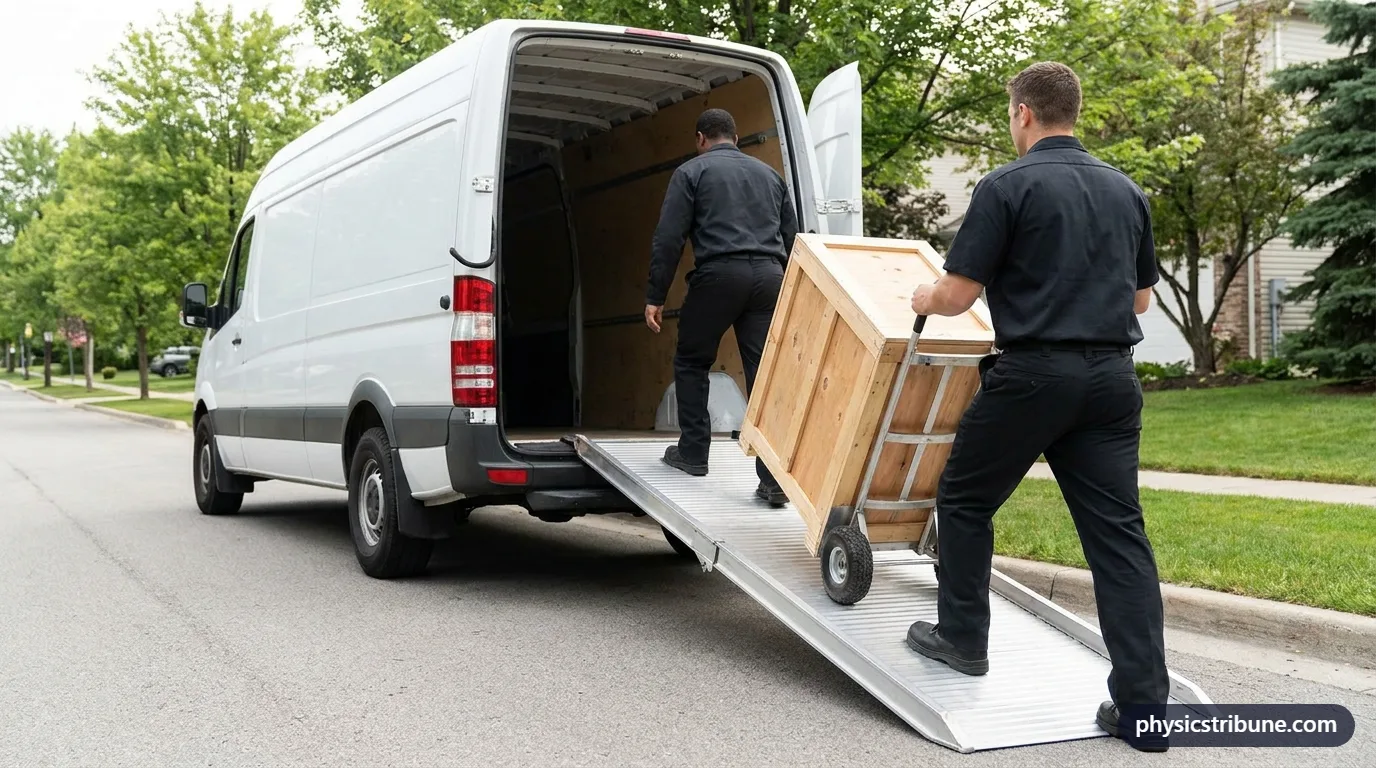
You use inclined planes every day without thinking about it. Wheelchair ramps, highway on-ramps, the sloping board movers use to roll a piano into a truck and the winding road up a mountain all work on the same idea. For a longer list, see our inclined plane examples.
How Does an Inclined Plane Work, Step by Step?
- Gravity pulls straight down. An object on the slope has a weight of mg, pointing toward the center of Earth.
- The slope splits that pull in two. One part presses the object into the surface. The other part points down along the slope and tries to slide the object back to the bottom.
- The surface pushes back. The ramp supplies a normal force that exactly cancels the part of gravity pressing into it.
- You only fight the downhill part. To move the object up at a steady speed, you push along the slope with a force equal to the downhill part plus any friction. On a gentle slope, that downhill part is a small fraction of the full weight.
- You pay with distance. A gentler slope means a longer path to the same height. Force times distance, the work you do, comes out the same as lifting straight up when there is no friction.
The diagram below shows these forces for a 25 kg box on a 20° slope with no friction.

What Is the Formula for an Inclined Plane?
Two formulas describe what happens on a slope at angle
On a frictionless slope, an object let go simply slides with acceleration
Angles in these formulas can be entered in degrees on a calculator, but the SI unit for angle is the radian, which is why the worked examples list both.
The part of an object's weight that pulls it down the slope sets how hard you must push. Here is that formula with each symbol and its SI unit.
| Symbol | Quantity | SI unit |
|---|---|---|
| component of weight parallel to the incline (down the slope) | newton (N) | |
| mass of object | kilogram (kg) | |
| acceleration due to gravity (9.80 m/s² (standard 9.80665 m/s²)) | meter per second squared (m/s²) | |
| incline angle above horizontal | radian (rad) |
Rearranged to find another variable:
Valid for: frictionless: acceleration down the slope is a = g sin θ.
Example 1 Pushing a crate up a loading ramp
A 90 kg crate sits on a smooth loading ramp tilted at 15° (0.2618 rad). Using g = 9.81 m/s², how large is the component of its weight that pulls it down the slope?
- Given:
- mass of object:
- acceleration due to gravity:
- incline angle above horizontal:
- mass of object:
- Formula:
- Substitute:
- Answer:
On a frictionless ramp this is also the steady push needed to move the crate up at constant speed, roughly a quarter of its full weight.
Example 2 How hard does a suitcase press on a ramp?
A 25 kg suitcase rests on an airport ramp inclined at 20° (0.3491 rad). With g = 9.81 m/s², what normal force does the ramp exert on the suitcase?
- Given:
- mass of object:
- acceleration due to gravity:
- incline angle above horizontal:
- mass of object:
- Formula:
- Substitute:
- Answer:
The normal force is a little less than the full weight because the slope carries only the part of gravity that points into its surface.
What Is the Mechanical Advantage of an Inclined Plane?
Mechanical advantage tells you how many times a machine multiplies your force. For an ideal, frictionless inclined plane, it equals the length of the slope divided by the height it rises, which is the same as
The catch is distance. To lift that load 1 m, you must push it 6 m along the ramp. Your small force times the long distance equals the large weight times the short height, so the work is unchanged. A machine can lower the force you need, but it cannot lower the total work.
Real ramps have friction, so the actual mechanical advantage is a bit lower than the ideal value. You can check numbers quickly with our mechanical advantage calculator. The table below shows how strongly the angle matters.
Example 3 Mechanical advantage of a wheelchair ramp
A helper pushes a wheelchair and rider with a combined weight of 1,150 N up a ramp. Ignoring friction, the push needed along the ramp is 96 N. What is the ramp's mechanical advantage?
- Given:
- output force (exerted on the load):
- input force (effort):
- output force (exerted on the load):
- Formula:
- Substitute:
- Answer:
A mechanical advantage near 12 matches a gentle ramp that rises about 1 m for every 12 m of length.
| Angle | Force down the slope (N) | Normal force (N) | Ideal mechanical advantage | Ramp length to rise 0.5 m |
|---|---|---|---|---|
| 5° | 8.5 | 97.7 | 11.47 | 5.74 m |
| 10° | 17.0 | 96.6 | 5.76 | 2.88 m |
| 15° | 25.4 | 94.8 | 3.86 | 1.93 m |
| 20° | 33.6 | 92.2 | 2.92 | 1.46 m |
| 30° | 49.0 | 85.0 | 2.00 | 1.00 m |
| 45° | 69.4 | 69.4 | 1.41 | 0.71 m |
| 60° | 85.0 | 49.1 | 1.15 | 0.58 m |
| Source: Computed with F∥ = mg sin θ, N = mg cos θ, IMA = 1/sin θ and g = 9.81 m/s² · Retrieved October 2026 | ||||
How Does Friction Change an Inclined Plane?
Friction works for you and against you on a slope. When you push a box upward, friction acts down the slope and adds to the force you need. When the box is resting, static friction acts up the slope and can hold it in place even though gravity is pulling it downhill.
Whether an object slides on its own depends on the angle and the surfaces. If the downhill pull is smaller than the largest static friction the surfaces can provide, the object stays put. Tilt the ramp steeper and at some angle it starts to slip. The second diagram shows a 40 kg crate on a 30° slope where rough surfaces keep it from sliding. Our page on static vs kinetic friction explains the two kinds.

What Are the Types of Inclined Planes?
- Fixed ramps: permanent slopes such as wheelchair ramps, loading docks, boat launches and stadium aisles.
- Portable ramps: boards or folding metal ramps used to load trucks, roll motorcycles into vans or move appliances.
- Roads and paths: switchback trails and winding mountain roads that lengthen the route to make a steep climb gentler.
- Chutes and slides: slopes used in reverse, letting gravity do the work of moving packages, grain, water or children downhill.
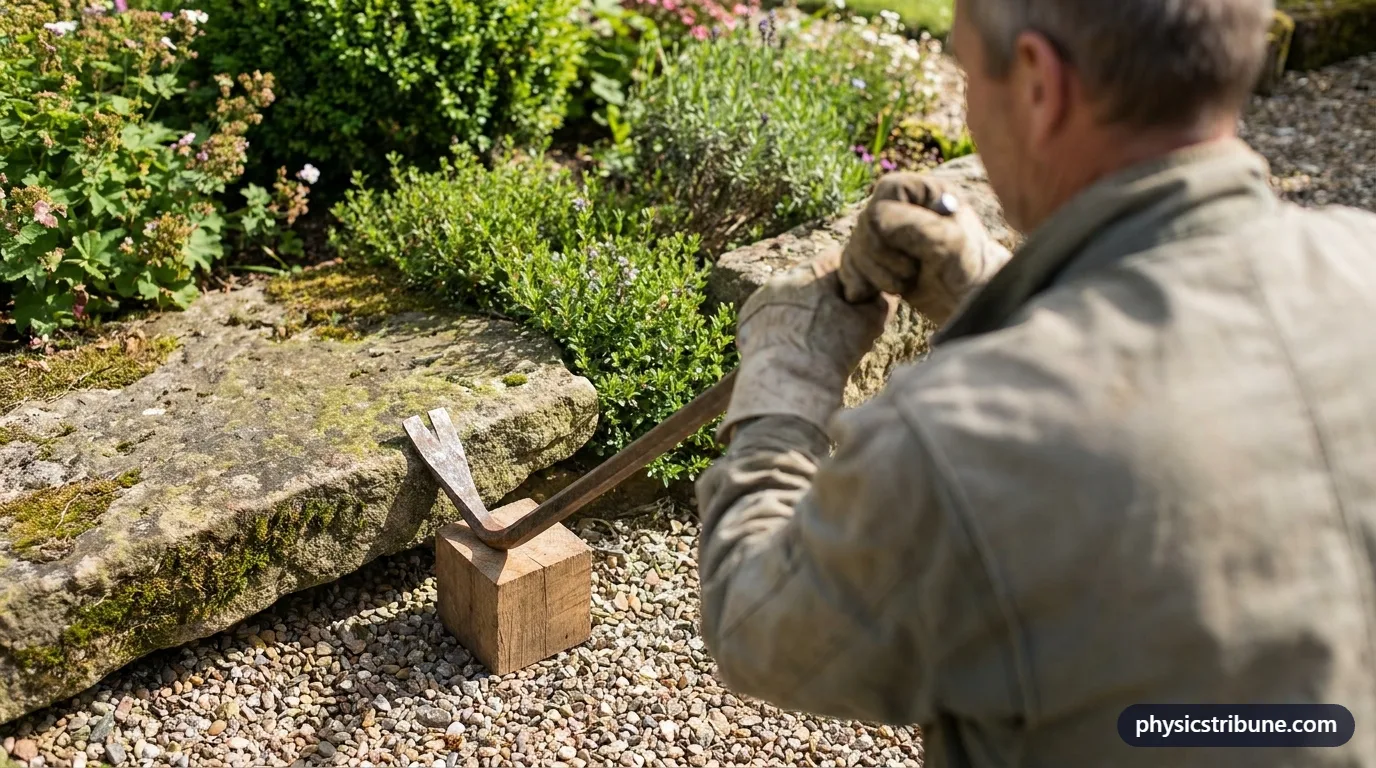
- The wedge: an inclined plane that moves, driven into a material to split or lift it, as in an axe or a door stop. See wedge.
- The screw: an inclined plane wrapped around a cylinder, turning rotation into a slow, powerful push. See screw.
Where Are Inclined Planes Used?
In buildings, ramps give wheelchairs, strollers and delivery carts access to raised entrances. Accessibility guidelines in many places call for a slope around 1 in 12, which works out to about 4.8° and an ideal mechanical advantage of about 12. That gentle angle keeps the push small enough for most people.
On roads, engineers limit steepness so heavy trucks can climb without stalling and descend without overheating their brakes. Railways are even more sensitive: steel wheels on steel rails have little grip, so main lines are usually kept to gradients of only a few percent.
In industry, conveyor ramps, gravity roller tracks and grain chutes move goods with little or no motor power. At home you will find inclined planes in slides, skateboard ramps, staircases (a stepped ramp) and even the sloped bottom of a bathtub that lets water flow to the drain.

What Is the History of the Inclined Plane?
People have used ramps since prehistoric times to move heavy stones. Most historians think the builders of ancient monuments in Egypt and elsewhere relied on long earthen or brick ramps to drag massive blocks into place, although the exact layouts are still debated.
The inclined plane also changed science. Galileo Galilei rolled smooth balls down a long wooden groove because a gentle slope slows the motion of falling enough to time it. He found that the distance covered grows with the square of the time, evidence that the balls speed up at a steady rate. He described this work in his book Two New Sciences, published in 1638, and you can read about the Galileo inclined plane experiment in detail.
How Can You Practice Inclined Plane Problems?
Start by drawing the slope, the weight and its two components, then decide whether friction acts up or down the surface. Our inclined plane worksheets give printable problem sets with answer keys, and the inclined plane for kids page explains the idea for younger learners. Then test yourself with the quiz below.
Common Misconceptions
Myth: A ramp reduces the work needed to lift something.
Physics: A ramp reduces the force, not the work. You push over a longer distance, so without friction the work equals lifting straight up, and friction makes it slightly more.
Myth: The normal force on a slope always equals the object's weight.
Physics: On a slope the normal force is only mg cos θ, which is less than the weight. It equals the weight only on level ground.
Myth: Heavier objects slide down a frictionless ramp faster.
Physics: On a frictionless slope every object accelerates at g sin θ regardless of its mass, so a heavy and a light box reach the bottom together.
Key Facts
- An inclined plane is a sloped surface that lets a smaller force raise a load over a longer distance.
- It is one of the six classic simple machines and has no moving parts.
- The part of an object's weight that pulls it down the slope is F∥ = mg sin θ.
- The ideal mechanical advantage of a ramp equals its length divided by its height.
- Without friction, the work to push a load up a ramp equals the work to lift it straight up to the same height.
- The wedge and the screw are both forms of the inclined plane.
- Galileo used inclined planes to slow falling motion enough to measure uniform acceleration.
Quick Quiz: How Well Do You Know Inclined Plane (Simple Machine)?
6 questions. Tap an answer to check it.
What does an inclined plane trade to reduce the force you need?
You push over a longer distance, which lets a smaller force raise the load.
A frictionless ramp is 8 m long and rises 2 m. What is its ideal mechanical advantage?
Ideal mechanical advantage equals length divided by height, 8 ÷ 2 = 4.
Which expression gives the part of the weight that pulls an object down a slope?
The downhill component of gravity is mg sin θ.
Which simple machine is an inclined plane wrapped around a cylinder?
A screw thread is a long, gentle ramp coiled around a shaft.
Without friction, how does the work to push a box up a ramp compare with lifting it straight up to the same height?
The force is smaller but the distance is longer, so the work is equal.
What happens to the normal force on a box as a ramp is made steeper?
The normal force is mg cos θ, which gets smaller as the angle grows.
Frequently Asked Questions
What is an inclined plane in simple words?
An inclined plane is a slope, like a ramp, that makes it easier to move something to a higher place. Instead of lifting a heavy box straight up, you push it up a gentle slope. You have to travel farther, but you need much less force at every step. Ramps, slides and sloping roads are all inclined planes.
How does an inclined plane make work easier?
It makes the force smaller, not the work. Gravity's pull is split into a part that presses into the ramp and a part that pulls down the slope, and you only have to overcome the second part. The gentler the slope, the smaller that part. The price is a longer path, so force times distance, the work, stays about the same.
What is the formula for an inclined plane?
The main formulas are F parallel = m g sin θ for the pull down the slope and N = m g cos θ for the normal force, where m is mass, g is about 9.81 meters per second squared and θ is the slope angle. The ideal mechanical advantage is the slope length divided by the height. With friction, add the friction force to the push needed.
What is the mechanical advantage of an inclined plane?
The ideal mechanical advantage is the length of the slope divided by the vertical height it rises. A ramp 5 meters long that rises 1 meter has an ideal mechanical advantage of 5, so you need only one fifth of the load's weight to push it up without friction. Real ramps have friction, so their actual mechanical advantage is somewhat lower.
What are 5 examples of inclined planes?
Common examples include a wheelchair ramp at a building entrance, a loading ramp on a moving truck, a playground slide, a boat launch that slopes into a lake, and a winding mountain road. Staircases, skateboard ramps, chutes in warehouses and the sloped ends of a swimming pool also use the same idea of spreading a height change over a longer distance.
Is a staircase an inclined plane?
In effect, yes. A staircase lets you rise to a higher floor by moving along a sloped path, and the total height gained is spread over a longer horizontal distance. It is broken into steps so your feet have flat places to push from, but the underlying idea is the same as a ramp: less effort per step in exchange for more steps.
Why is a screw considered an inclined plane?
A screw's thread is an inclined plane wrapped around a cylinder. If you could unroll the thread, you would see a long, gentle slope. Each turn of the screw moves it forward only a short distance along its axis while your hand travels a long way around, so a small twisting force produces a large driving force, just as a long ramp needs only a small push.
Does a steeper ramp need more force?
Yes. The pull down the slope is proportional to the sine of the angle, so it grows as the ramp gets steeper. On a 10 degree ramp you push against about 17% of the load's weight, while on a 30 degree ramp you push against half of it. A steeper ramp is shorter, but each step is harder.