At a Glance
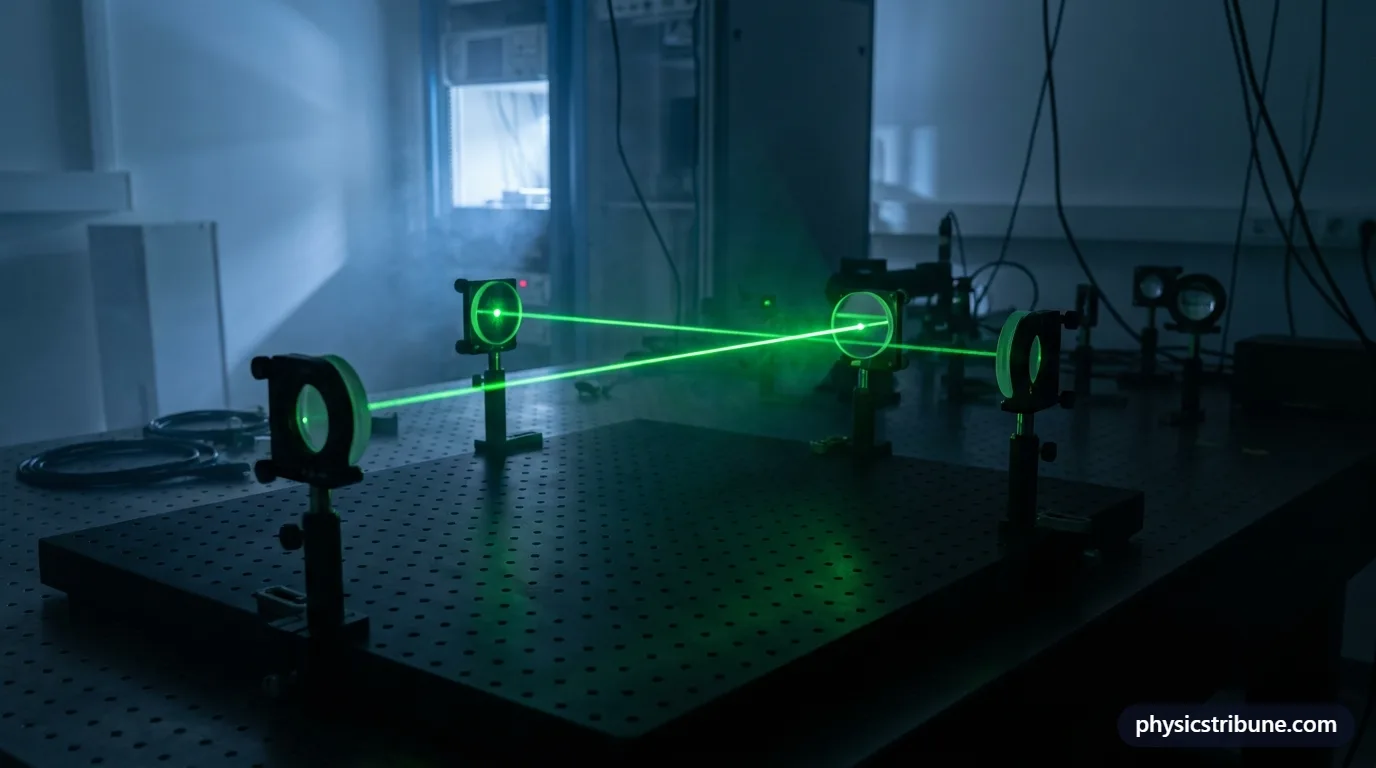
Light is an electromagnetic wave whose speed is set by the electric and magnetic properties of space, c = 299,792,458 m/s in vacuum. Sound is a pressure wave passed from molecule to molecule, so its speed is limited by how fast those molecules move, about 343 m/s in air at 20 °C. That is why you see lightning before you hear thunder.
- Speed of light in vacuum
- 299,792,458 m/s (exact)
- Speed of sound in air, 20 °C
- About 343 m/s
- Light vs sound in air
- About 874,000 times faster (computed)
- Type of wave
- Light: electromagnetic · Sound: mechanical
- Needs a medium?
- Light: no · Sound: yes
- Thunder rule
- About 3 s per km, 5 s per mile
On this page
- Why Is Light Faster Than Sound? The Short Answer
- What Sets the Speed of Each Wave?
- Why Do You See Lightning Before You Hear Thunder?
- What Does a Sound Wave Look Like Compared With Light?
- Does Sound Ever Catch Up With Light?
- Step by Step: How Light and Sound Leave a Thunderstorm
- Try It at Home: See the Delay Across a Field
- Key Facts
- FAQ
Why Is Light Faster Than Sound? The Short Answer
Light and sound are both waves, but they are completely different kinds of waves. Sound is a mechanical wave: a ripple of squeezed and stretched air that moves forward only because each molecule bumps into the next. Light is an electromagnetic wave: a changing electric field that creates a changing magnetic field, which in turn recreates the electric field, so the wave keeps itself going with no material at all.
Because sound depends on molecules handing along a push, it can never outrun the molecules doing the pushing. Light has no such middleman. Its speed in empty space, the speed of light, is fixed by two basic constants of nature and is the fastest speed any signal can travel.
What Sets the Speed of Each Wave?
For sound in a gas, the key player is the motion of the molecules themselves. Nitrogen molecules in room-temperature air move at an average of roughly 500 m/s (computed from the rms speed formula), zooming in random directions. A pressure pulse can only spread as fast as those molecules carry momentum to their neighbors, so the speed of sound in air lands at about 343 m/s, a bit slower than the molecules themselves.
Warm air carries sound slightly faster because its molecules move faster. A rough rule from the temperature formula is that sound gains about 0.6 m/s for every degree Celsius.
Light plays by different rules. James Clerk Maxwell showed in the 1860s that electric and magnetic fields can form a traveling wave whose speed is fixed by the electric constant and the magnetic constant of empty space. Working out that speed gave a value matching measurements of light, which is how physicists learned that light itself is an electromagnetic wave. See James Clerk Maxwell for the story.
Why Do You See Lightning Before You Hear Thunder?
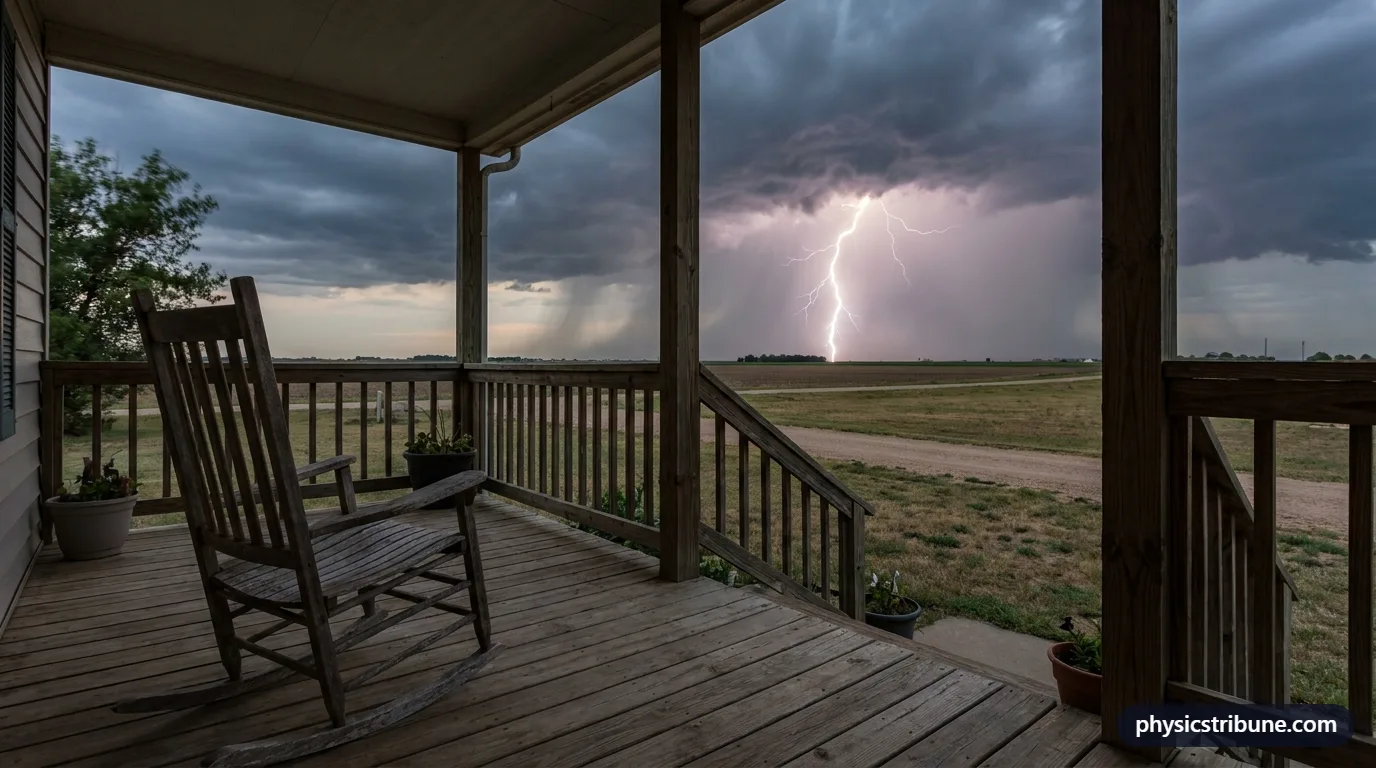
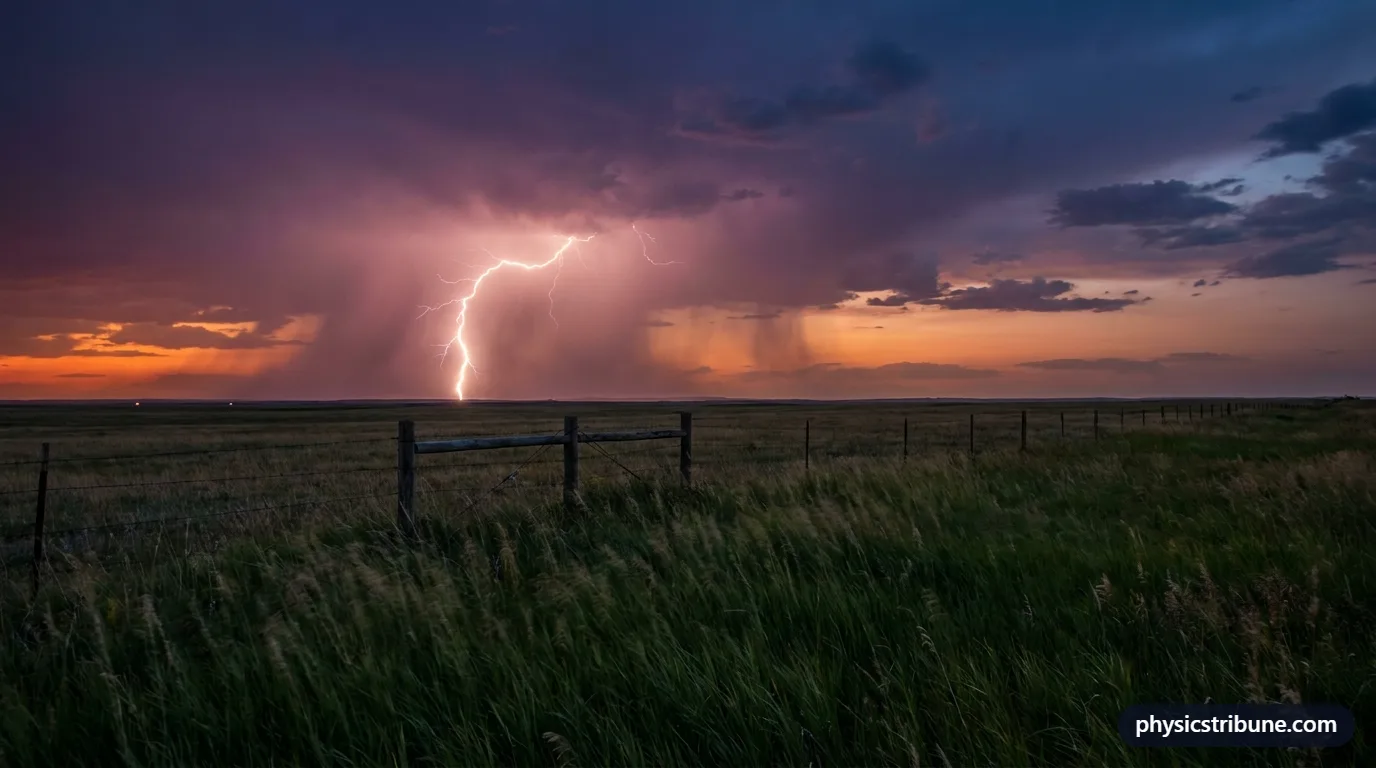
A lightning bolt creates its flash and its thunder at the same instant. The flash reaches you almost immediately: across a kilometer of air, light needs only about 3.3 millionths of a second. The sound needs close to 3 seconds for that same kilometer.
That gap gives a handy way to estimate how far away a storm is. Count the seconds between the flash and the thunder, then divide by 3 to get kilometers, or by 5 to get miles. If the count is under 30 seconds, the storm is close enough to be dangerous, so head indoors. Our page on how lightning forms explains where the flash and the boom come from.
The table compares travel times for light and sound over a few distances. Notice that the light column is measured in microseconds, while the sound column is in whole seconds.
| Distance | Light (microseconds) | Sound at 343 m/s (seconds) |
|---|---|---|
| 100 m | 0.334 | 0.29 |
| 1 km | 3.336 | 2.92 |
| 1 mile (1,609 m) | 5.368 | 4.69 |
| 3 km | 10.007 | 8.75 |
| 8 km | 26.685 | 23.32 |
| Source: Computed with t = d / v, using c = 299,792,458 m/s (NIST CODATA 2022) for light and a typical 343 m/s for sound in air at 20 °C · Retrieved October 2026 | ||
What Does a Sound Wave Look Like Compared With Light?
The diagram shows a sound wave as bands of crowded molecules, called compressions, separated by bands of spread-out molecules, called rarefactions. The molecules jiggle back and forth along the direction the wave travels, which makes sound a longitudinal wave.
Light is drawn very differently. Its electric and magnetic fields wiggle at right angles to the direction of travel, making it a transverse wave, and there are no molecules in the picture at all. You can see more side by side on our sound waves vs light waves comparison.

Does Sound Ever Catch Up With Light?
Never. Sound moves faster in liquids and solids than in air because their particles are packed close and bound tightly, so pushes pass along quickly. Typical values are about 1,480 m/s in water and about 5,960 m/s in steel. Even so, light in a vacuum is still about 50,000 times faster than sound in steel (computed).
Light does slow down inside materials, to about three quarters of its vacuum speed in water and about two thirds in glass. That still leaves it hundreds of millions of meters per second, while even the fastest sound in the stiffest solids stays below about 20 kilometers per second. Read about why sound travels faster in solids and why light slows down in water.
Step by Step: How Light and Sound Leave a Thunderstorm
- The bolt strikes. A huge current heats a thin channel of air to tens of thousands of degrees in a split second.
- Light leaves at once. The glowing channel emits light that races outward as an electromagnetic wave.
- Air explodes outward. The heated air expands violently, slamming into the air around it and starting a pressure wave.
- Sound crawls along. Molecule by molecule, the pressure wave spreads at about 343 m/s, roughly a kilometer every 3 seconds.
- You notice the gap. Your eyes catch the flash almost instantly, and your ears catch the rumble seconds later.
Try It at Home: See the Delay Across a Field
You can watch light outrun sound with a friend and an open space such as a park or a long, quiet sports field. Stay well away from roads.
- Stand about 150 to 200 large steps away from your friend, with a clear view of each other.
- Ask your friend to clap two wooden blocks or two pot lids together with big, visible arm swings.
- Watch closely. You should see the blocks meet a moment before you hear the clack.
- Walk closer and repeat. The delay shrinks until it seems to vanish at short range.
The gap is small, a fraction of a second at this distance, but it is long enough for your brain to notice. The farther apart you stand, the clearer it gets.
Key Facts
- Light is an electromagnetic wave and needs no material, while sound is a mechanical wave that must travel through matter.
- The speed of light in vacuum is exactly 299,792,458 m/s.
- Sound travels at about 343 m/s in air at 20 °C, roughly 874,000 times slower than light (computed).
- Sound cannot outrun the molecules that carry it, which move at only a few hundred meters per second in air.
- Lightning and thunder start together; the thunder arrives about 3 seconds later for every kilometer of distance.
- Sound is faster in water and steel than in air, but still at least tens of thousands of times slower than light.
Frequently Asked Questions
Why is light faster than sound?
Light is an electromagnetic wave made of electric and magnetic fields that recreate each other, so it travels without needing any matter. Sound is a pressure wave passed from molecule to molecule, so it can only move as fast as molecules can push their neighbors. In air, that limits sound to about 343 m/s, while light moves at nearly 300 million m/s.
How much faster is light than sound?
In air at room temperature, light is roughly 874,000 times faster than sound (computed from 299,792,458 m/s divided by about 343 m/s). Put another way, light could circle Earth about seven and a half times in one second (computed), while sound would cover only about a third of a kilometer in that time.
Why does lightning come before thunder?
They actually happen at the same moment. The flash travels to you as light and arrives almost instantly, while the thunder travels as sound at about 343 m/s. Each kilometer of distance adds about 3 seconds of delay, so the farther away the strike, the longer you wait for the rumble.
Can sound travel faster than light?
No. No known material carries sound anywhere near the speed of light. Even in the stiffest solids, sound reaches only about 12 to 18 km/s, while light moves at hundreds of thousands of kilometers per second. Nothing that carries energy or information can travel faster than light in vacuum, according to relativity.
Why can light travel through space but sound cannot?
Sound needs particles to bump into each other, and space is nearly empty, so a sound wave has nothing to travel through. Light does not need particles because its electric and magnetic fields sustain each other. That is how sunlight reaches Earth across about 150 million kilometers of near vacuum.
How do you calculate how far away lightning is?
Count the seconds from the flash to the first sound of thunder. Divide the count by 3 to get the distance in kilometers or by 5 to get miles. For example, a 9 second gap means the strike was about 3 kilometers away. This works because light arrives almost instantly and sound adds about 3 seconds per kilometer.
Does light always travel at the same speed?
Light always travels at 299,792,458 m/s in a vacuum. Inside materials it moves slower, about 75% of that speed in water and about 66% in typical glass, because the material's charges interact with the wave. In air the slowdown is tiny, only about 0.03%, so light in air is still almost as fast as in space.