
At a Glance
Time dilation is the effect in special relativity where a clock moving relative to you runs slow by the Lorentz factor, Δt = Δt0 / sqrt(1 - v^2/c^2). Here Δt0 is the proper time on the moving clock and Δt is the longer time you measure. At everyday speeds the effect is tiny, but at 87% of light speed a moving clock runs at half rate.
- Formula
- Δt = γΔt0 = Δt0/√(1 − v²/c²)
- Proper time Δt0
- Time read on a clock that travels with the event, always the shortest
- Half rate at
- About 0.866c, where γ = 2
- Caused by
- The speed of light being the same for every observer
- Predicted by
- Albert Einstein, special relativity, 1905
- Tested by
- Cosmic-ray muons, particle accelerators, flying atomic clocks, GPS
On this page
- What Is Time Dilation?
- Why Does Time Slow Down When You Move Fast?
- What Is the Time Dilation Formula?
- How Does a Light Clock Show Time Dilation, Step by Step?
- How Fast Do You Have to Go for Time Dilation to Matter?
- What Proves That Time Dilation Is Real?
- Does Time Dilation Affect GPS and Astronauts?
- How Is Time Dilation Related to Other Relativity Effects?
- Common Misconceptions
- Key Facts
- Quiz
- FAQ
What Is Time Dilation?
Time dilation is the measured difference in elapsed time between two clocks that move relative to each other. If a spacecraft streaks past you, you find that its clocks, its engines and even its crew's heartbeats run slow compared with your own. The crew, meanwhile, sees nothing odd on board: their seconds feel like ordinary seconds.
The effect comes straight out of special relativity, which Einstein published in 1905. It is symmetric in an important way. To the crew, it is your clock that runs slow, because from their point of view you are the one moving. Both views are correct within their own frames, and the puzzle only resolves when the two clocks are brought back together, as in the twin paradox.
Two terms keep the bookkeeping straight. Proper time, written
Why Does Time Slow Down When You Move Fast?
The root cause is one of Einstein's postulates: light in a vacuum travels at the same speed,
Ordinary speeds add and subtract. If you throw a ball forward from a moving train, a person on the platform sees it go faster than you do. Light refuses to play along. Since speed is distance divided by time, and both observers must agree on the speed of the same light pulse even though they disagree about the distance it covers, they cannot agree on the time either.
In other words, time dilation is not a mechanical effect on clocks. It is a statement about time itself: different observers slice spacetime differently, and the amount of time between two events depends on how you move relative to them.
What Is the Time Dilation Formula?
The time you measure for a moving clock equals its proper time multiplied by the Lorentz factor:
At a walking pace,
Here is the time dilation formula with each variable and its SI unit, plus the forms solved for proper time and for speed.
| Symbol | Quantity | SI unit |
|---|---|---|
| time interval measured by the observer who sees the clock moving | second (s) | |
| proper time (measured in the clock's rest frame) | second (s) | |
| relative speed | meter per second (m/s) | |
| speed of light in vacuum (2.998 × 10⁸ m/s (exact: 299 792 458 m/s)) | meter per second (m/s) |
Rearranged to find another variable:
Valid for: special relativity, inertial frames; Δt ≥ Δt₀.
Example 1 A three-year voyage at 0.8c
A crew flies to a distant outpost at 0.80c (2.398 × 10^8 m/s), and the ship's own clocks record 3.0 years for the trip. How much time passes for mission control back home?
- Given:
- proper time (measured in the clock's rest frame):
- relative speed:
- speed of light in vacuum:
- proper time (measured in the clock's rest frame):
- Formula:
- Substitute:
- Answer:
The crew is two years younger than they would have been had they stayed home, and neither side feels anything unusual during the flight.
How Does a Light Clock Show Time Dilation, Step by Step?
The cleanest way to see the effect is a thought experiment with a light clock: two mirrors facing each other, with a light pulse bouncing between them. Each round trip counts as one tick.
- Clock at rest. The mirrors are a distance
- Clock in motion. Now put the clock on a ship moving sideways at speed
- Longer path, same speed. The slanted path is longer than
- Apply Pythagoras. The slanted path is the hypotenuse of a right triangle with sides
Nothing in the argument depends on mirrors in particular. Any clock that disagreed with the light clock would let the crew detect their own motion, which relativity forbids, so every physical process aboard must slow down in step.
How Fast Do You Have to Go for Time Dilation to Matter?
Far faster than anything in daily life. A jet airliner flying for ten hours at about 250 m/s gains a lag of only about 12 billionths of a second compared with a clock on the ground, a figure we computed from the formula. Even an astronaut circling Earth for six months at about 7.66 km/s ends up only about 5 milliseconds behind, ignoring gravity's own effect.
The table shows how sharply the effect rises once speeds become a sizable fraction of light. Up to 10% of
Example 3 What speed stretches 60 minutes into 90?
A clock on a passing probe ticks off 60 minutes while a station observer's clock records 90 minutes. How fast is the probe moving? Use c = 299,792,458 m/s.
- Given:
- time interval measured by the observer who sees the clock moving:
- proper time (measured in the clock's rest frame):
- speed of light in vacuum:
- time interval measured by the observer who sees the clock moving:
- Formula:
- Substitute:
- Answer:
That is roughly three quarters of the speed of light, where the Lorentz factor equals exactly 1.5.
| Speed (fraction of c) | Lorentz factor γ | Minutes ticked on the moving clock per 60 minutes outside | Years outside per 1 year on board |
|---|---|---|---|
| 0.1 | 1.005 | 59.70 | 1.005 |
| 0.5 | 1.155 | 51.96 | 1.155 |
| 0.6 | 1.250 | 48.00 | 1.250 |
| 0.8 | 1.667 | 36.00 | 1.667 |
| 0.866 | 2.000 | 30.00 | 2.000 |
| 0.9 | 2.294 | 26.15 | 2.294 |
| 0.99 | 7.089 | 8.46 | 7.089 |
| 0.995 | 10.01 | 5.99 | 10.01 |
| 0.999 | 22.37 | 2.68 | 22.37 |
| Source: Computed with γ = 1/√(1 − v²/c²) and Δt = γΔt₀; c from NIST CODATA 2022 · public domain · Retrieved October 2026 | |||
What Proves That Time Dilation Is Real?
The most famous natural test uses muons, heavy cousins of the electron created when cosmic rays strike the upper atmosphere about 15 km up. A muon at rest decays in roughly 2.2 microseconds on average. Even at nearly the speed of light, that is enough time to cover only about 660 m, so almost none should survive the trip to the ground.
Yet detectors at sea level catch plenty of them. Seen from the ground, the speeding muon's internal clock runs slow, so its average lifetime stretches about tenfold at 0.995c. From the muon's own point of view, the explanation is length contraction of the atmosphere instead. Both descriptions predict the same survival rate.
People have tested the effect with machines too. In 1971 the Hafele-Keating experiment flew atomic clocks around the world on airliners and found offsets of tens to a few hundred nanoseconds that matched relativity's predictions. Particle accelerators routinely see unstable particles live many times longer than they would at rest, exactly as
Example 2 How long does a fast muon live?
A muon at rest lives about 2.197 µs on average. One created high in the atmosphere moves at 0.995c (2.983 × 10^8 m/s). What average lifetime do ground observers measure for it?
- Given:
- proper time (measured in the clock's rest frame):
- relative speed:
- speed of light in vacuum:
- proper time (measured in the clock's rest frame):
- Formula:
- Substitute:
- Answer:
A lifetime about ten times longer is what lets a sizable share of these muons reach detectors at sea level.

Does Time Dilation Affect GPS and Astronauts?
Yes. GPS satellites orbit at about 3.9 km/s, and their speed alone makes their clocks lose about 7 microseconds per day relative to ground clocks. Their greater height has the opposite effect: weaker gravity makes them gain about 45 microseconds per day, a separate effect called gravitational time dilation. The net drift of roughly 38 microseconds per day is corrected in the system's design.
Those microseconds matter because a radio signal travels about 300 m in one microsecond. Left uncorrected, the clock drift would push position fixes off by kilometers within a single day. Astronauts on the space station, for their part, return from long missions a few thousandths of a second younger than they would otherwise be, a real but harmless difference.
| Moving clock | Typical speed | Time interval | How far behind it falls |
|---|---|---|---|
| Jet airliner | about 250 m/s | 10 hours | about 12.5 ns |
| GPS satellite | about 3.87 km/s | 1 day | about 7.2 µs |
| Space station astronaut | about 7.66 km/s | 6 months | about 5.1 ms |
| Cosmic-ray muon | 0.995c | one mean lifetime | lifetime stretched about 10 times |
| Source: Computed with Δt = Δt₀/√(1 − v²/c²); speeds are typical values · Retrieved October 2026 | |||

Common Misconceptions
Myth: Time dilation is just an illusion caused by light taking time to reach you.
Physics: The delay of signals is removed before comparing clocks. Even after that correction, moving clocks really do record less elapsed time, as returning atomic clocks and long-lived muons show.
Myth: Only clocks are affected, not people.
Physics: Every physical process slows by the same factor, including chemistry and biology. A traveler ages more slowly in exactly the same proportion as the ship's clocks.
Myth: The traveler feels time dragging on board.
Physics: Nothing feels different in your own frame. Your seconds feel normal to you; the difference shows up only when you compare clocks with someone moving relative to you.
Myth: Time dilation only matters near the speed of light.
Physics: It is largest there, but it is measurable at everyday speeds with atomic clocks, and GPS would drift by kilometers per day without correcting for it.
Key Facts
- A clock moving relative to you runs slow by the Lorentz factor γ = 1/√(1 − v²/c²).
- Proper time is the time on a clock that travels with the event, and it is always the shortest measured time.
- Time dilation follows from the fact that light's speed in a vacuum is the same for every observer.
- At 86.6% of the speed of light, a moving clock runs at half the rate of a clock at rest.
- Cosmic-ray muons reach the ground only because their decay clocks run slow while they fall.
- GPS satellite clocks must be corrected for both speed-related and gravitational time dilation.
- The effect is symmetric: each of two observers in relative motion sees the other's clock run slow.
Quick Quiz: How Well Do You Know Time Dilation?
5 questions. Tap an answer to check it.
A spaceship passes Earth at high speed. Compared with Earth clocks, how do Earth observers find the ship's clocks running?
A clock moving relative to an observer runs slow by the Lorentz factor γ.
What is proper time?
Proper time is measured by a clock present at both the start and end of the event, and it is the shortest interval.
At about what speed does a moving clock run at half rate?
At 0.866c the Lorentz factor equals 2, so a moving clock ticks once for every two outside ticks.
Why do so many cosmic-ray muons reach sea level?
At nearly light speed their decay clocks run about ten times slower as seen from the ground.
Which fact is the root cause of time dilation?
Observers who agree on light's speed but disagree on its path length must disagree on elapsed time.
Frequently Asked Questions
What is time dilation in simple terms?
Time dilation means that a clock moving past you ticks more slowly than your own clock, as you measure it. The faster the clock moves, the bigger the difference. The people moving with the clock notice nothing strange, because everything around them slows by the same amount. The effect is tiny at normal speeds and huge near the speed of light.
What is the formula for time dilation?
The formula is Δt = Δt0 / √(1 − v²/c²), often written Δt = γΔt0. Here Δt0 is the proper time on the moving clock, Δt is the time measured by an observer who sees it moving, v is the relative speed and c is the speed of light. The factor γ is called the Lorentz factor and is never less than one.
Is time dilation real or just theoretical?
It is real and has been measured many times. Atomic clocks flown on airliners, fast muons from cosmic rays, unstable particles in accelerators and the clocks aboard GPS satellites all show the predicted slowing. Engineers build the correction into satellite navigation, which would fail within hours without it. No experiment has ever contradicted the formula.
Does time slow down if you travel at the speed of light?
Nothing with mass can reach the speed of light, because the energy needed would grow without limit. As a spacecraft gets closer and closer to light speed, its clocks run slower and slower compared with clocks at home, but they never fully stop. Light itself has no rest frame, so asking how time passes for a photon has no ordinary answer.
Do astronauts age slower in space?
Slightly. Speed slows an astronaut's clock, while being higher up in weaker gravity speeds it up. For the space station the speed effect wins, so a six-month crew member returns a few thousandths of a second younger than if they had stayed on the ground. The difference is real but far too small to notice.
Why does time dilation happen?
It happens because every observer measures the same speed for light in a vacuum. When two observers in relative motion watch the same light pulse, they disagree about how far it traveled. Since they must agree on its speed, they must also disagree about how long the trip took. Time is therefore not universal; it depends on motion.
What is the difference between time dilation and gravitational time dilation?
Ordinary time dilation comes from relative speed and is described by special relativity. Gravitational time dilation comes from differences in gravity: a clock lower in a gravitational field runs slower than one higher up, as general relativity predicts. GPS satellites experience both at once, and the two effects push their clocks in opposite directions.
Who discovered time dilation?
Albert Einstein derived time dilation as a consequence of special relativity in 1905. Hendrik Lorentz and others had already written down mathematics with a similar factor while studying electromagnetism, but they treated the slowed time as a calculation aid. Einstein was the first to argue that it describes real time for moving clocks.
Keep Exploring
 modern physicsSpecial Relativity
 modern physicsLength Contraction
 modern physicsTwin Paradox
 modern physicsGravitational Time Dilation
 modern physicsLorentz Transformation and Lorentz Factor
 calculatorsTime Dilation & Lorentz Factor Calculator
 physicistsAlbert Einstein
 experimentsHafele-Keating experiment
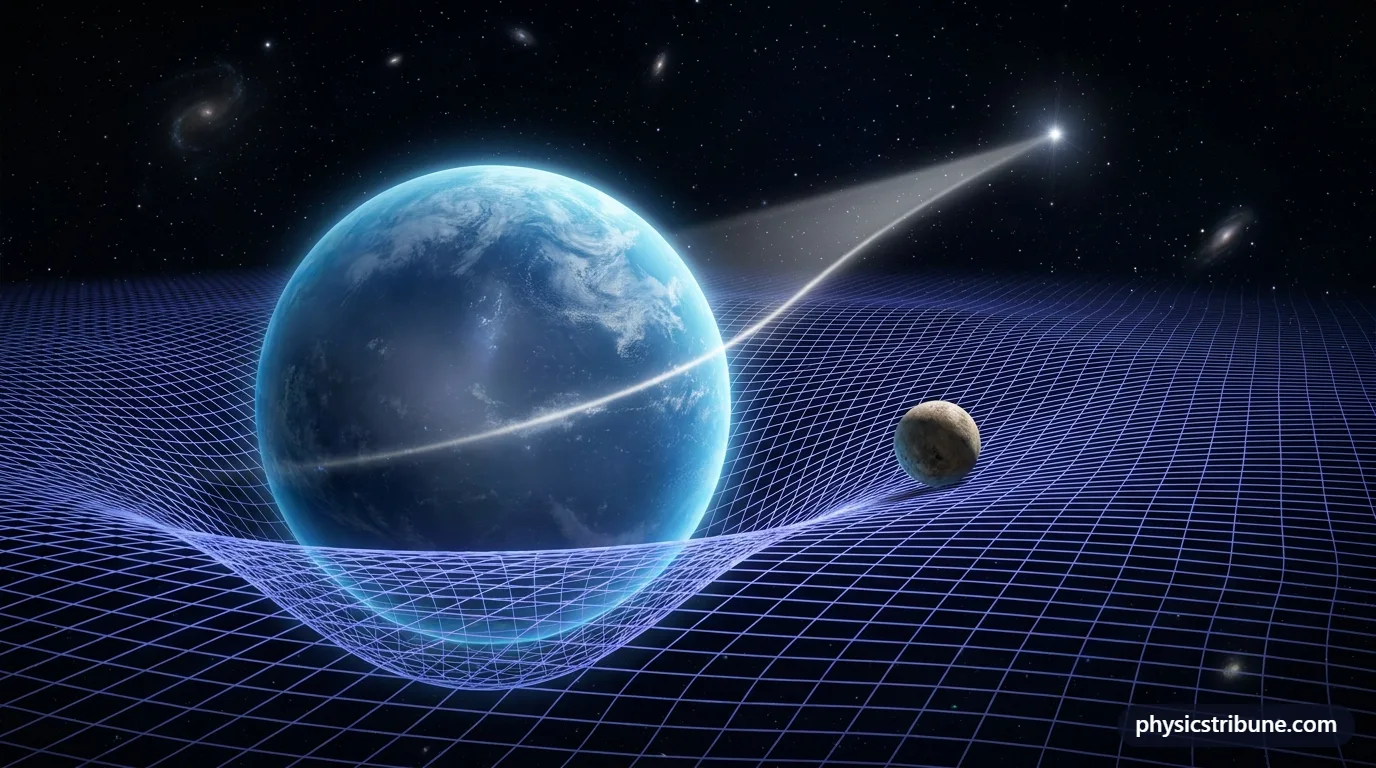 compareSpecial vs General Relativity
Sources
Constants come from NIST CODATA 2022 (public domain) and unit definitions from the BIPM SI Brochure (CC BY 4.0). Text, diagrams and illustrations are original work by Physics Tribune.