
At a Glance
Special relativity says the laws of physics are identical in all inertial frames and the speed of light in a vacuum, c = 299,792,458 m/s, is the same for every observer. As a result, moving clocks run slow by the Lorentz factor γ = 1 / sqrt(1 - v^2/c^2), moving objects shrink along their direction of travel, and mass and energy are linked by E = mc^2.
- Proposed by
- Albert Einstein, 1905
- Applies to
- Observers moving at constant velocity (inertial frames)
- Key constant
- c = 299,792,458 m/s (exact)
- Key factor
- γ = 1 / √(1 − v²/c²)
- Famous result
- E = mc²
- Does not cover
- Gravity and acceleration in curved spacetime (general relativity)
On this page
What Is Special Relativity?
Special relativity is the rulebook for motion when speeds get large compared with light. At highway or even rocket speeds its effects are tiny, which is why Newton's mechanics works so well in daily life. Push toward a sizable fraction of light speed, though, and time, length, momentum and energy all behave differently from what everyday intuition suggests.
The word "special" means the theory handles a special case: frames of reference that move in straight lines at steady speed, called inertial frames. Gravity and accelerating frames belong to the broader general relativity, which Einstein completed a decade later. Our special vs general relativity comparison lays the two side by side.
What Are the Two Postulates of Special Relativity?
The whole theory grows from two short statements, covered in depth on our page about Einstein's postulates:
- The principle of relativity. The laws of physics take the same form in every inertial frame. No experiment done inside a sealed, smoothly moving lab can tell you how fast the lab is going.
- The constancy of light speed. Light in a vacuum moves at
The second postulate clashes with the common sense of adding speeds. If you chase a light beam at half of
What Happens to Time, Length and Mass at High Speed?
Every major effect of the theory is controlled by one number, the Lorentz factor
- Time dilation: a moving clock ticks slower by the factor
- Length contraction: a moving object is measured shorter along its direction of motion.
- Relativity of simultaneity: two events that happen at the same moment for one observer can happen at different moments for another.
- Relativistic momentum grows as
Velocities also stop adding in the simple way. The relativistic velocity addition rule guarantees that combining two speeds below
| Speed (fraction of c) | Lorentz factor γ | 1 hour on the moving clock lasts, for a watcher at rest |
|---|---|---|
| 0.1 c | 1.005 | 60.3 minutes |
| 0.5 c | 1.155 | 69.3 minutes |
| 0.6 c | 1.250 | 75.0 minutes |
| 0.8 c | 1.667 | 100.0 minutes |
| 0.9 c | 2.294 | 137.7 minutes |
| 0.99 c | 7.089 | 425.3 minutes |
| 0.999 c | 22.37 | 1,342 minutes |
| Source: Computed with γ = 1 / √(1 − v²/c²) · Retrieved October 2026 | ||
How Are Mass and Energy Related?
The most quoted result of the theory is
For a moving object the total energy becomes
| Quantity | Formula | SI unit |
|---|---|---|
| Lorentz factor | γ = 1 / √(1 − v²/c²) | none (dimensionless) |
| Time dilation | Δt = γ Δt0 | second (s) |
| Length contraction | L = L0 / γ | meter (m) |
| Velocity addition | u = (v + u′) / (1 + v u′ / c²) | meter per second (m/s) |
| Relativistic momentum | p = γ m v | kilogram meter per second (kg·m/s) |
| Rest energy | E0 = m c² | joule (J) |
| Total energy | E = γ m c² | joule (J) |
| Relativistic kinetic energy | KE = (γ − 1) m c² | joule (J) |
| Energy-momentum relation | E² = (p c)² + (m c²)² | joule squared (J²) |
| Source: Formulas from our formula data set (data/formulas.json); c = 299,792,458 m/s exact (NIST CODATA 2022) · Retrieved October 2026 | ||
How Do We Know Special Relativity Is True?
The theory has passed every test thrown at it for more than a century. Muons created high in the atmosphere live only about 2.2 microseconds at rest, yet many reach the ground because their internal clocks run slow at nearly light speed; our muon page explains the numbers. Particle accelerators routinely push protons to a Lorentz factor in the thousands, and the energy needed matches the formulas exactly.
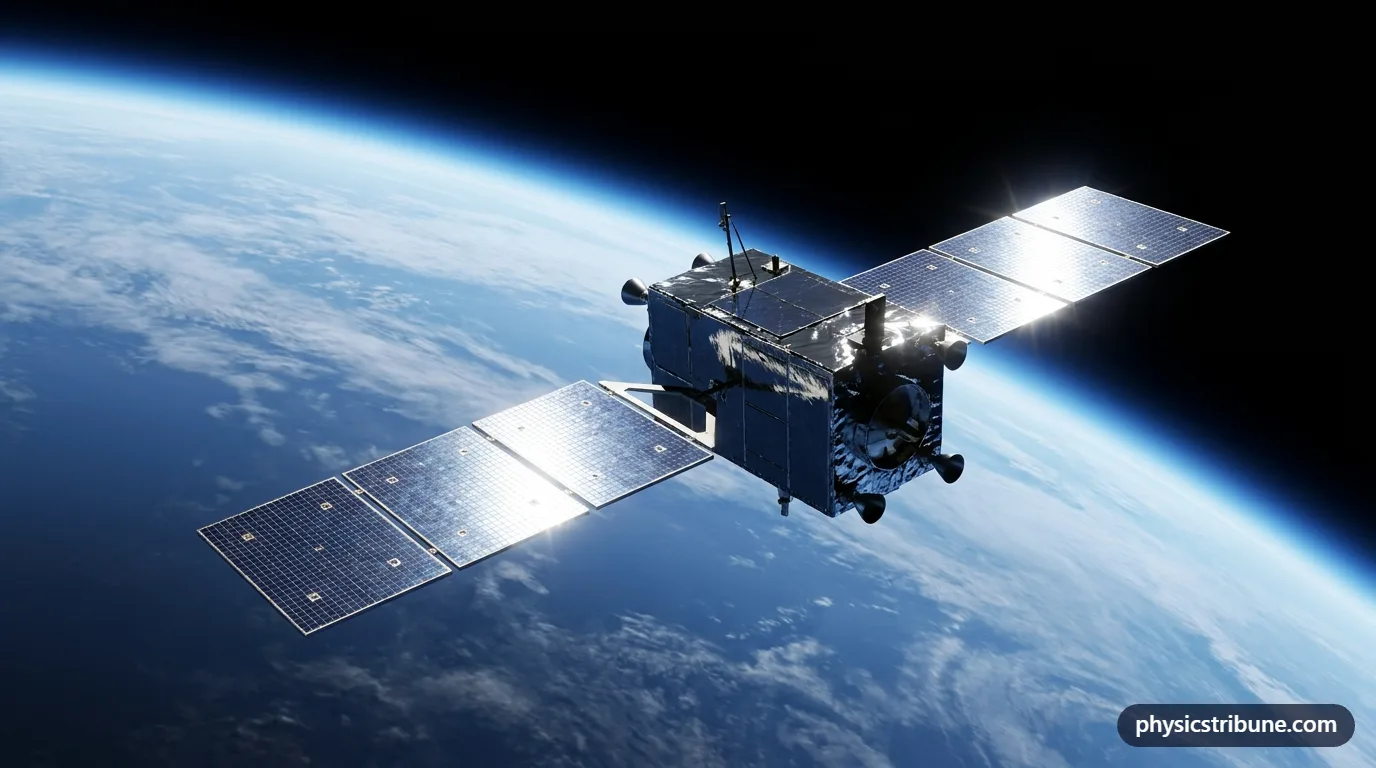
Satellite navigation is an everyday check. GPS clocks move at several kilometers per second, so special relativity makes them lag ground clocks by a few microseconds per day, while weaker gravity in orbit makes them run fast. Engineers correct for both effects; without the correction, position errors would build up by kilometers each day.
In What Order Should You Learn Special Relativity?
Each step uses ideas from the one before. We suggest this path:
- Frames of reference and relative velocity, the classical starting point.
- Einstein's postulates and the speed of light.
- Time dilation, then length contraction and the relativity of simultaneity.
- The Lorentz transformation, which packs all three effects into one set of equations, and the idea of spacetime.
- Relativistic momentum, mass-energy equivalence and the relativistic Doppler effect.
Practice with the time dilation calculator, keep the modern physics formulas sheet handy, and read about the theory's author on our Albert Einstein page.
All Special Relativity (10)
 modern physicsEinstein's Postulates of Special Relativity
 modern physicsLength Contraction
 modern physicsLorentz Transformation and Lorentz Factor
 modern physicsMass-Energy Equivalence (E = mc²)
 modern physicsRelativistic Doppler Effect
 modern physicsRelativistic Momentum
 modern physicsRelativistic Velocity Addition
 modern physicsRelativity of Simultaneity
 modern physicsTime Dilation
 modern physicsTwin Paradox
Key Facts
- Special relativity was published by Albert Einstein in 1905 and applies to frames moving at constant velocity.
- Its two postulates are that physical laws are the same in all inertial frames and that light speed in a vacuum is the same for all observers.
- The speed of light in a vacuum is exactly 299,792,458 m/s by the definition of the meter.
- Moving clocks run slow and moving objects are shorter along their motion, both by the Lorentz factor γ.
- No object with mass can reach the speed of light, because its energy would have to become infinite.
- Rest energy is E = mc², so a small mass stands for a very large energy.
- GPS satellites, particle accelerators and cosmic-ray muons all confirm the theory every day.
Frequently Asked Questions
What is special relativity in simple terms?
Special relativity is the idea that there is no single, universal clock or ruler. Observers moving relative to each other measure different times and lengths for the same events, yet all of them measure the same speed for light. The differences only become noticeable at speeds that are a sizable fraction of light speed, which is why everyday life seems to follow Newton's rules.
What is the difference between special and general relativity?
Special relativity deals with observers moving at constant velocity and leaves gravity out. General relativity, finished by Einstein in 1915, extends the ideas to accelerating observers and explains gravity as the curving of spacetime by mass and energy. Special relativity is the flat-spacetime limit of general relativity, so the two never disagree where both apply.
Why can't anything go faster than light?
As an object with mass speeds up, the Lorentz factor grows and so does the energy needed for each extra bit of speed. Reaching light speed exactly would require infinite energy, so the limit can be approached but never reached. Massless particles such as photons always move at light speed, and no signal or information can be sent faster than that.
What does E = mc² mean?
E = mc² says that mass is a form of energy. Any object at rest stores an energy equal to its mass times the speed of light squared. Because light speed squared is about 9 × 10^16 m²/s², converting even one gram of mass completely would release around 90 trillion joules, which is why nuclear reactions release so much energy from small amounts of fuel.
Is time dilation real or just an illusion?
It is real and measurable. Atomic clocks flown on airplanes come back slightly out of step with clocks left on the ground, by the amount relativity predicts. Fast-moving unstable particles survive longer before decaying, and GPS satellites need their clocks corrected every day. Time dilation is not a trick of signals or measurement; it is how time itself behaves between frames.
Who discovered special relativity?
Albert Einstein published special relativity in 1905, in a paper on the electrodynamics of moving bodies. He built on earlier work by Hendrik Lorentz and Henri Poincaré, who had found many of the equations, but Einstein was the first to derive them from two simple postulates and to treat time itself as relative. Hermann Minkowski later recast the theory as four-dimensional spacetime.
Keep Exploring
modern physicsEinstein's Postulates of Special Relativitymodern physicsTime Dilationmodern physicsLength Contractionmodern physicsMass-Energy Equivalence (E = mc²)modern physicsLorentz Transformation and Lorentz Factor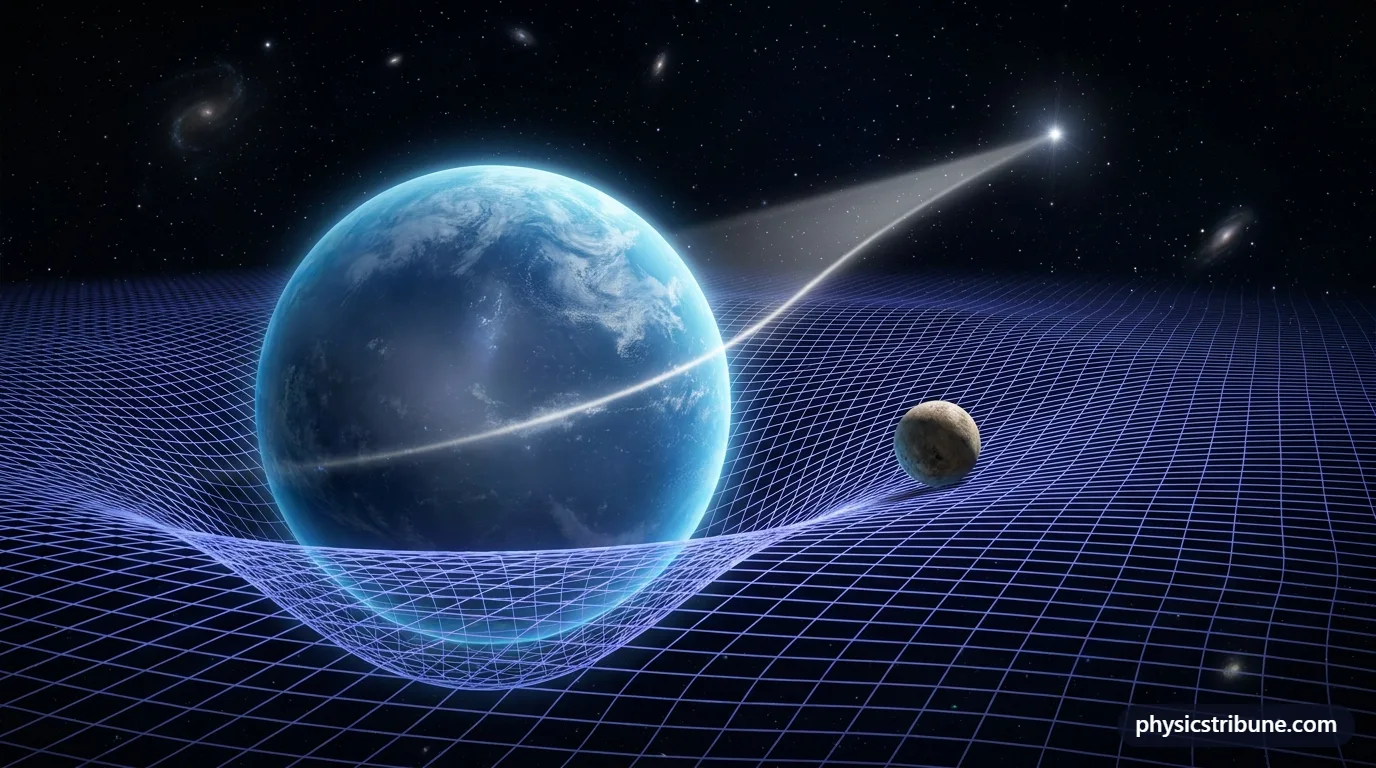 compareSpecial vs General Relativity
 calculatorsTime Dilation & Lorentz Factor Calculator
 physicistsAlbert Einstein
 formulasModern Physics Formulas